Home / Roof Damage Repair / Commercial Roof Seam Failure Repair
Send roof plans, membrane records, seam photos, leak locations, and access limits. We will identify the failed segment, check nearby attachment and moisture clues, and define a compatible seam repair.
We inspect the seam for separation, fishmouths, wrinkles, contamination, prior patch edges, and changes in sheet tension. A probe helps locate an unbonded edge, but it does not measure hidden moisture or establish the full repair length on its own. We mark the failed segment, examine nearby intersections, and photograph the lap in context with drains, curbs, and roof zones.
We look for a change in seam width, a bead of displaced material, and a lap edge that can be lifted without force. The observations are marked along the run so the repair does not stop at the first visible split. Cross seams and corners can concentrate stress; each junction gets checked before the work limit is approved.
Thermoplastic sheet seams depend on preparation and a consistent weld. EPDM laps use different adhesives and seam details. A repair method must fit the membrane type and any coating or overlay above it. If the original system is concealed, a sample or record review may be needed before choosing material. Our roof inspection can map related seams and identify where a second test is justified.
A seam can release where welding energy, speed, pressure, or surface cleanliness was inconsistent. A lap can also be stressed by membrane shrinkage, substrate movement, thermal cycling, ponding, or repeated foot traffic. We check the seam direction, sheet tension, fasteners, insulation support, and whether the opening aligns with a deck transition. The cause guides the repair length and preparation.
Repeated seam failure along a single sheet can also point to restraint or attachment that is pulling against the lap. We inspect plates and fasteners where accessible, compare sheet direction with the roof layout, and look for wrinkles that indicate tension. The patch method should not lock a moving sheet in a way that transfers stress to the next seam.
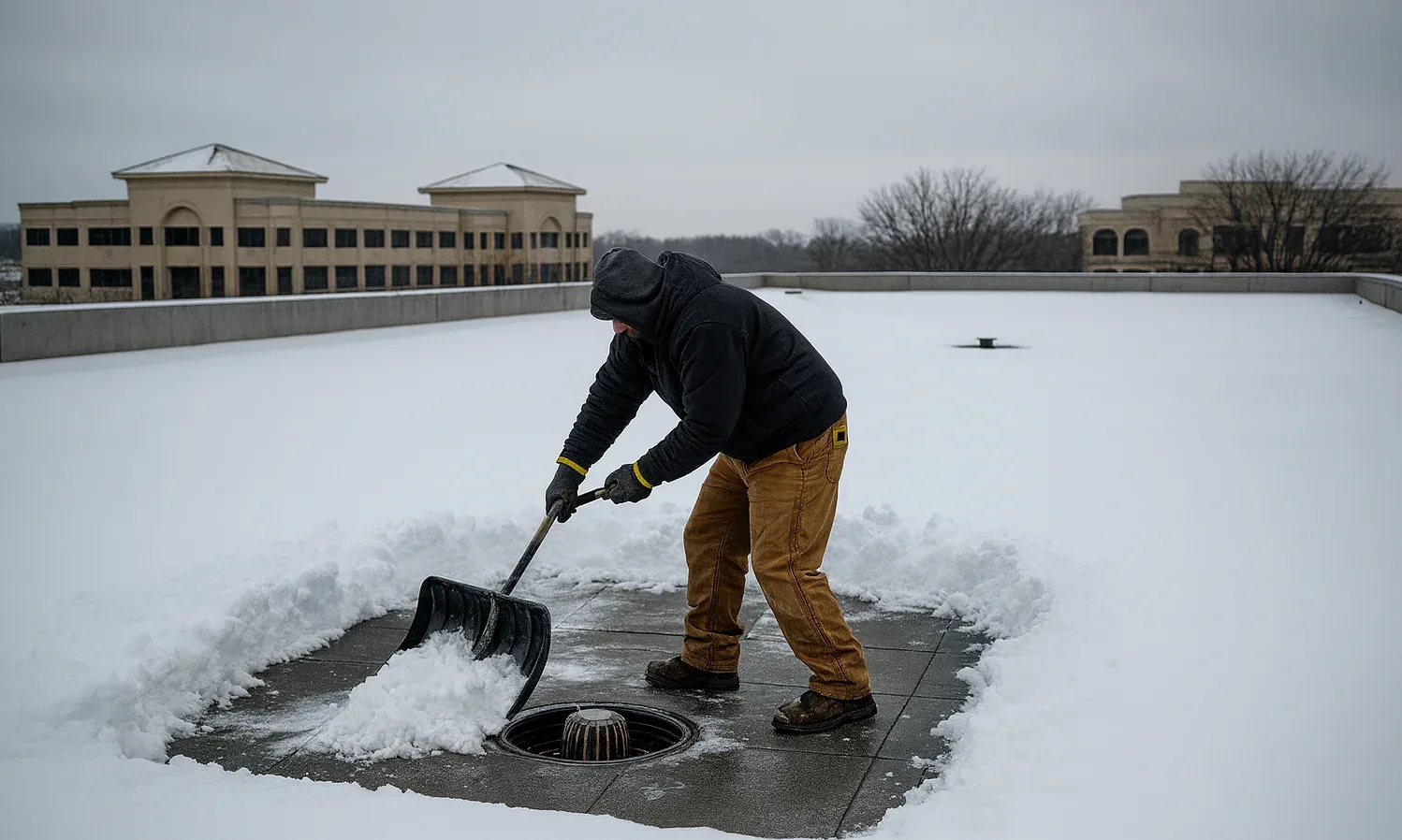
Nearby Detroit climate normals show seasonal temperature movement and winter snowfall. We use the actual surface temperature, moisture, and access conditions to set the repair window, then inspect whether the seam shows movement or loss of bond. If ponding remains against the failed lap, investigate the low point through a ponding-water assessment rather than welding over a drainage problem.
Water may move under a membrane from the opening before it appears indoors. We record the affected room, timing, weather, and equipment activity, then compare the location with roof slope, seam direction, drains, and nearby flashing. A seam above the stain may be part of the route, but an upslope curb or edge can be the actual entry. We identify the confirmed defect and any remaining uncertainty.
For active water, leak tracing can pair interior reports with the roof map. Emergency coverage is available around the clock, including holidays, to limit exposure while a permanent repair is planned. If flashing at a wall or curb also released, inspect the transition failure as a separate detail so both paths are closed.
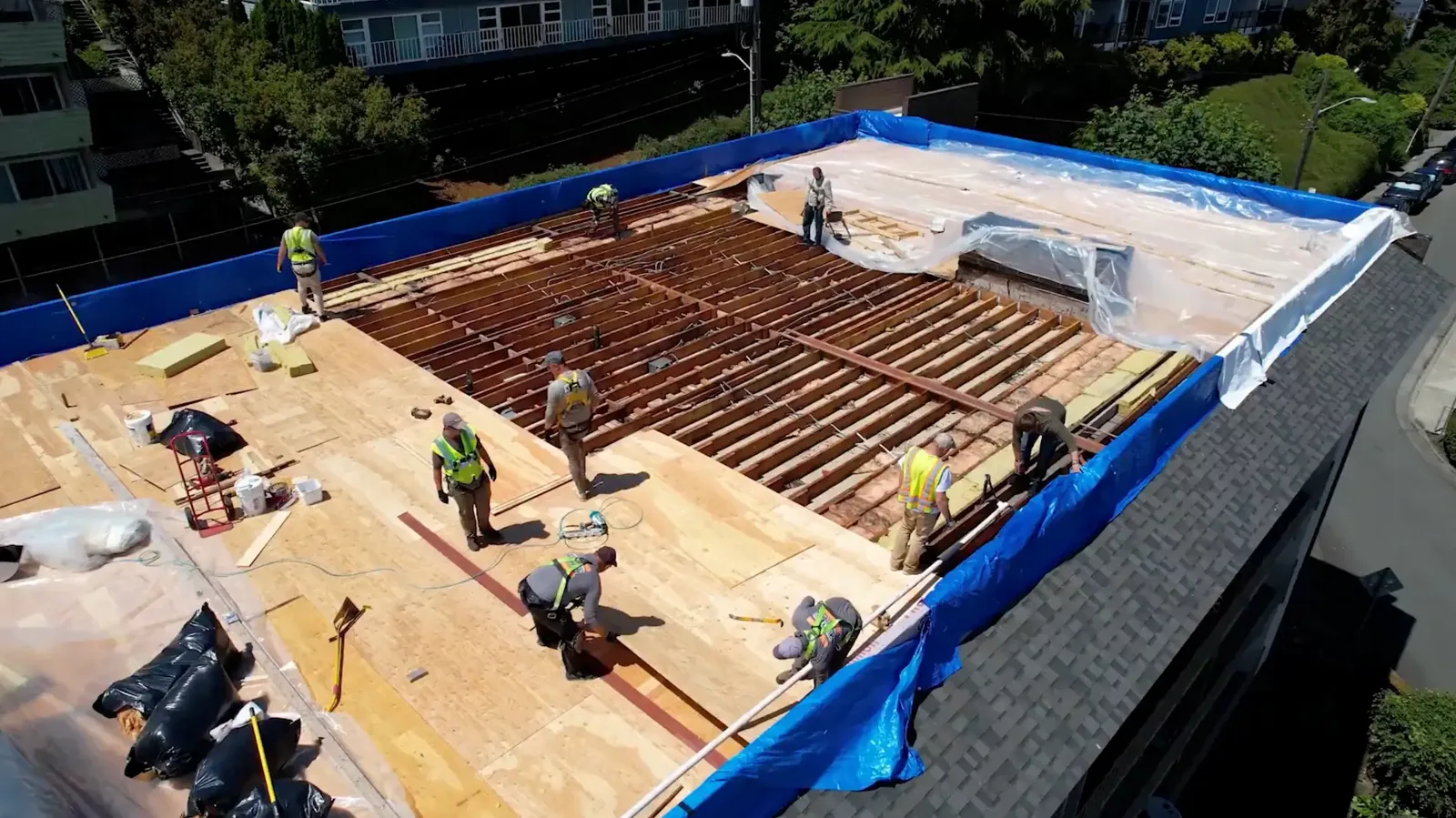
We clean and prepare the existing membrane, remove loose or incompatible repair material, and expose a sound lap. Thermoplastic seams may be reheated and rewelded when sheet condition and geometry allow. A damaged section may require a compatible patch that extends beyond the failed area. Adhesive-based systems need the specified preparation and cure conditions before the roof is returned to service.
For heat-welded material, we verify preparation and test settings on a compatible surface before running a longer weld. The seam must cool before the bond is checked. An adhesive lap requires the right surface condition and cure interval. Moisture, dirt, incompatible coatings, and old sealant can prevent adhesion, so the substrate is cleaned to a sound boundary before new material is set.
Where the membrane has shrunk, the sheet may need to be released and reset rather than covered with a narrow strip. If insulation is wet or deck material has deteriorated, the repair boundary can extend beyond the lap. We document exposed layers, replace confirmed wet material as scoped, and close the assembly before weather exposure. A broader edge movement issue can be evaluated with wind damage roof repair when attachment or perimeter restraint is involved.
After the repair, inspect the new weld or adhesive lap for continuity, width, wrinkles, fishmouths, and open corners. The verification method should suit the membrane and installation conditions. We photograph the repair and record its roof-zone location, materials, and any seam length not accessed. If another section remains suspect, list it as a separate follow-up rather than extending the completed repair without evidence.
If a seam intersects a curb or drain flashing, check both details after the new lap is complete. A continuous seam alone does not close an adjacent open corner. The report lists the tested length, repair method, surface conditions, and the next step if moisture remains unconfirmed beneath the field.
At an industrial building in the Mound corridor, equipment and production access may shape the work window. At a Golden Corridor storefront or medical property, customer and patient routes may need protection. We coordinate those conditions with the site representative. Send roof plans, membrane records, leak locations, repair photos, and access rules so the seam test and close-in plan match the roof that is installed.
Often, if the membrane and seam geometry remain suitable. We test the bond, prepare the surface, and choose a weld or compatible patch for the system.
No. It locates a loose lap. Moisture in the assembly requires a separate survey or a test opening at a selected location.
Sheet tension, movement, surface preparation, moisture, or a weak substrate can affect the lap. We inspect the surrounding system before setting the repair boundary.
The membrane type, surface temperature, moisture, and repair materials control the method. We schedule only when the required preparation and cure conditions can be met.
It follows the unbonded seam and the condition of surrounding sheet, insulation, and substrate. We inspect adjacent laps before documenting the work limit.
Send roof plans, membrane records, seam photos, leak locations, and access limits. We will identify the failed segment, check nearby attachment and moisture clues, and define a compatible seam repair.