Home / Industries We Serve / Logistics and 3PL Operators
Share roof plans, site traffic rules, loading schedules, leak locations, and operating windows. We will map access, work zones, and close-in steps before recommending repair or replacement.
Before a site visit, we confirm truck arrivals, yard traffic, dock doors, lift locations, roof hatches, and any areas where staging is prohibited. A drone flight or ladder route may need a separate time from a repair crew’s material delivery. The facility contact identifies pedestrian routes and active loading zones so access does not cross a moving trailer lane.
Mark any temporary closures on the dispatch board and identify a contact who can release the work zone. That confirmation avoids a crew arriving while the dock is active or a lift blocking a scheduled trailer movement.
Work planning should name the shift affected, the section being closed, and the point where the roof will be weather-tight at day’s end. We coordinate noisy removal or odor-sensitive work with operations and tenants. If activity continues below, occupied-building reroofing can sequence roof areas while maintaining controlled close-in. A realistic plan also accounts for the time needed to clear the dock-side staging area after material handling.
Water that appears over a dock door may have entered upslope at a seam, curb, or wall transition. We compare the report with roof slope, drain location, membrane laps, and nearby equipment. The interior point alone does not set the repair boundary. A commercial leak investigation maps the suspected route and separates a confirmed opening from a condition that needs testing.
When water is active, the first objective is to protect operations and limit exposure. Our emergency response runs around the clock, holidays included. Temporary dry-in may make the area safer while materials, insulation, and deck are evaluated for permanent repair. We record what was removed and whether wet material extends beyond the visible stain. That detail can affect both close-in and the operating schedule.
Large roof fields can hide local drainage issues. We check primary drains, overflow paths, scuppers, gutters, ponding marks, and outlet elevations. A blocked basket can slow discharge; a low deck section can keep water after the outlet clears. A recurring puddle should be compared with slope, deck movement, and insulation compression before corrective work is chosen.
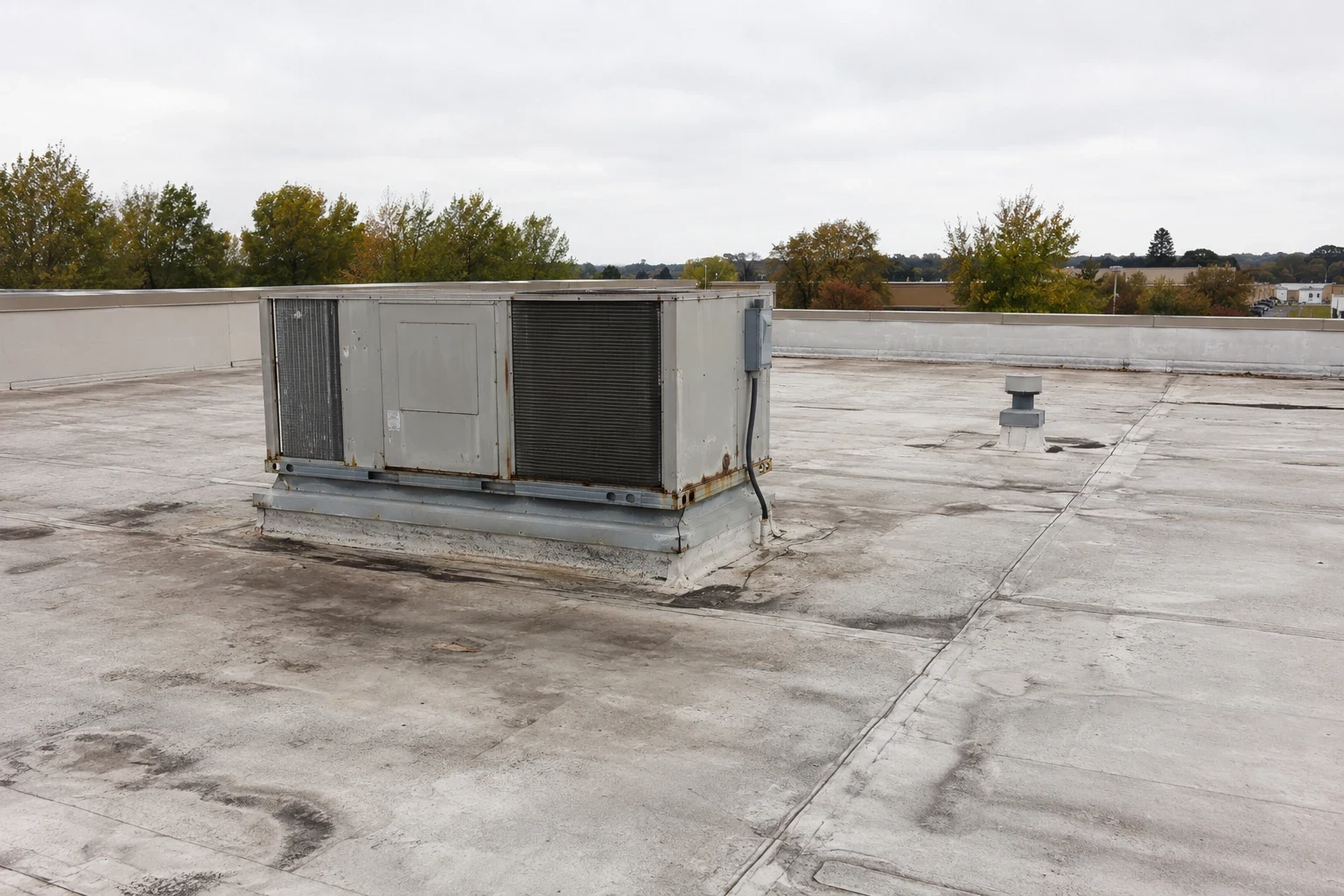
Service routes matter too. Foot traffic to rooftop units can abrade membrane surfaces or leave debris near a curb. Forklift activity does not usually reach the roof, but dock-side canopies and wall transitions can take repeated impact from adjacent operations. We inspect those edges and document any damage pattern. A hands-on roof inspection can record zones, drains, seams, equipment, and areas concealed by units or stored materials.
A localized puncture with sound surrounding layers can support a targeted repair. Broad wet insulation, repeated seam failures, or deck concerns can justify a larger investigation. We identify the field evidence and the testing that could alter the extent. That keeps a small confirmed defect from becoming an unsupported full-roof recommendation and prevents hidden damage from being ignored in a patch scope.
During a walk, we note roof access points, drain locations, dock canopy junctions, and any area hidden by equipment. For a long membrane run, a map that divides the field into usable zones can make follow-up work easier to schedule. If the report indicates an inconclusive thermal pattern or concealed wet layer, we mark the next verification step rather than folding it into a confirmed repair quantity.
Replacement can be phased by dock zone or building section if the assembly and schedule allow it. Temporary tie-ins and daily close-in should be shown on the sequence plan. A replacement scope should identify affected entrances, loading operations, material staging, and the handoff for each weather-tight area. A recover is considered only after checking existing layers, attachment, drainage, code, and the added assembly’s edge transitions.
For a 3PL operator with several buildings, group inspections by access window while keeping a separate condition record for every address. The Sterling Heights Mound Industrial Corridor is part of a broader industrial district served by Mound Road, while the Golden Corridor connects a varied commercial mix along M-59. At each distribution site, verify the roof layout, loading routes, and operating window before setting the work plan.
Nearby Detroit climate normals show winter snowfall concentrated across colder months and a broad yearly temperature range. Snow cover can obscure drains and edge details; meltwater may refreeze at an outlet when temperatures fall. Snow can obscure drains and edge details; meltwater may refreeze at an outlet when temperatures fall, so we check actual site conditions before access. We use the conditions present at the facility to decide whether access and inspection are safe.
A shared delivery yard also changes when materials can arrive and where a lift can stand. The dispatch lead can identify quiet windows, but the facility contact still approves the roof route and work limits. Staging near a fire lane or emergency access is not acceptable. We include those constraints when comparing an after-hours repair with a phased daytime scope.
We can coordinate inspections through multi-site roof programs and retain roof-zone photos and follow-up actions in each file. Operators working with landlords may use property manager coordination to align responsibilities for roof access and maintenance. A manufacturer sharing dock infrastructure may also benefit from plant roofing coordination. Share route maps, dock schedules, leak history, roof plans, and site rules so the work plan fits actual operations.
Usually, with a defined staging area, approved access route, and schedule coordinated with dispatch. Each site’s traffic and safety rules control the sequence.
We coordinate interior protection and urgent water control, then trace the roof entry path and check whether insulation or deck material is affected.
Phasing may work when the assembly, tie-ins, access, and daily close-in can maintain weather protection. We map the sequence with operations before work begins.
No. We check outlet condition, deck slope, movement, and insulation before selecting a corrective method. The visible water alone does not identify the cause.
Provide roof plans, dock and shift schedules, leak logs, recent repair notes, access restrictions, and any inventory or equipment zones needing protection.
Share roof plans, site traffic rules, loading schedules, leak locations, and operating windows. We will map access, work zones, and close-in steps before recommending repair or replacement.