Home / Roof Damage Repair / Ponding Water Roof Repair
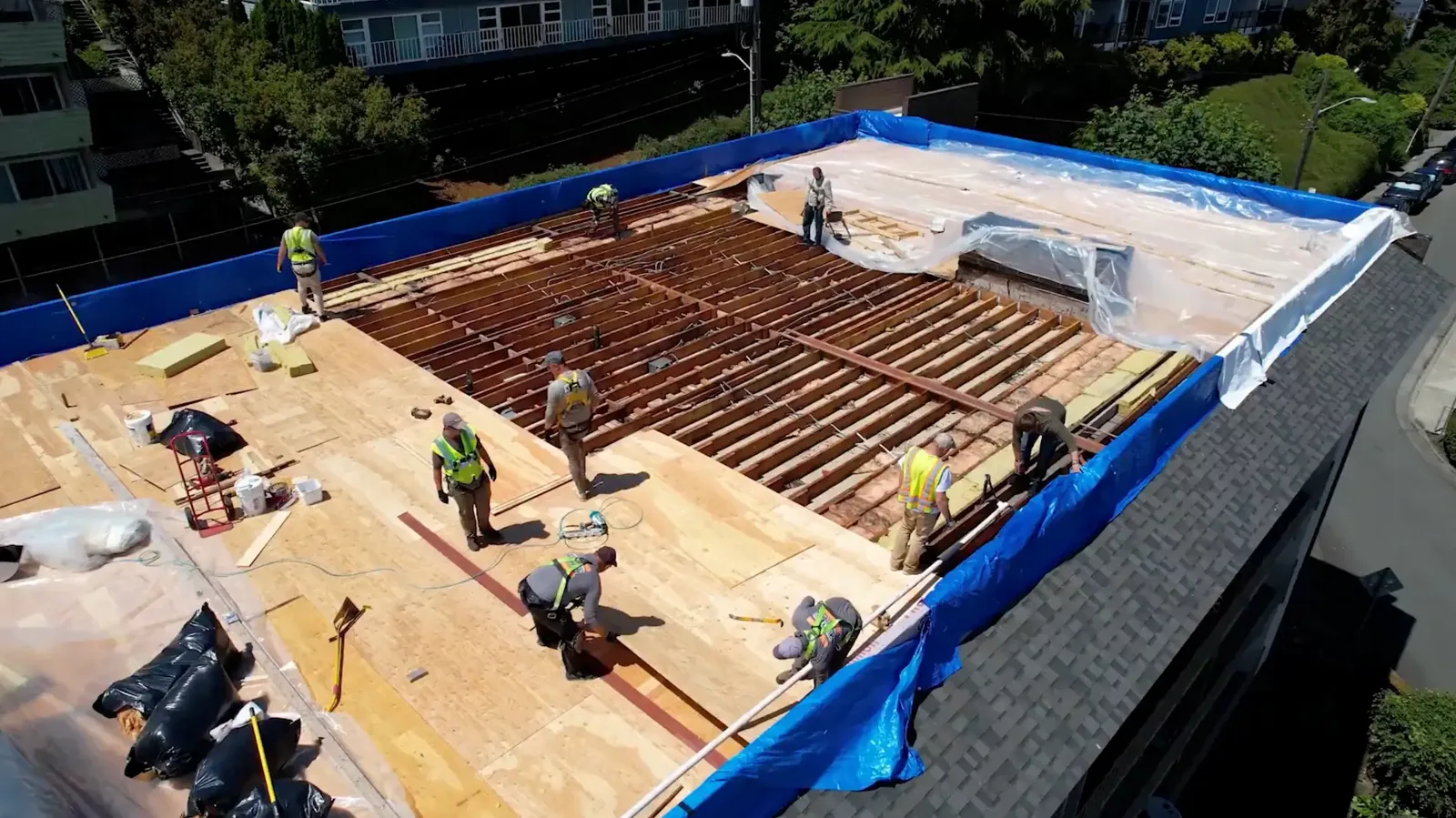
Send roof plans, drain locations, photos after rain, interior leak reports, and prior repair records. We will inspect the pool boundary, trace the drain path, and identify a correction supported by the assembly.
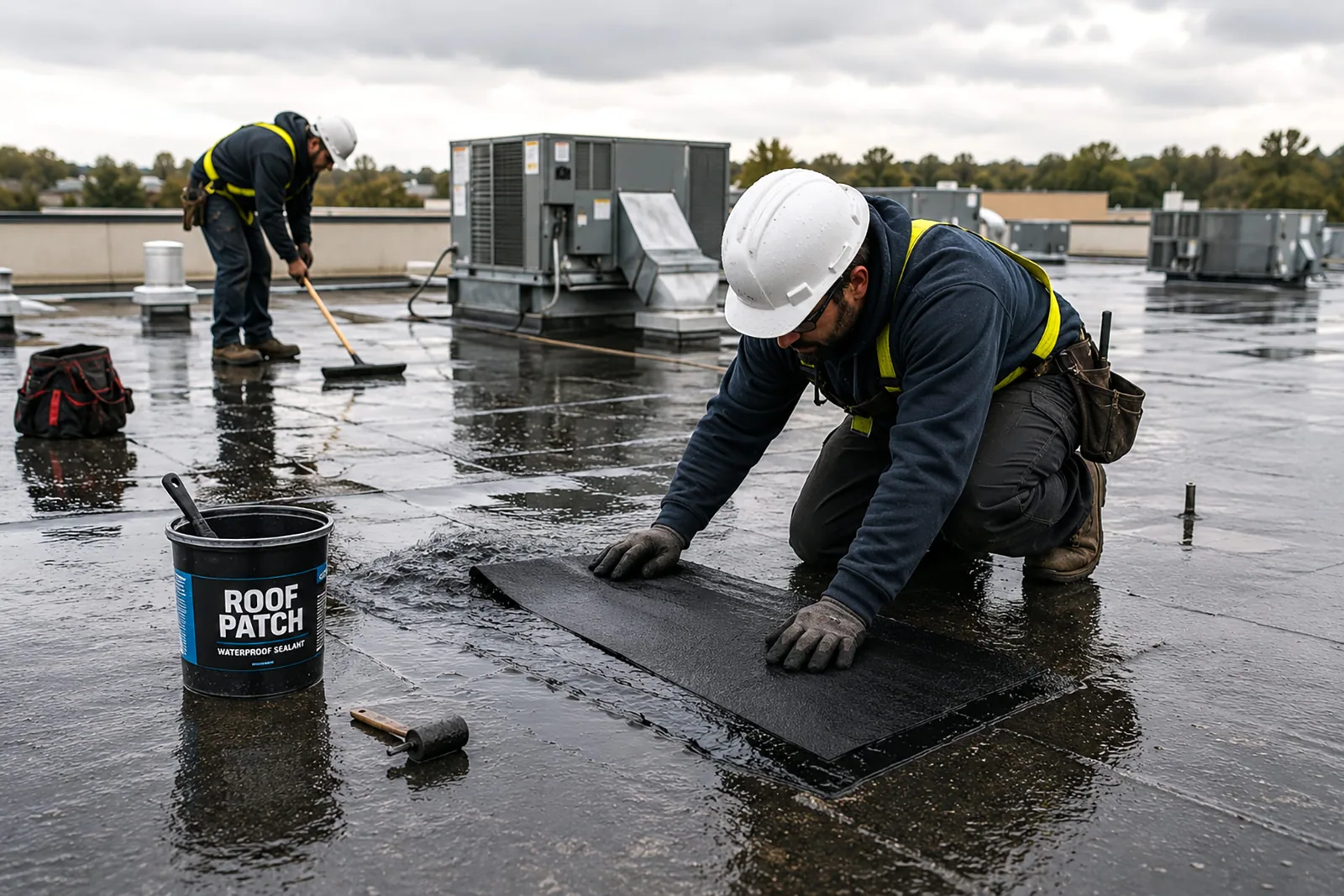
We note the pool’s boundary, depth where practical, distance from a drain or scupper, and nearby seams or transitions. A circular area at a blocked bowl suggests a different question from a broad strip that follows the deck. We clear accessible debris when authorized, then check whether water can leave the roof. If it remains after the outlet is open, the investigation shifts to slope, insulation, or deck movement.
An interior stain beneath a pond does not prove that the pool is leaking directly through the membrane. Water can travel laterally under a sheet or along a deck flute before it appears indoors. We compare the roof map with the ceiling location and nearby curbs, penetrations, and parapets. A drain and scupper inspection can identify outlet condition and the overflow route before a larger repair scope is set.
A low section may result from deck deflection, a shifted support, compressed insulation, or an installation slope that stops short of the drain. We check nearby roof transitions and look for evidence of movement, ponding lines, soft areas, and changes in elevation. If the cause is concealed, a test cut or measured survey can establish what is beneath the membrane before new material is added.
Where the membrane is intact but the plane is low, adding a drain may not solve the entire route. Check whether the bowl is below the surrounding roof, whether a cricket blocks flow, and whether a nearby wall creates a second basin. The correction should be coordinated with insulation thickness, curb clearances, and the outlet connection before the new surface is closed and the revised path is checked after installation safely.
The nearby Detroit station records a cold-season snowfall pattern and a marked change between winter and summer temperatures. That is regional climate context, not a structural load calculation for this building. During a thaw, water can remain at a low point and freeze again at an outlet or seam. We record current conditions and recommend structural review when visible movement or deflection raises a load question. Drainage correction should not substitute for evaluating a suspected structural condition.
Standing water can expose a weak seam, but it does not automatically mean the insulation is wet. We inspect membrane, laps, flashing, and drain details around the pool. If an infrared pattern or interior report points to concealed moisture, a selected moisture survey may help choose test locations. A scan identifies patterns; a test opening confirms the layers at that point.
At an approved opening, we identify the sheet, board, fasteners, and deck beneath the water line. Photograph the layers and close the opening after the condition is recorded. A single sample describes only its own roof zone. Where water has affected more than one area, comparisons should be chosen from the same assembly and relevant conditions. Any wet insulation or compromised substrate is included in the repair boundary only when confirmed.
Debris removal may be sufficient when the outlet works and roof slope is sound. A failed drain flange, open flashing, or damaged membrane can need a compatible detail repair. If a low spot results from compressed insulation or incorrect slope, correction may require tapered insulation or work at the deck. We identify which condition is present before adding material or changing the drainage plane.
If cleaning restores flow but the depression remains, record the water line again after the next suitable rain. Compare the same roof-zone landmarks, outlet, and nearby seam. That repeat observation helps separate a temporary debris blockage from a persistent low area. We do not add a layer simply to hide a pond; the correction should preserve the intended discharge route and avoid creating a new dam at the edge.
When the affected area is localized, flashing repair or seam correction may close the entry route while retaining the surrounding assembly. If repairs repeat or moisture extends across broad sections, compare the scope with a replacement evaluation only after the system is mapped. For immediate water entry, emergency roof service can protect the interior while the drainage correction is developed.
After a repair, we check the outlet, overflow route, patched area, and adjacent seams. A flow test may help confirm that water moves to the intended discharge when conditions and site controls permit. It does not replace review of concealed slope or structural movement. We photograph the completed boundary and list any section that could not be inspected because of equipment, snow, or unsafe access.
A drain repair also needs a sound tie-in. We inspect the flange, membrane termination, bowl attachment, and surrounding insulation before closing the detail. If a drain body or leader is damaged, that work may need coordination with the plumbing or site-drainage scope. We label that boundary so the roofing repair does not promise work outside the roof assembly.
For an occupied business near the Golden Corridor, drain work may need a short, controlled access window. A Mound corridor manufacturing site may require coordination with yard activity or plant schedules. These local operating contexts help set the visit, while roof drawings and observed conditions set the technical scope. Share roof plans, drainage maps, photos after rainfall, leak locations, prior repair notes, and site restrictions so we can trace the low point and identify the next check.
No. We check the drain, deck elevation, insulation, slope, and nearby transitions first. The correction follows the confirmed cause.
It can stress a seam or drain detail, but the interior symptom may be offset. We map the likely path and verify the entry point where possible.
Only if obstruction is the cause. If water remains with an open outlet, we evaluate slope, deck, and insulation before selecting corrective work.
No. Nearby Detroit climate normals are regional context. The building’s design information and current roof condition govern any load review.
Use one when moisture or a concealed layer could change the repair boundary. The opening confirms conditions only at its own location.
Send roof plans, drain locations, photos after rain, interior leak reports, and prior repair records. We will inspect the pool boundary, trace the drain path, and identify a correction supported by the assembly.