Home / Commercial Roofing Services / Commercial Roof Repair
Send roof plans, leak locations, assembly records, and site access limits. We will inspect the detail, verify the water path, and define a repair boundary that can be closed securely.
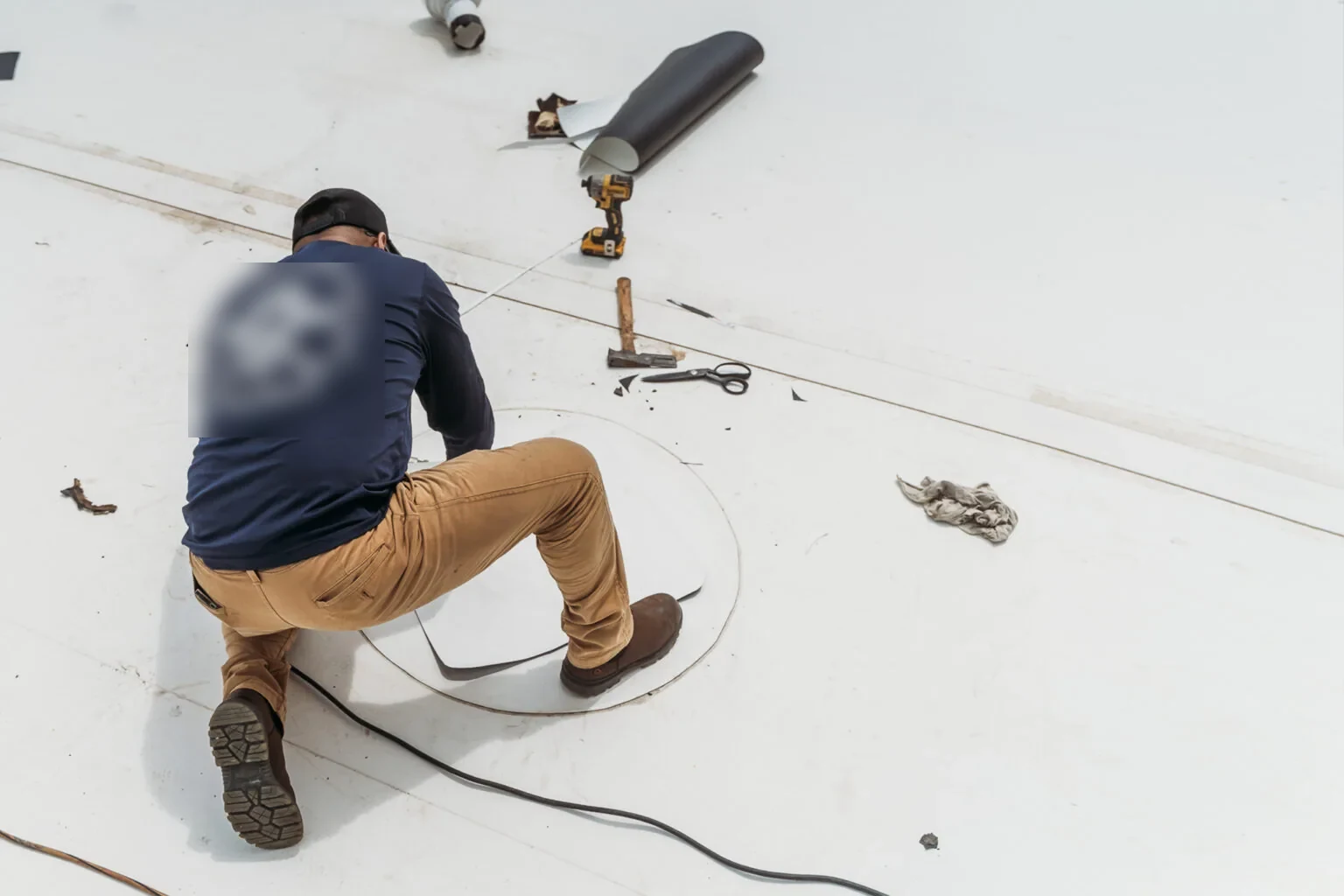
A split lap, puncture, loose fastener, failed curb corner, or wet insulation calls for a different repair boundary. We photograph the condition, record its location, and check the material surrounding it. A patch should reach sound roofing rather than stop at a visible crack if the bond has already weakened nearby. We also note prior repairs and whether they are holding.
Water can travel laterally under a membrane or along a deck flute. An interior stain may be several feet from the entry. We compare the report with slope, drain path, penetrations, and wall transitions before opening the assembly. A moisture scan or test cut is used where its result would change the repair plan. We log each test location and restore the opening during the same shift after recording the layers.
If the deck is soft or insulation is wet, the repair may need to extend beyond the surface defect. We identify how far the damage reaches and keep dry material protected. That separates a localized detail repair from a larger correction and prevents covering a wet layer that will continue to affect the roof.
We identify whether the roof is TPO, PVC, EPDM, modified bitumen, built-up, metal, or a coated assembly. Seam preparation, attachment, and flashing methods differ. A repair must bond to the actual surface and fit the installed system. If a previous coating or overlay hides the original layer, a test cut can establish the build-up before material is selected.
At a curb, we check flashing height, corner seams, metal counterflashing, and the support beneath the unit. At a roof-to-wall transition, we inspect termination, fasteners, and movement at the joint. A patch over a loose edge or moving support will not stabilize the detail. If another trade must adjust equipment, that step is coordinated before final closure.
For membrane work, the repair uses compatible sheet and seam treatment. Metal repairs address panel laps, fasteners, and edge attachment. Where the repair crosses an insulation or cover-board change, we verify that the substrate is secure. A TPO roof system or a rubber membrane assembly needs its own preparation and patch sequence.
A leak at one seam can be fed by water entering upslope at a curb or edge. We trace the path toward drains and overflows instead of widening the repair without a reason. A blocked outlet can keep water against a seam; a clear outlet does not rule out an open flashing. The scope names each confirmed source and the work needed to restore the route.
A thaw followed by refreeze can leave ice at a shaded outlet or metal transition. We document what is visible at the visit, inspect seams and fasteners where access is safe, and mark concealed or snow-covered areas for a later check rather than infer the damage.
Condensation may look like a roof leak near cold ducts or equipment. We compare the timing and moisture pattern with the roof detail and mechanical records. Where evidence points to HVAC or plumbing, that trade boundary is stated separately. Confirmed drain and scupper work can be coordinated with membrane repair when both affect the water path.
We cut back damaged roofing until the membrane or metal, insulation, and substrate provide a sound tie-in. Wet insulation is replaced where confirmed. The replacement layers are secured and flashed to match the roof system. If a test reveals a wider wet area, we photograph it and pause at a protected edge while the owner reviews the added scope.
Temporary protection can stop active water while permanent repair is scheduled. The record identifies what was covered and what still needs testing. A small surface patch is not enough when the deck is deteriorated or the flashing moves. A larger project may require selective removal or commercial roof replacement if inspection shows repeated failures or widespread damage.
For isolated seams, penetrations, and perimeter defects, the work can often be completed in a defined area without opening the entire roof. The repair record shows the boundary, materials, test results, and any condition that was outside the authorized scope.
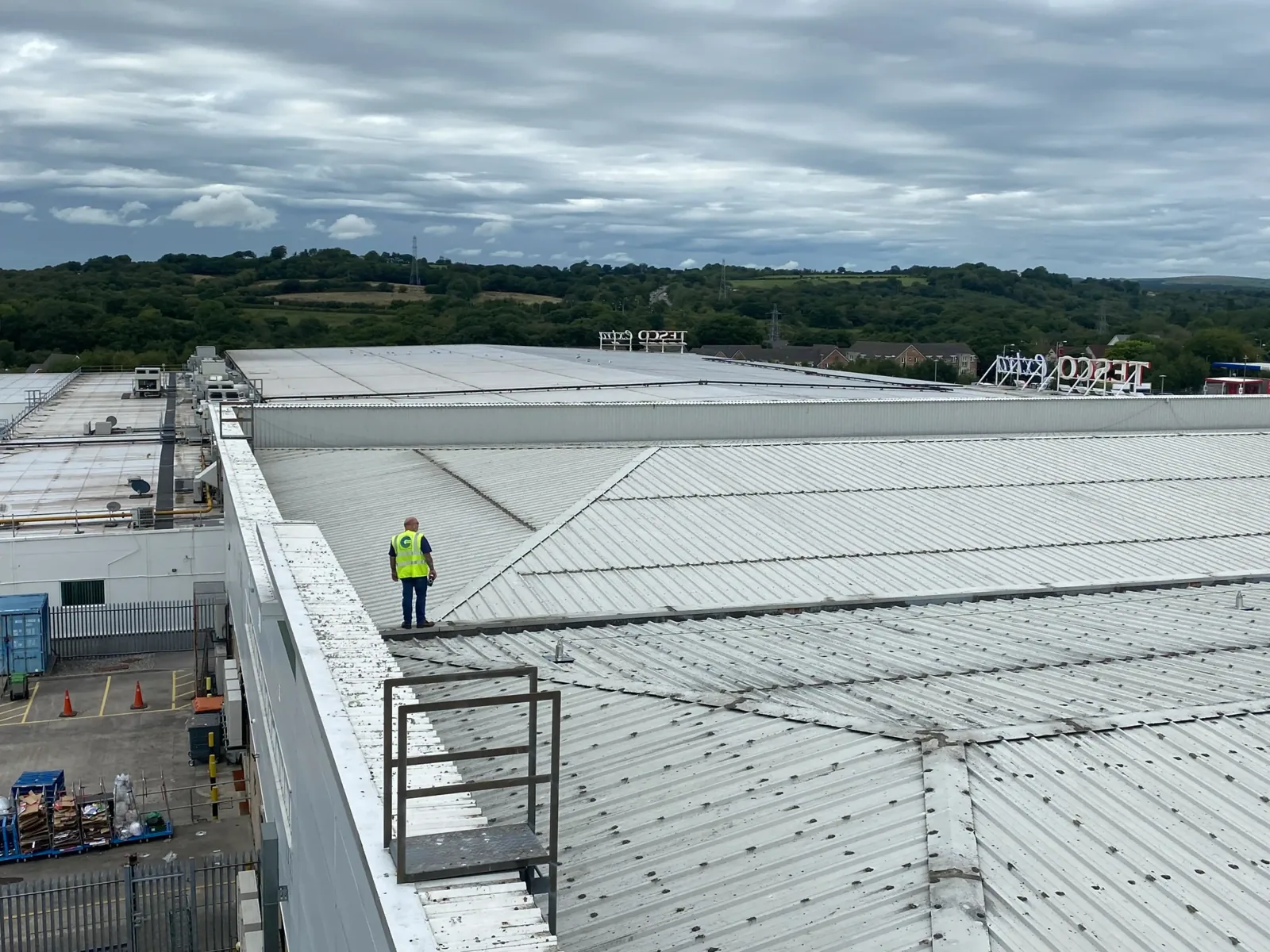
We coordinate roof access, lift locations, equipment shutdowns, deliveries, and occupied space below with the site contact. A service call at a production building may need a different work window from a storefront or office. The owner identifies routes and equipment that must stay clear. We set a small enough opening to complete and secure within the shift.
If weather or concealed damage changes the timing, temporary protection covers the exposed area while the scope is reviewed. Before leaving, we check membrane edges, loose materials, drains, and access paths. On a facility near the Sterling Heights Mound Industrial Corridor, local manufacturing context informs coordination, but the property's actual schedule determines staging.
For an occupied building with several repairs, a maintenance program can track repeat findings and access dates. This helps separate urgent leak work from a planned repair list.
The closeout identifies the roof zone, failure, assembly, repair limit, materials, moisture result, and any item left for another trade. Photos show both the detail and the larger roof area. The owner can compare a later leak report with the prior repair without treating the full roof as one undifferentiated surface.
Send roof drawings, leak locations, prior repairs, equipment records, and access requirements. We will inspect the related seam, curb, drain, or edge and return a repair scope tied to the confirmed condition. A roof condition report can keep recurring repairs and follow-up observations in one facility record.
The next step may be a seam repair, curb flashing, drain correction, or a test cut. If a broader failure is found, the report explains why the scope needs to expand. Work proceeds only within the approved boundary, with each opening secured against weather at close-in.
It can when the failure is isolated and the surrounding assembly is sound. We inspect the bond, substrate, and water path before setting the patch boundary.
A scan may locate a test area, but an opening confirms the layers at that point. We replace wet material where inspection verifies it.
We identify the installed system first. The seam preparation, flashing, and patch material must suit that assembly.
Often, with a defined work zone and close-in limit. We coordinate access and equipment restrictions with the site contact.
Provide roof plans, the leak location, prior repair notes, equipment records, and access rules. Mark the area below that needs protection.
Send roof plans, leak locations, assembly records, and site access limits. We will inspect the detail, verify the water path, and define a repair boundary that can be closed securely.