Home / Service Areas / Mound Industrial Corridor
Share facility access rules, roof plans, production constraints, leak history, and past repair records. We will inspect the roof area and detail that affect the next repair or capital decision.
Wind pressure and thermal movement work on roof edges differently from the central field. We inspect coping cleats, splice plates, fastener spacing, sealant joints, fascia, and membrane terminations for looseness or separation. A lifted metal piece may reflect a failed attachment, movement at a joint, or water behind the assembly. We check the adjoining substrate and look for staining below before assigning a cause. Patching the visible corner without verifying the attachment can leave the opening active.
Roof elevations, equipment zones, and loading areas vary by building. The site contact identifies safe roof routes, production restrictions, and overhead activity. We mark the inspection boundary and avoid placing materials where they interfere with operations. If a repair needs a metal fabricator or another trade, the scope states the handoff instead of treating every perimeter condition as a membrane-only repair.
A coping and edge-metal repair should show the length, joint locations, attachment work, and tie-in to the roof membrane. For an exposed metal assembly, a retrofit metal review checks existing panel condition and support before a new system is considered.
Water at a low point is a finding, not a diagnosis. We locate drains, scuppers, overflow routes, and tapered transitions, then check whether the outlet is obstructed or the roof plane holds water. A blocked strainer may be cleared; recurring ponding may involve deflection, insulation layout, a compressed patch, or a restricted pipe. We photograph the source area and the route to the outlet so the repair scope does not jump from a puddle directly to replacement.
Nearby Detroit normals place most of the region's typical snowfall between November and April, with roughly 45 inches in a year. Snow can cover drains and seams; meltwater can refreeze at an outlet or along a metal transition. We record access limits and return when the roof can be inspected safely. During freeze-thaw periods, a ponding-water assessment should compare the low area, drain function, and nearby seams rather than promise that a surface treatment will flatten the roof.
Where a pipe penetration or curb intersects the water path, we inspect the flashing and membrane separately. A flashing repair addresses the verified opening; it does not correct a blocked drain. Keeping those work items distinct makes closeout easier to verify.
Before a recover or broad repair, we review available drawings, past reroof records, warranty documents, and repair history. We confirm visible membrane type, attachment pattern, insulation transitions, penetrations, and deck edges. If the existing assembly is unknown, a test cut can identify layers and reveal moisture where a sample will change the scope. We record the opening, photograph each layer, and close the approved cut the same day.
A dry, secure assembly with compatible details may support a recover. Wet insulation, a weak bond, multiple concealed repairs, or deterioration at a deck transition can favor removal. A recover feasibility review examines layer limits and edge restraint before a second roof is proposed. If removal is indicated, a replacement scope accounts for tear-off, deck repair allowances, temporary dry-in, and the day's close-in boundary.
Michigan's current commercial code editions are the 2021 Michigan Building Code, effective April 9, 2025, and the 2021 Michigan Commercial Energy Code, effective April 22, 2025. Those statewide dates belong in project coordination, not as a blanket claim that each roof repair triggers the same upgrade. We confirm the applicable code review and insulation requirements for the actual work before material selection and permitting.
A roof opened above manufacturing equipment creates a direct exposure below. We divide removal into areas the crew can dry in during the shift and identify weather limits before work starts. The sequence includes material staging, debris removal, equipment clearances, protected paths, and who can authorize access. If operations cannot stop, noisy work, lifting, and penetrations need time windows agreed with the facility. Access changes or hidden deck damage can alter the plan, so the proposal states those dependencies.
For a leak that is active during production, temporary protection can reduce further interior exposure while the permanent repair is traced. Our 24-hour emergency response is available year-round, including holidays. An emergency cover is a temporary measure, not proof that the roof is repaired. We document what was protected, what remained inaccessible, and when a full inspection can proceed.
Closeout should name each repaired area, materials and detail used, photographs, and any remaining observation. If equipment work disturbed a curb or conduit support, we record the interface with the responsible trade. A phased occupied-building reroof can track these handoffs across successive areas without leaving the production team to reconstruct the sequence later.
Repair cost follows the verified quantity and conditions: membrane layers, wet insulation, deck repairs, perimeter length, penetrations, access, disposal, and shift restrictions. Timing also depends on weather exposure and any equipment or production coordination. We separate measured work from concealed-condition allowances and explain what observation would trigger each allowance. If moisture extent is uncertain, testing can be priced as a decision step rather than hidden inside a broad replacement number.
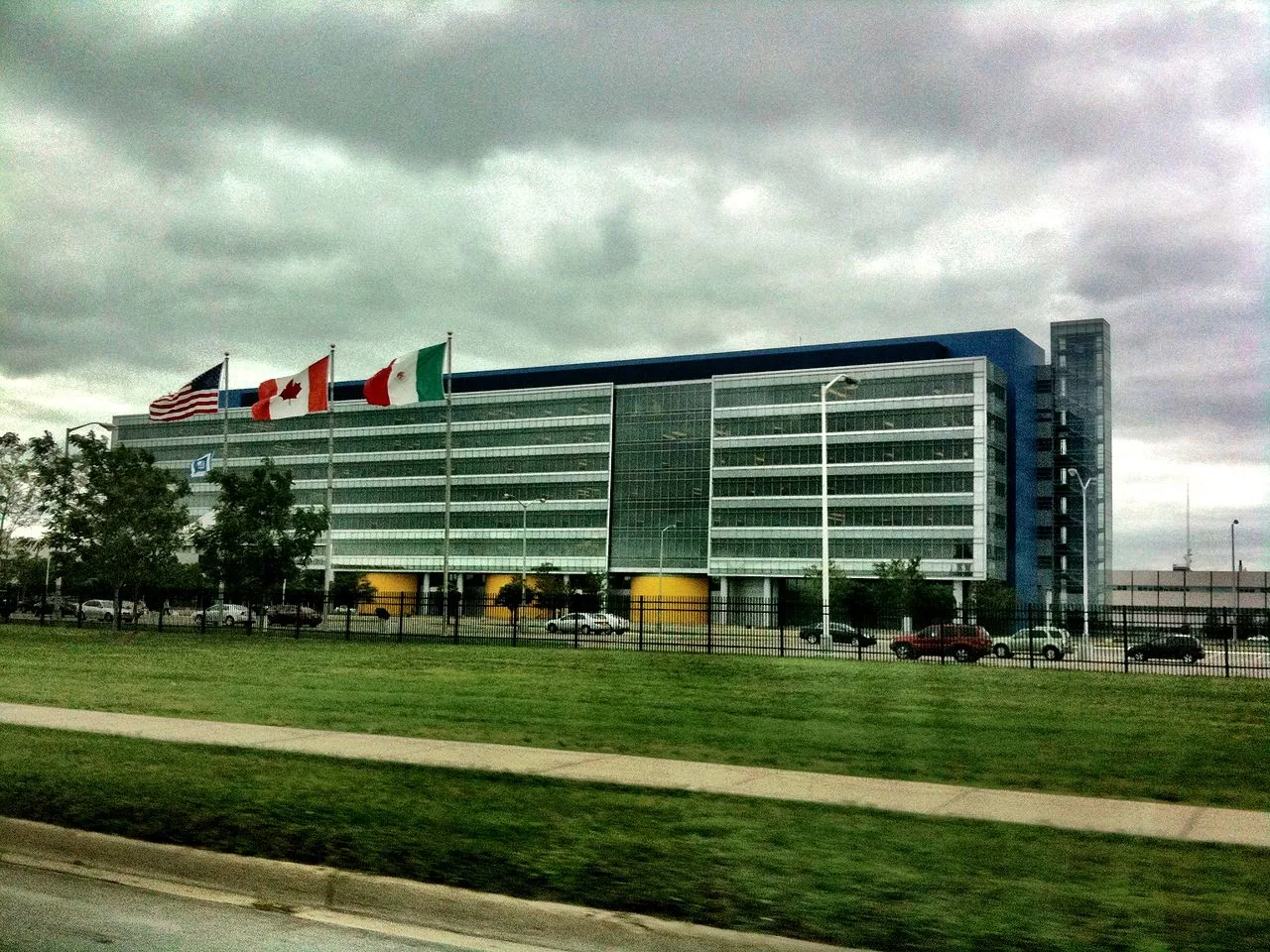
A photo-based condition report can connect findings to roof areas, limitations, and next actions. For a facility portfolio, roof asset records preserve inspection and repair history for later budgeting. The Sterling Innovation District between Van Dyke Avenue and Mound Road was described in a 2022 council record as nearly 30 million square feet of industrial and high-tech space; that figure describes district floor area, not a roof. The Golden Corridor is another distinct business district in Sterling Heights, but its profile cannot establish the assembly or use of a Mound facility. For each facility, we document the installed assembly, access route, and repair scope from the roof plan and field findings.
Provide roof plans, leak dates, prior repair records, facility schedules, and access procedures. We will identify the suspect edge or drain area, inspect the adjoining layers and details, and return a written scope that separates confirmed work from any remaining test.
It proves that the edge needs inspection. We check fasteners, cleats, joints, substrate, and nearby membrane before identifying the mechanism or repair.
It can when access, protection, work hours, and close-in limits are planned with the facility. The daily area must be small enough to secure before exposure changes.
Test when hidden moisture, deck condition, or existing layers could change the decision. We choose locations that answer a specific scope question and document the results.
Only if the outlet is the cause. We trace the roof plane and drain path; persistent water can also involve slope, deflection, insulation, or a restricted connection.
Tear-off depth, deck repairs, weather, equipment clearances, production windows, staging, and the area that can be closed in per shift all affect sequencing.
Share facility access rules, roof plans, production constraints, leak history, and past repair records. We will inspect the roof area and detail that affect the next repair or capital decision.