Home / Commercial Roofing Services / Commercial Roof Leak Repair
Send the interior leak location, roof plan, recent timing, prior repair notes, and access rules. We will trace the water path, protect active areas, and document the permanent repair boundary.
We record the room, ceiling mark, date, recent weather, and whether water is still entering. Timing can distinguish an active roof leak from a recurring stain or mechanical condensate, but it does not prove the source. We compare the interior location with roof plans, deck direction, slope, and nearby penetrations. Water may move along insulation or a structural flute before it shows below.
On the roof, we inspect the likely path: seams, patches, curbs, vents, parapets, drains, and overflow outlets. We note wet insulation where visible and use a moisture scan when it can narrow the search. A test cut answers a specific question about layers or moisture. We choose its location from the mapped route and close the opening within the work window.
If several rooms report water, each stays a separate location until roof evidence links them. A leak over a mechanical room may have a different route from one below a parapet. The record labels confirmed entry points, related conditions, and any area that remains untested.
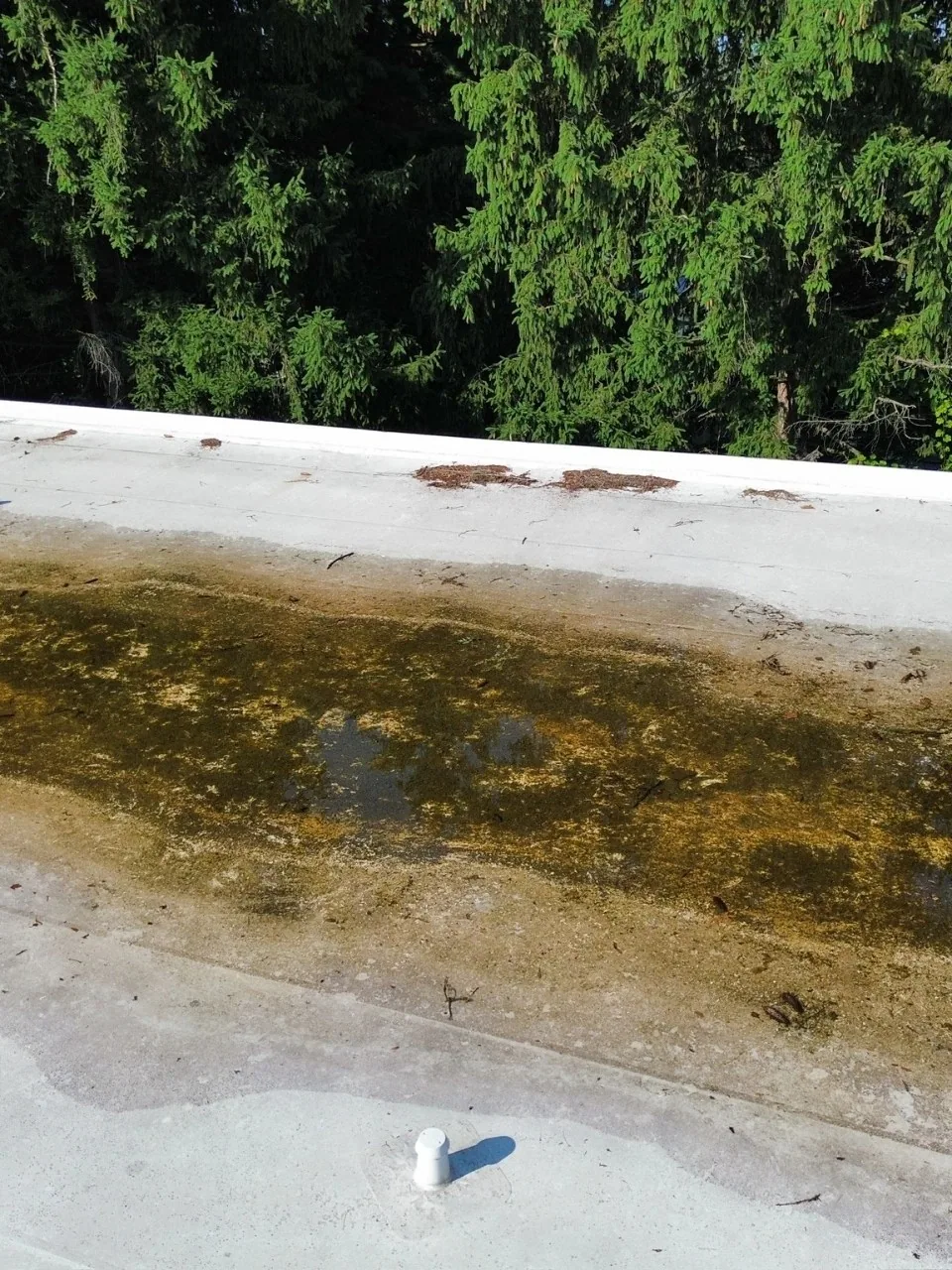
A failed seam, open curb corner, loose fastener, drain flange, or wall flashing can admit water. Once below the membrane, it can move across insulation or along the deck and appear indoors at another point. We inspect upslope details and the low area together. A dry first test does not justify widening the opening blindly; we adjust the search to follow the assembly.
Detroit monthly normals document recurring winter snow and a marked change from cold-season temperatures to summer heat. That record helps frame seasonal access planning; it does not locate the opening on an individual roof. Meltwater can refreeze at a shaded outlet or edge transition, then back up against a seam. We inspect the actual drain, overflow, and membrane condition.
Condensation and plumbing leaks can resemble roof entry. We compare moisture patterns with HVAC, plumbing, and roof records. If the source is outside the membrane, we identify what the other trade needs to check before roofing closes a penetration. Confirmed drain and scupper repair can be included when the outlet is part of the water path.
When water is still entering, the first step is to limit damage below and protect the roof opening. We coordinate with the facility contact to safeguard equipment, stock, records, and occupied rooms. Temporary covers, targeted membrane patches, or a controlled drain correction may be used according to the roof and weather. The protected location is photographed and recorded so temporary work is not mistaken for the permanent repair.
For active leaks, crews can respond at any hour, including overnight and on holidays. Dispatch timing depends on safe access, weather, and site rules. We confirm where crews can enter, what areas are restricted, and who can authorize temporary measures. If the building must remain open, the work zone is kept clear of public paths and critical operations.
Temporary protection is only the first decision. Once the roof is safe to test, we inspect the assembly and define the lasting repair. If hidden moisture or deck damage changes the boundary, the owner receives the finding before permanent work expands.
We identify the membrane or metal system, attachment, insulation, deck, and previous repair history. TPO, PVC, EPDM, modified bitumen, built-up, and standing-seam roofs do not use one shared patch method. The repair needs compatible material, sound substrate, and a secure transition to the existing assembly. A coating over a seam is not a substitute for an open lap or saturated insulation.
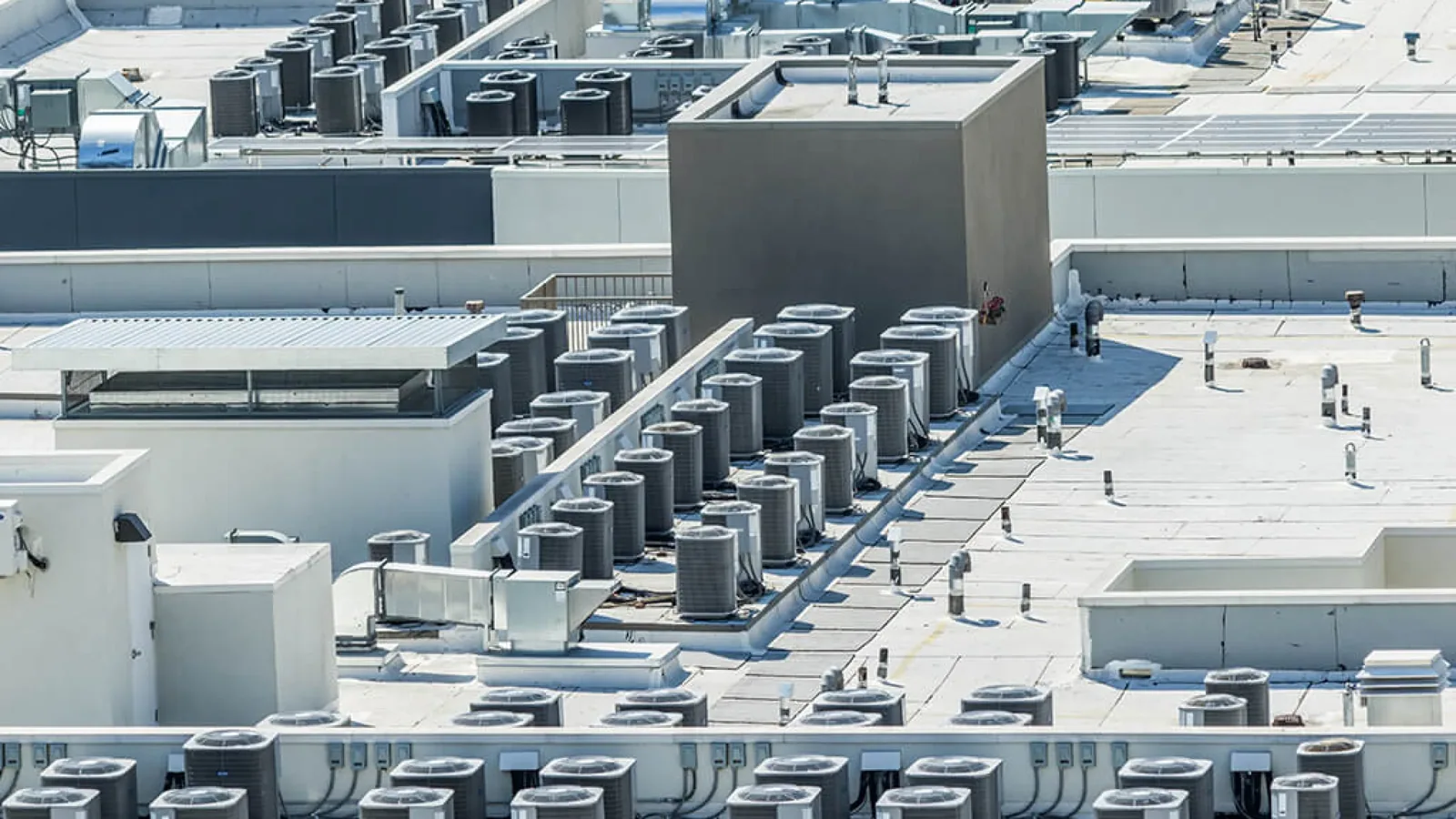
At a curb, we check flashing height, corner seams, fasteners, and movement at the equipment support. At a wall, we inspect termination and counterflashing. If a unit or pipe must be moved, that work is coordinated with the mechanical contractor before roofing closes the opening. We identify abandoned penetrations and previous patches that may affect the water path.
Where layer count or moisture changes the scope, a test cut is documented before the repair proceeds. The close-in photo shows the prepared substrate, replacement layers, and finished detail. For a broader localized scope, commercial roof repair addresses confirmed membrane, flashing, and seam failures beyond the urgent water stop.
We remove failed material to a sound edge, replace wet insulation where verified, and rebuild the membrane or metal detail to match the system. At a drain, the repair preserves flow into the bowl. At a curb, flashing ties into stable metal and substrate. The boundary follows testing, not the outline of the interior stain.
After installation, we check seams, fasteners, terminations, and adjacent drainage. If conditions prevent permanent work that day, the area remains temporarily protected and the return scope is recorded. The owner receives photos and notes about any unresolved mechanical or structural item.
A repeated leak can point to a larger assembly problem. The commercial roof inspection can map nearby areas and repair history before the next scope is set. If deterioration extends beyond a local detail, we compare repair with replacement using the verified condition.
We coordinate roof access, ladders or lifts, interior protection, and any equipment shutdown with the site contact. Production lines, patient rooms, tenant entrances, and deliveries may require different limits. The facility identifies sensitive areas and routes that must remain clear. The repair boundary is planned so an open section can be secured before the shift ends.
Nearby Detroit winter normals describe seasonal conditions, but they do not predict the workday. We check the actual roof surface and forecast before opening material. If wind, snow, or rain prevents a sound close-in, the work waits or remains under temporary protection. We verify drains and remove loose material before leaving the area.
For repeat leaks across a facility, a condition report can keep test locations and completed repairs in one record. This helps maintenance staff distinguish a new event from water that followed an earlier path.
The closeout lists the interior report, roof zone, assembly, confirmed entry point, test result, materials, and repair boundary. Photos show the detail and its position on the roof. The record separates confirmed roofing work from a plumbing, HVAC, or wall condition that needs another trade.
Send the affected room, leak timing, roof plan, prior repair notes, equipment records, and access rules. We will trace the route and tell you whether the condition supports a localized repair, temporary protection, or a larger scope. A 24-hour emergency response can protect active areas before the permanent repair is ready.
Each next step follows the evidence. It may be a seam patch, drain correction, curb rebuild, test cut, or broader inspection. We state what the roof confirms and what remains unknown, then close the approved work area against weather.
Water can move beneath the membrane or along the deck before reaching the ceiling. We trace the assembly and test likely entry points before choosing a repair boundary.
Yes. Temporary protection can limit damage while the roof is made safe to inspect. We document the covered area and identify the lasting correction separately.
It can. We compare the moisture pattern with roof details and equipment records, then identify plumbing or HVAC coordination if the source is outside the roofing system.
Around-the-clock response is available, including weekends and holidays. Safe access and site restrictions determine how crews reach and protect the roof.
Send the affected room, time and weather notes, roof plan, repair history, equipment records, and site access rules. Mark any area below that needs protection.
Send the interior leak location, roof plan, recent timing, prior repair notes, and access rules. We will trace the water path, protect active areas, and document the permanent repair boundary.