Home / Roof Systems / KEE Commercial Roofing
Share system records, prior patches, roof drawings, and access instructions. We will check the membrane product, seam bond, attachment, and drainage, then recommend compatible work based on the verified assembly.
KEE is a PVC-alloy membrane category, but products and accessories differ. We review labels, submittals, maintenance records, and repair material where available. A field sheet should not be identified solely from color or appearance. Confirming the product helps select a compatible cleaner, flashing, and weld procedure. If documentation is missing, we note what can be established and avoid using a material that could compromise the existing membrane.
We inspect the surface for abrasion, punctures, cracking, seam separation, chemical residue, and patches with lifted edges. At a roof curb or pipe, we follow the membrane turn into the flashing. A defect near an exhaust or equipment line may have more than one cause. We document the source only when the observed evidence supports it, and we consider a test cut if hidden moisture changes the repair boundary.
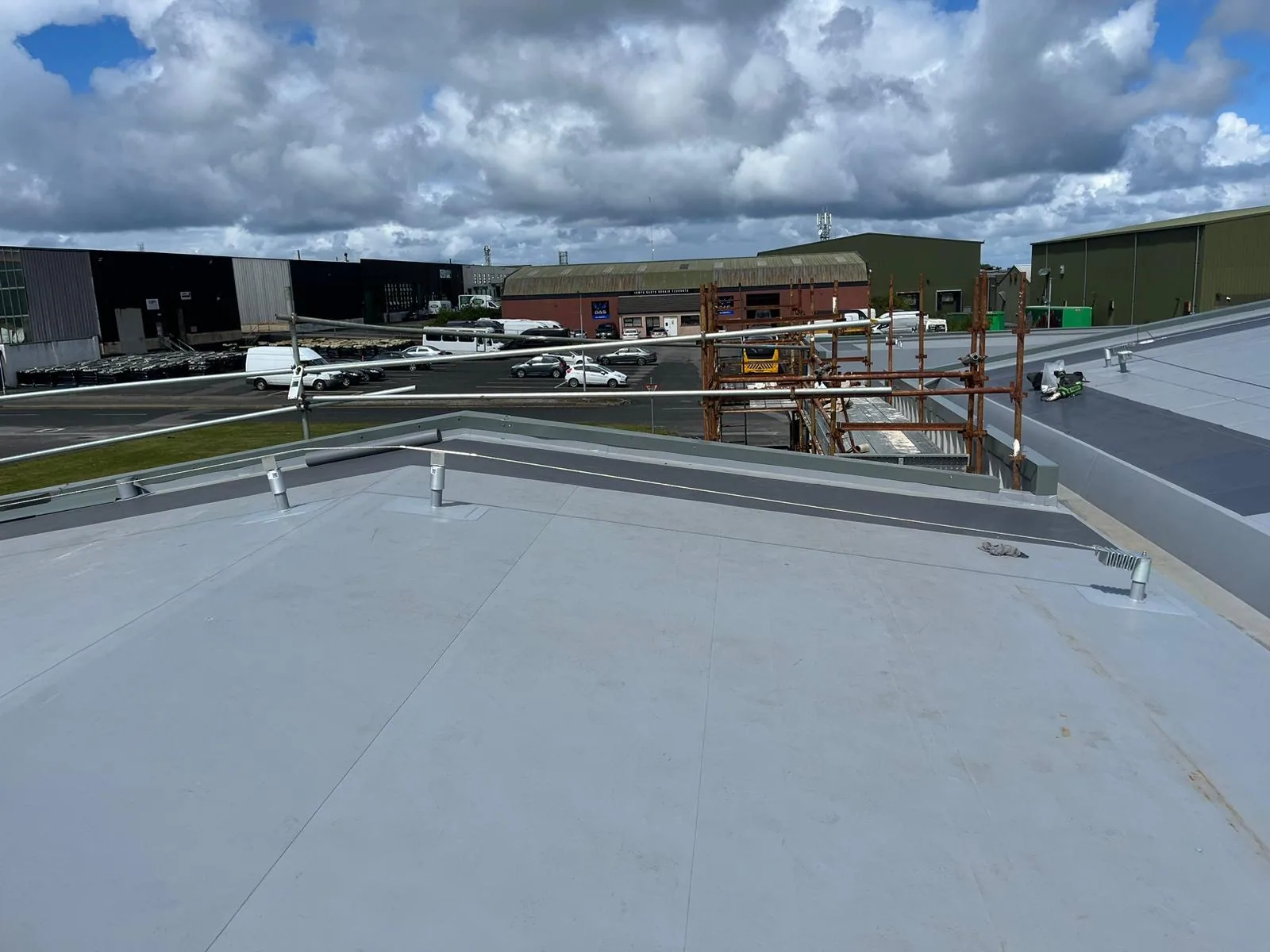
KEE seams are heat-welded. A probe can identify an unbonded stretch, but the cause may lie in surface contamination, temperature, pressure, or movement at the detail. We check the lap, nearby sheet, and prior patches as a continuous area. Repairing only the visible curled corner can leave weak bond beside it. The seam map records where separation starts and ends so the new weld can reach sound material.
Seasonal thermal movement can load the connection between the sheet and a rigid curb or wall. Nearby Detroit normals show winter cold and July average highs in the low 80s Fahrenheit. These station values help frame regional exposure, not predict a specific roof temperature. We look for actual shrinkage, stress wrinkles, loose edge restraint, or water entry. The result determines whether a seam repair is enough or whether attachment and perimeter details also need attention.
The KEE membrane may be mechanically attached or adhered over insulation and cover board. We identify the attachment pattern, sheet movement, substrate condition, and deck transitions before patching. A repair depends on a stable base. If the board is wet, crushed, or loose, the membrane can move again after a new weld. We use test cuts where an opening can confirm the layers or moisture and change the work scope.
At curbs, drains, and parapets, the detail must suit both the specific membrane and the geometry. We check corners, terminations, welds, and fasteners. If an existing repair uses an unknown accessory, we may need a compatibility check before adding more material. For comparison during a larger project, we can assess PVC and TPO as separate systems; material selection follows documented requirements and roof condition rather than a generic ranking.
Water that remains at a curb or drain can stress a seam even when the membrane is intact. We trace slope into the bowl, check the overflow, and inspect where the sheet terminates at walls and metal edges. If the outlet is blocked or the deck has settled, a weld repair alone will not correct the cause. We can coordinate drainage repair or edge-metal work with the membrane scope where inspection confirms the connection.
Sterling Innovation District and Velocity SmartZone are named places in the local business base. Their presence does not indicate roof construction. On a specific building, we mark the outlet, low point, seams, and transition conditions that were actually observed. A report can then distinguish a repeated KEE issue from an isolated repair or a drainage problem shared by a larger roof section.
We prepare the KEE sheet under the selected product requirements, remove material that will not bond, and weld compatible flashing over a sound boundary. The corner shape, lap direction, and surface cleanliness matter. After the work, we inspect and probe the completed seam where appropriate. If wet insulation or a damaged deck is present, that material is addressed before the membrane closes over it.
Work timing depends on dry surface conditions and installation temperatures. We define a protected boundary if weather changes during an open repair. If the roof needs broad work, we compare localized repair with replacement or a recover after verifying moisture and attachment. A coating is considered only if the specific assembly and product support it; it is not a general substitute for restoring KEE seams.
The inspection record should identify the KEE product where known, seam condition, attachment, test locations, moisture findings, and repair boundary. We include contextual photos at the curb, drain, or edge where the membrane changes direction. Any compatibility question or missing product record is stated before a material is specified. That gives the owner a usable basis for approval and future maintenance.
Send system submittals, previous repair details, leak locations, roof plans, and access instructions. We will confirm the field condition and explain what can be repaired locally. A condition report can retain the photos and follow-up items by roof zone. The next inspection can compare a repaired seam with the documented baseline rather than repeat the same initial investigation. We also note any nearby detail that could stress the repair again. That makes future checks more specific and repeatable, and improves planning.
KEE is part of the PVC-alloy membrane family, but individual products and accessories can differ. We identify the installed sheet before choosing repair materials.
A repair can be welded when the surrounding sheet is sound and the surface can be prepared. We map the full loose area and check the substrate before closing it.
Product records, field identification, and the manufacturer’s applicable repair instructions guide material choice. Unknown products require verification before work.
The answer depends on the system, duration, and details exposed to water. We inspect slope, seams, outlets, insulation, and deck to identify a roof-specific correction.
Send the membrane submittal, repair history, leak locations, and roof access rules. We can then identify the product and focus inspection on its seams and transitions.
Share system records, prior patches, roof drawings, and access instructions. We will check the membrane product, seam bond, attachment, and drainage, then recommend compatible work based on the verified assembly.