Home / Roof Systems / Built-Up Commercial Roofing
Send roof plans, past repair records, leak locations, and access rules. We will inspect surfacing, plies, drainage, and representative test locations, then define a repair or replacement scope.
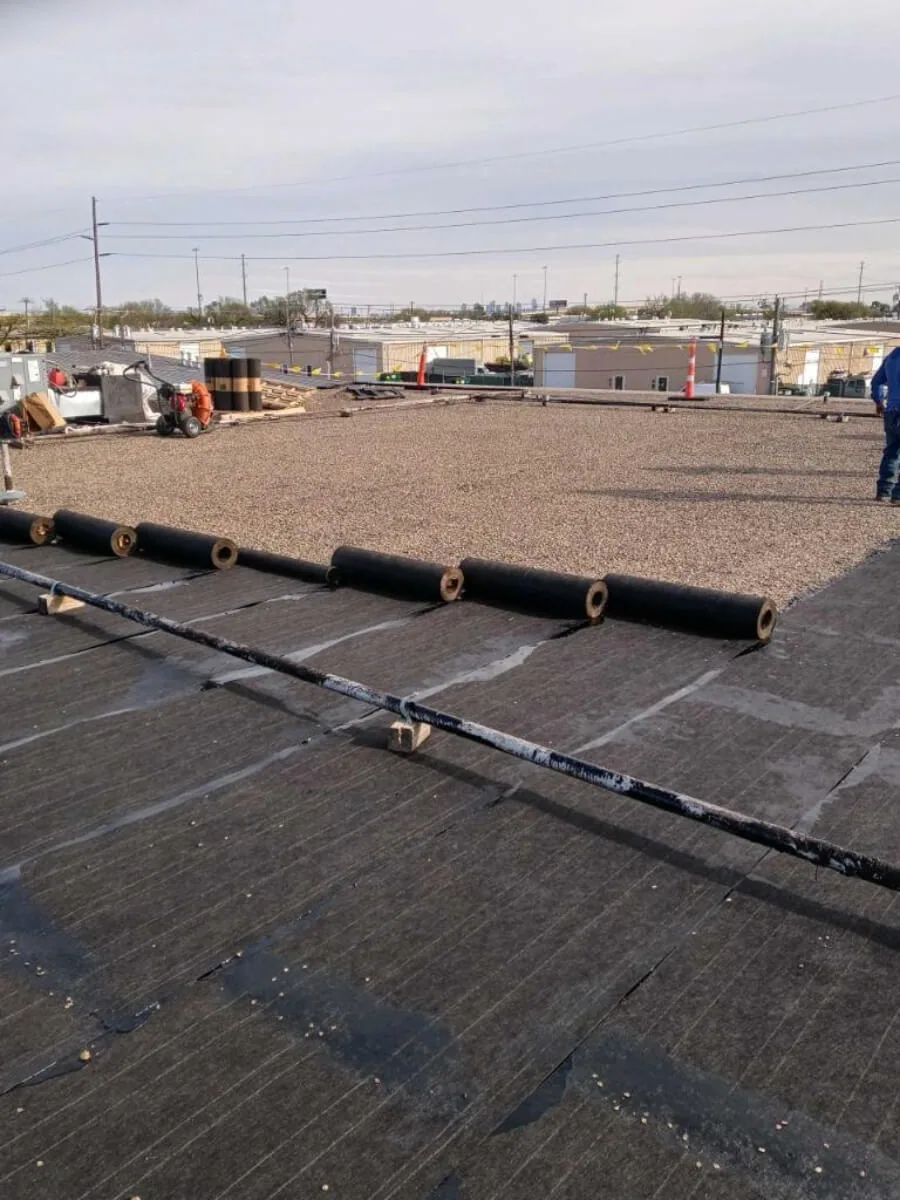
A built-up roof may have a gravel surface, mineral cap sheet, or another specified finish over multiple plies. We look for bare asphalt, displaced aggregate, blisters, ridges, cracks, open flashing, and signs of traffic. Gravel can protect the membrane but also hide a small split or collect at a drain. We move material only where inspection needs access and record what is uncovered before repair.
Water stains below the roof do not show which layer failed. We map the interior mark, compare it with roof slopes, and inspect nearby drains, curbs, and seams. A test cut can identify the layer count, insulation, and deck where the visible surface cannot answer the repair question. The cut is placed to help distinguish localized damage from moisture that has spread through the assembly.
Built-up roofing relies on continuous plies bonded with asphalt or the specified system materials. If water enters through a split, it may travel between layers. A blister can hold air or moisture, so we inspect its bond and surroundings before opening it. Adding another surface layer over a wet assembly can trap moisture and obscure deterioration. We verify what is below the cap before recommending a recover.
Nearby Detroit normals show snow and cold through much of the winter, followed by summer temperatures in the 80s. The seasonal cycle can stress exposed edges and transitions, but a normal does not prove damage at a building. We check for actual cracking, wet material, loose flashing, and blocked drainage. The repair timing also depends on safe access and the conditions needed for asphalt or compatible repair materials.
Older roofs may have several overlays or repairs that do not appear in the latest drawing. We use records and test cuts to establish the layers, insulation, attachment, and deck. This matters before adding material: extra weight and height affect roof edges, curbs, drains, and equipment bases. If the deck is deteriorated or insulation is wet, the proposed repair must address that condition rather than simply cover it.
At parapets and penetrations, the plies turn into flashing that must remain continuous. We inspect cant transitions where present, counterflashing, metal terminations, and the substrate supporting each detail. A patch needs a sound bond and a defined lap. For a broader replacement comparison, we may review modified bitumen or EPDM after the roof records and exposure needs are clear.
Aggregate can migrate toward a drain and reduce the opening if the basket or bowl is not maintained. We inspect the outlet, strainer, overflow, and nearby low point, then check whether water is being directed toward the intended route. If the surface stays wet after the outlet is clear, we evaluate slope and deck conditions. A drainage fix may require outlet work or tapered correction rather than a new surfacing layer.
Sterling Innovation District and Velocity SmartZone are identified in the city’s business-development context, while Ford’s local operations are tied to axle and transmission work. These facts describe the local economy, not the roof construction of any named property. We inspect each built-up assembly at its own address and tie photos to the drain, edge, and test-cut locations. That record helps facility staff coordinate roof maintenance with other work.
We remove loose aggregate or failed surfacing at the repair area, expose sound material, and rebuild the plies or flashing with compatible components. The method follows the assembly and project conditions. Where wet insulation is present, affected material is removed before restoring the membrane. We close the repair with the specified protective surfacing and check that the transition sheds water without leaving a raised dam.
Hot asphalt and heat-based methods require careful sequencing and site controls. We confirm access, fire-safety requirements, ventilation concerns, and weather limits before work. If the area cannot be completed in one shift, we leave a stable, watertight boundary and document the remaining step. Widespread moisture or layer failure may call for replacement rather than repeated local patches. Removal and disposal, access for hot materials, roof height, and how much surfacing must be restored all affect the sequence. We identify those work drivers before mobilization so the crew can stage the correct materials and secure a watertight daily boundary.
The report should identify surface type, apparent layer count, test-cut findings, moisture, deck condition, and drainage defects. It distinguishes observed conditions from areas concealed beneath aggregate or overlays. Photos and a marked plan help the owner track each repair and plan follow-up. We can note access limits and identify which areas need a second look before the next budget review and annual planning cycle. For larger properties, roof condition reports can carry that record into future inspections and budget decisions.
Send the roof plan, repair history, known assembly records, interior leak locations, and access requirements. We will inspect surfacing and representative details, then explain whether local repair, recover, or replacement fits the verified layers. The proposal will state which sections were examined and what additional test would change the recommendation.
Yes. We inspect the surface and details, then move surfacing only where needed to examine a defect. Test cuts can verify layers and moisture at selected locations.
Not necessarily. A blister may contain air, moisture, or both. We check bond and nearby layers before opening it.
A recover requires a sound, dry assembly with suitable attachment and clearance at edges and drains. We confirm layer count and moisture first.
Water movement, surface slope, or displaced aggregate may carry it toward the outlet. We check the strainer and surrounding low point and clear the route before recommending correction.
Provide original specifications, past reroof records, repair notes, and roof plans. Test cuts can confirm what those records do not show in the field.
Send roof plans, past repair records, leak locations, and access rules. We will inspect surfacing, plies, drainage, and representative test locations, then define a repair or replacement scope.