Home / Property Types We Roof / Manufacturing Plant Roofing
Send the roof plan, equipment or process records, leak location, and shift restrictions. We will inspect the assembly and identify a repair sequence that accounts for the building’s operations.
We ask where water appears, what equipment or material sits below, and whether the leak follows a production event, washdown, or weather. The sequence can help narrow the search, but it does not prove the cause. Water may travel along a deck flute, insulation joint, or structural member before reaching the work floor. We mark the reported location and compare it with roof seams, curbs, drains, and expansion transitions.
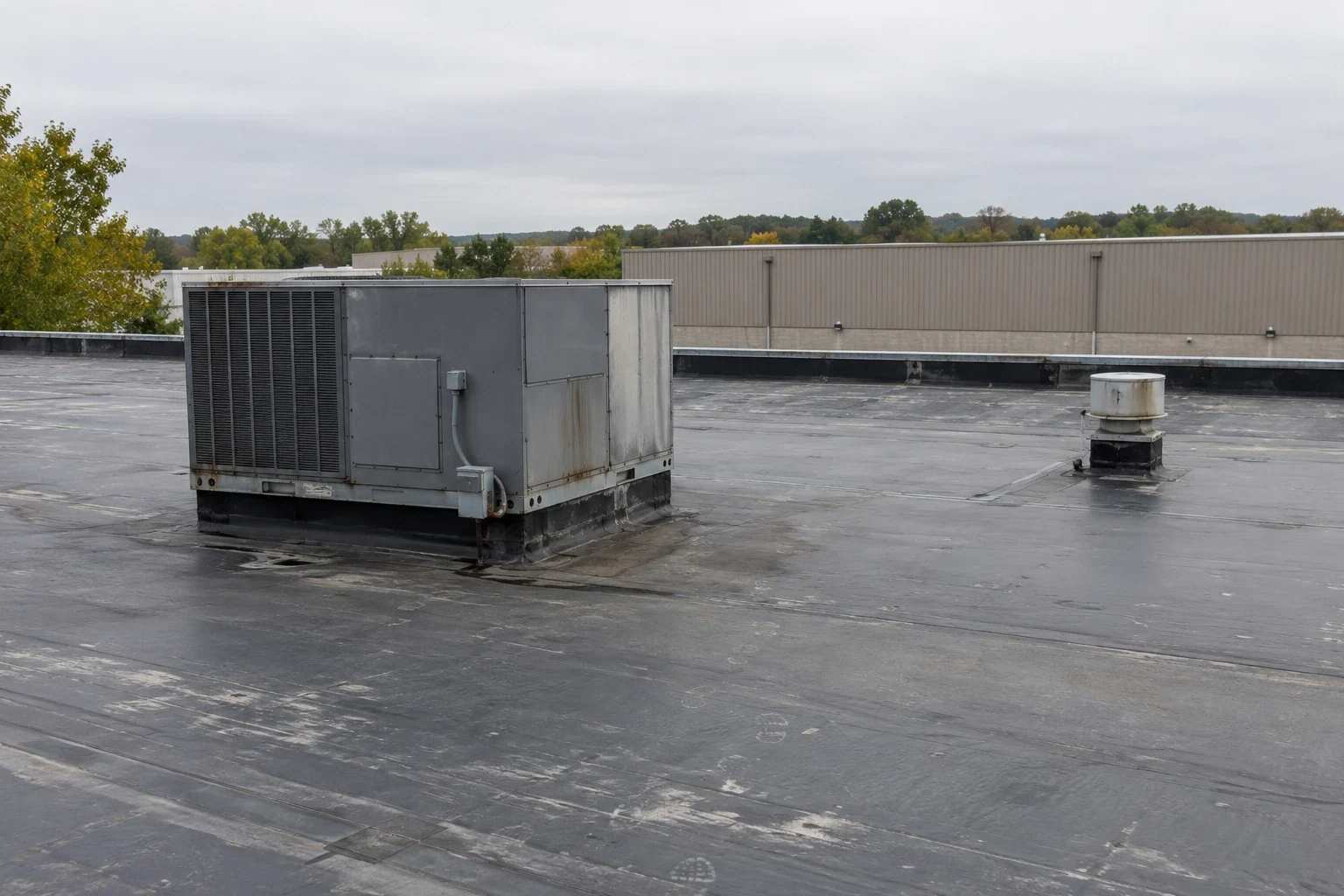
Manufacturing roofs often have rooftop units, exhausts, make-up air, pipe racks, or process lines. We inspect flashing and supports around the items relevant to the leak. A loose support can move a pipe against its boot; a failed curb corner can send water below the membrane. If records are incomplete, a targeted test cut may confirm whether insulation is wet or the deck is affected.
Water can move beneath the roof sheet before it reaches the plant floor. We trace slope and seams to drains, check for blocked outlets, and inspect the uphill side of equipment curbs. Interior condensation or process humidity can resemble a leak. We compare the location and timing with the roof condition, then document which evidence supports an exterior opening and what requires an interior review.
Nearby Detroit normals show cold winters and warm summer highs. The regional range informs seasonal roof access, but facility conditions depend on the actual roof and interior operations. Heat or moisture from a process can affect the assembly differently from outdoor exposure. We ask about operating temperatures, ventilation changes, and roof exhaust routes when they bear on the inspection. We do not infer those conditions from the company or industry name.
We identify the installed roof system, attachment, insulation, and deck before selecting a repair. TPO, PVC, EPDM, modified bitumen, built-up, and metal systems require different preparation and flashing. Chemical or exhaust exposure may also affect material selection, so the owner’s process information matters. If a patch is applied to an unknown or contaminated surface, it can fail at the bond rather than the original leak.
At process pipes and equipment supports, the roof and mechanical interfaces must be coordinated. We check whether the base is stable, whether lines move, and whether service access can be preserved after the flashing closes. A production change that adds equipment may require new penetrations, but roof structure and attachment capacity need appropriate review. For loading and storage wings, warehouse roof conditions or distribution-center access needs may be evaluated separately from the process area.
Before work, we confirm shift schedules, equipment shutdown limits, access routes, lift positions, material staging, and the interior areas that require protection. A roofing crew cannot choose a production stop on its own. The facility contact identifies when a noisy operation can pause and what equipment cannot be exposed to dust, debris, or water. A clear work plan assigns who approves a change once tear-off reveals a hidden condition.
We phase removal so each opened area can be inspected and closed against weather within the shift. If wet insulation or deck damage extends beyond the planned boundary, we protect the opening, photograph it, and present the added condition before moving farther. This keeps production planning connected to the actual assembly and creates a defined stop point for the owner’s decision.
We inspect drain bowls, scuppers, overflow paths, gutters, and wall terminations around the affected area. Process exhaust may release residue near a curb or wall; we document what is present and confirm material compatibility before repair. A blocked drain or low spot may send water toward a seam that appears defective. We can include drain correction or perimeter work when those details are part of the route.
The Sterling Heights Mound Industrial Corridor contains a major concentration of industrial and high-tech space. We tie findings to a specific plant, roof section, and process area rather than treating the corridor as one building stock. That helps a facilities team compare work across locations without carrying a detail from one roof onto another that has a different deck, system, or operating schedule.
We remove failed membrane to a sound boundary, inspect exposed insulation and deck, and rebuild the detail with compatible materials. If a process line or support is unstable, the mechanical correction must occur before final flashing. The proposal identifies which trade handles removal, equipment movement, attachment, roof repair, and startup. Clear responsibilities prevent a finished membrane from being cut again by later equipment work.
If water enters a production area, a crew can arrange temporary containment at any hour, including weekends and holidays. The plant contact receives the protected location and the test or trade question that remains. That stabilization is documented separately from the permanent roof scope. Once the repair is complete, we check seams, penetrations, drains, and the close-in boundary, then provide photos for the maintenance record.
The report identifies the roof area, defect, test findings, process interface, drain path, and work limits. It states whether the cause was confirmed or whether further monitoring or testing is needed. Photos connect the roof detail to the affected interior zone. The owner can then plan repair timing around production without treating an unresolved stain as a verified membrane defect.
Send roof plans, assembly records, process or exhaust information, leak locations, access instructions, and the production schedule. We will inspect the reported zone and define a repair with secure phases. A condition report can retain photos and maintenance history, while capital planning can compare larger roof needs by building and system.
Some exhaust or chemical exposure can affect roofing materials, but the product and actual discharge matter. We inspect residue and confirm the process details before selecting a repair.
We coordinate access, noisy work, protection, and daily close-in with the facility contact. The work boundary follows production limits and the condition found after opening.
Yes. We compare moisture timing, location, and roof evidence, then identify when an interior humidity or ventilation review is needed.
We inspect the proposed penetration and support requirements, coordinate the mechanical work, and detail the membrane around a stable interface. Structural questions go to the appropriate design professional.
Send roof drawings, system records, process or exhaust details, prior repairs, access rules, and shift limits. Those facts help define a safe work window and compatible materials.
Send the roof plan, equipment or process records, leak location, and shift restrictions. We will inspect the assembly and identify a repair sequence that accounts for the building’s operations.