Home / Roof Damage Repair / Wind Damage Roof Repair
Send roof plans, dated photos, leak locations, repair history, and access rules. We will inspect the attachment and nearby details, then document temporary needs and a supported repair boundary.
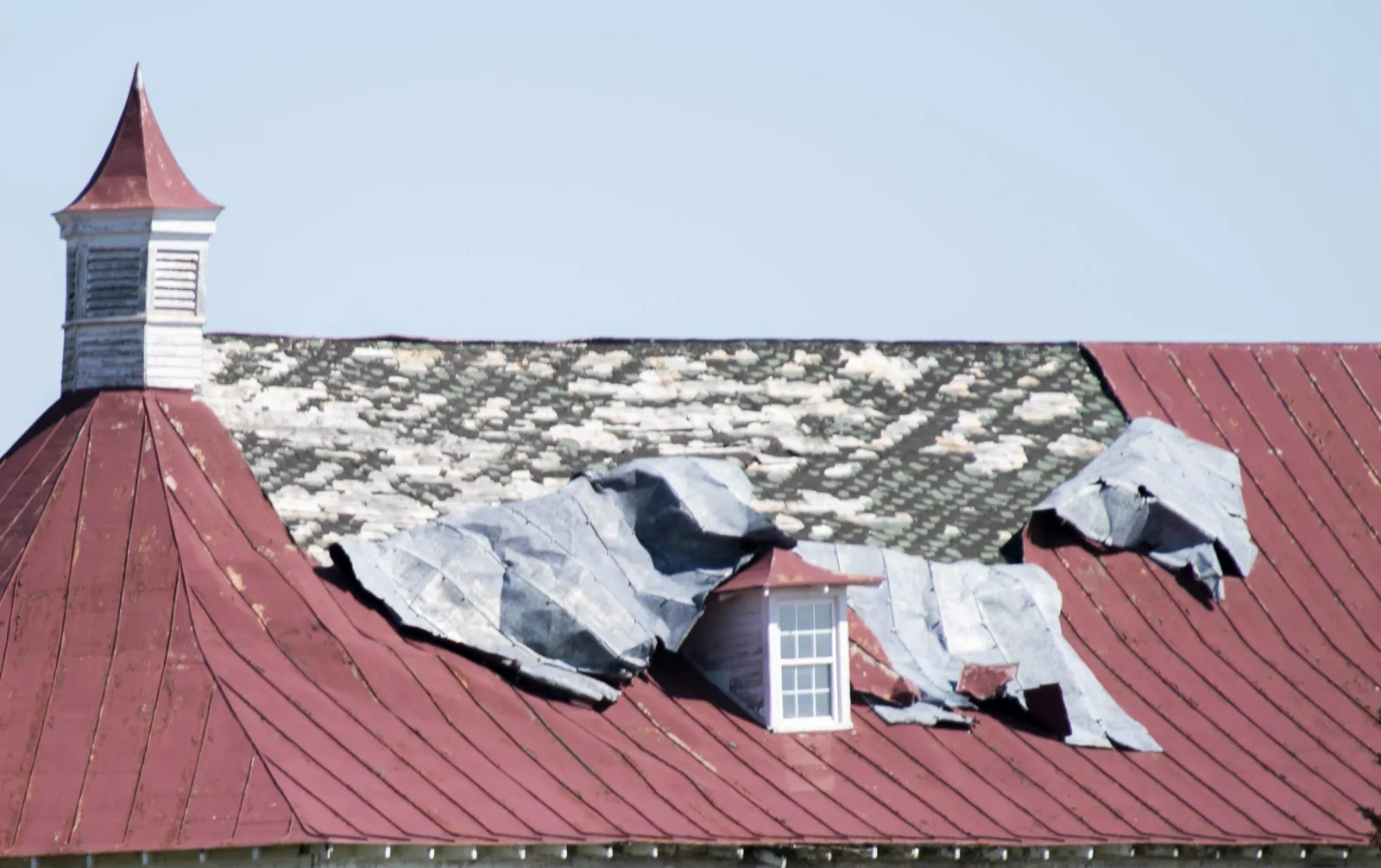
We photograph displaced metal, lifted membrane, loose coping, open seams, punctures, and any material on the roof surface. The overview image establishes the roof zone; closer views show fasteners, welds, terminations, and the surrounding bond. If material is unsafe to approach, we mark the limit and plan a safe route. Do not assume that a visible edge defect explains every interior leak.
If pieces of metal or membrane have detached, secure the area only with a method appropriate to safe access and the installed roof. Do not fasten through a membrane without checking the assembly below. A temporary attachment can create a new opening or concentrate pull at a weak point. We document immediate protection separately from the permanent edge or seam repair.
Record when the condition was first noticed, which rooms are affected, and whether equipment service or earlier repairs occurred nearby. We compare that report with drainage, roof slope, parapets, curbs, and previous patches. A hands-on roof inspection can establish the assembly and document areas that remain concealed. We state what was observed and avoid assigning a storm cause to a condition that the available evidence cannot support.
Wind pressure concentrates at roof edges and corners. We inspect coping joints, fascia, edge metal, cleats, fasteners, and the substrate that holds the assembly. A loose metal cover can move without the membrane below it failing. A detached termination can expose the membrane edge and let water enter behind the flashing. The repair must address the attachment and substrate, not only press the metal back into place.
Check corners and transitions first, then follow the perimeter in both directions until the attachment detail returns to sound material. That boundary may include a short run of coping, several metal panels, or a membrane termination. We record whether the failure appears isolated or repeats at matching details. A repair to a failed flashing transition may need to continue beyond the point where the metal first looks loose.
On a single-ply roof, check whether the perimeter sheet is mechanically attached or adhered and whether the termination remains secure. On a metal roof, inspect panel clips, seam engagement, trim laps, and fastener condition. Thermal movement can affect panel connections, so the repair detail must retain movement where the system requires it. A metal roof retrofit assembly has different edge details from a membrane roof, and the existing profile should be identified before materials are selected.
Water can enter at an exposed edge and travel under membrane or insulation before showing on a ceiling. We compare interior marks with the roof slope, drains, wall transitions, and the location of the displaced material. A stain below a parapet does not prove the coping is the only source. Check the full transition, including counterflashing, terminations, corners, and any nearby curb.
For an active opening, the emergency crew can set a temporary cover on nights, weekends, or holidays. The visit record names the protected section and the follow-up inspection needed before the permanent attachment is rebuilt. If the interior symptom persists, leak tracing can follow the route and identify whether insulation or deck material has been affected.
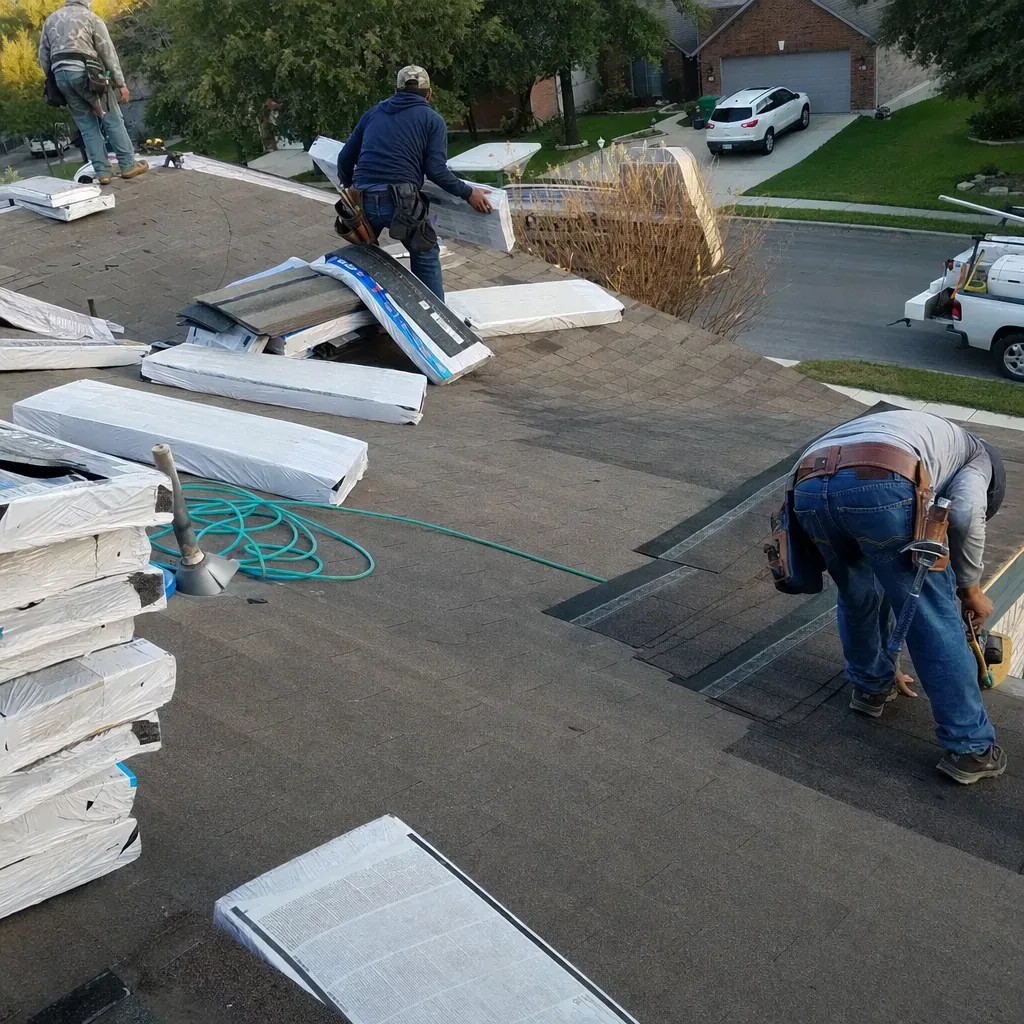
A wind repair can include refastening or replacing edge metal, rebuilding a termination, welding compatible membrane, replacing damaged sheet, or renewing flashing at a curb. We remove loose or deteriorated material to a sound boundary and inspect the substrate before closing it. If fasteners have pulled through or the deck is damaged, the assembly needs more than a surface patch.
A seam that has opened under pressure is checked along its full accessible length. We test the weld or lap and look for nearby distortion, punctures, or a previous patch that has released. Where a longer split remains, use a seam failure repair detail compatible with the existing membrane, then verify the tie-in before close-in.
We compare the affected area with adjacent seams and attachment points. A single failure may be localized; repeated movement along an edge can indicate a broader perimeter issue. Any changed scope is documented with location and photos before additional material is removed. Where the surrounding roof remains serviceable, targeted commercial roof repair can restore the detail without assuming that the full roof needs replacement.
Closeout photographs show the initial condition, exposed substrate if any, completed attachment, seam or flashing work, and final tie-in. The report identifies roof zones inspected, temporary measures, permanent repair limits, and areas not reached. If older wear appears beside a wind-damaged detail, we record it separately rather than folding it into an event-related scope without evidence.
Roof access may change after a storm because loose debris, wet surfaces, or damaged edge metal create new hazards. We confirm the route with the site contact and avoid crossing an unstable section to reach a photo target. If a roof is partially concealed by snow or equipment, the report names that limitation and schedules a return when safe access is available.
Industrial facilities and customer-facing properties set different access limits. Production controls, deliveries, and public routes can change where materials are staged and how interior areas are protected. For a wind claim, document the reported event date and the roof evidence at the affected building. Send roof plans, dated photos, prior repair notes, leak locations, and access rules so we can inspect the edge restraint and define the next action.
Inspect coping, fascia, cleats, fasteners, membrane termination, and the substrate. We photograph the detail and check nearby seams for movement.
No. The attachment, substrate, affected length, and condition of nearby roof zones determine whether a local repair is supportable.
Temporary protection may limit water entry while we verify the assembly and repair boundary. We document what was covered and schedule permanent close-in.
An inspection can document physical conditions and compare them with dated reports. Event attribution requires evidence beyond the appearance of a roof defect.
Provide dated photos, the first noticed date, leak locations, roof plans, prior repair records, and access requirements for the affected area.
Send roof plans, dated photos, leak locations, repair history, and access rules. We will inspect the attachment and nearby details, then document temporary needs and a supported repair boundary.