Home / Roof Systems / EPDM Commercial Roofing
Send the roof plan, repair history, leak locations, and access rules. We will inspect EPDM seams, attachment, flashings, and drainage, then define a repair boundary from the field condition.
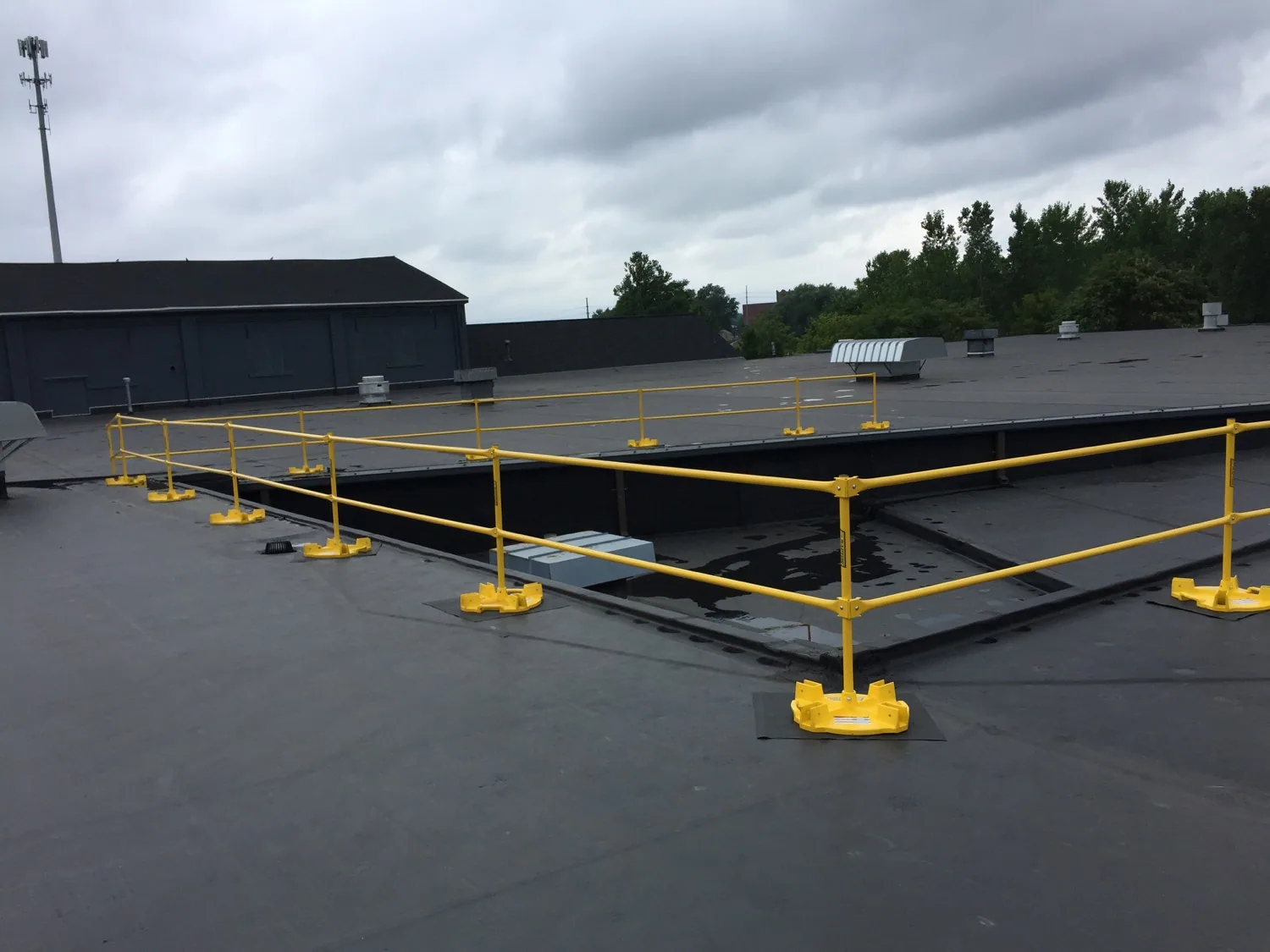
EPDM can show punctures, shrinkage, wrinkles, open laps, loose flashing, and damage from foot traffic or service work. We mark each condition and check how it meets drains, curbs, walls, and metal edges. A wrinkle may reflect sheet movement or a substrate change; it is not automatically a leak. We inspect its bond and direction before opening the assembly. If water entry is reported indoors, the roof map helps compare the ceiling mark with the likely path.
Past patches deserve close review. The repair sheet may not have been prepared correctly, or the patch edge may have lifted from age, contamination, or movement. We identify the patch material and its transition to the field sheet before covering it again. A test cut can show whether the insulation is wet or the deck is deteriorated when the answer changes the scope. We document the layers and close the opening once the condition is recorded.
Many EPDM seams rely on seam tape with prepared surfaces. Dust, moisture, aged adhesive, or poor pressure can leave a bond that separates under movement. We check the lap edge, field adhesion, and previous repair boundaries, then determine whether the seam can be cleaned and rebuilt or must be replaced over a longer run. A bead of sealant over a loose edge does not restore the lap’s bonded area.
Seasonal movement can load a seam where the sheet turns up a curb or meets a rigid wall. Nearby Detroit normals include winter lows in the teens and summer highs in the low 80s Fahrenheit. That regional temperature spread helps explain why an attachment or termination needs room to move; actual splits and loose bonds are confirmed in the field. We check edge restraint and sheet tension before specifying an attachment correction.
EPDM may be adhered, mechanically attached, or ballasted. The system type changes how a repair is prepared and how loads reach the deck. We review roof records and inspect fastening rows, adhesive bond, perimeter restraint, and cover board where accessible. A patch must attach to sound EPDM with compatible materials. Where the field sheet lifts or insulation moves, a surface repair may not hold until the underlying cause is corrected.
Flashings at pipes, skylights, curbs, and drains need their own compatible details. We inspect the membrane turn and termination, not only the open seam in the field. At a metal edge, we check whether the sheet is securely restrained and whether water can get behind the fascia. Related TPO or KEE options may be reviewed for a larger reroof, but system selection follows the deck, use, and project requirements.
EPDM can remain watertight at the field while water collects at a blocked drain, damaged bowl, or settled area. We trace the flow toward the outlet, inspect overflow details, and look for ponding that presses against seams or terminations. Where needed, we coordinate drainage work before rebuilding the membrane. A roof coating is not a correction for a low deck or closed outlet.
The Sterling Heights Mound Industrial Corridor supports manufacturing and high-tech uses, while the North Van Dyke River District includes retail and industrial investment. Those uses do not prove an EPDM roof or drainage condition. We record the actual roof zone, outlet, and seam pattern for the property. Owners with several buildings can compare repair history without assuming that every roof has the same membrane or low-point design.
We remove loose material to a sound boundary, clean and prime the sheet as the selected EPDM repair system requires, and install compatible seam tape or flashing. The patch receives the specified overlap and pressure, with corners and transitions checked for complete bond. If insulation is wet, affected material is replaced before the membrane is closed. The scope states whether the repair includes the sheet, flashing, cover board, or deck.
Temperature, moisture, and surface cleanliness affect the repair window. We plan close-in around those conditions and protect any open area if weather shifts. After installation, the seam is probed where appropriate and the surrounding details are photographed. If the field has widespread shrinkage, failed bonding, or concealed moisture, we compare local work with replacement or a suitable recover based on verified conditions.
The inspection record should show EPDM type, attachment, seam condition, prior patches, test locations, moisture findings, and the boundaries of proposed work. Photos should include context so the owner can find each repair later. A follow-up walk can test whether the same seam continues to move after seasonal exposure. If records do not identify the sheet or installation method, we note what was confirmed in the field and where product or assembly records would help.
Send roof drawings, repair notes, interior leak locations, and access instructions. We will inspect the sheet and seams, follow the water path, and explain whether the repair can remain local. A roof condition report can hold the findings for future inspection and budget review. The next action should follow the condition found, not an assumption based on membrane color.
Often, when the sheet and substrate remain sound outside a defined seam failure. We inspect the bond and nearby attachment before setting that limit.
Surface contamination, weak preparation, incompatible material, or movement can reduce bond. We identify the interface before installing another patch.
The material and the assembly both matter. We check ponding depth and duration, seams, insulation, and deck condition to determine whether drainage correction belongs in the scope.
It reveals the actual layers, attachment, and moisture at that location. We select it where the result would change the repair or replacement decision.
Current roof conditions govern safe access. Regional snow normals help with seasonal planning, but we inspect the actual surface and defer areas covered by ice or snow.
Send the roof plan, repair history, leak locations, and access rules. We will inspect EPDM seams, attachment, flashings, and drainage, then define a repair boundary from the field condition.