Home / Roof Damage Repair / Commercial Roof Membrane Puncture Repair
Send roof plans, photographs, service logs, leak locations, and access rules. We will identify the membrane, check the layers beneath the opening, and document a compatible repair boundary.
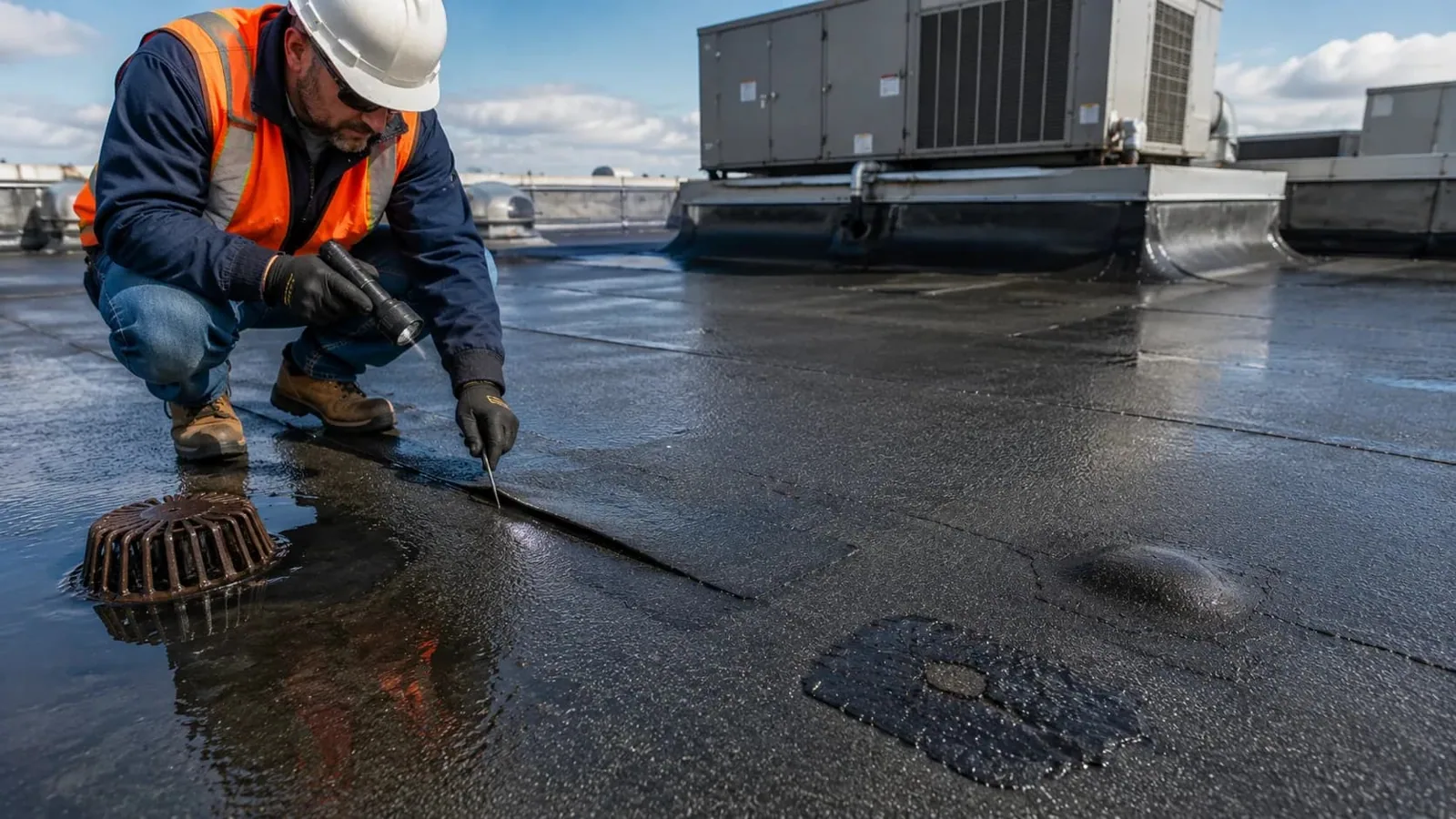
We examine the membrane for a round puncture, linear slice, abrasion, crushed surface, or damage at a maintenance path. A hole may be partly hidden by dirt, water, ballast, or an old patch. We photograph the area before cleaning, mark the roof zone, and check nearby seams, curbs, and fasteners. The damage pattern can point to a dropped object, tool, or repeated travel, but the repair still follows the actual material condition.
Mark nearby fasteners, sharp metal corners, discarded packaging, and any service cart route. A puncture can be difficult to see when water, grime, or a temporary cover obscures the sheet. We remove only what can be handled safely and keep the original condition documented. If loose material could move or expose an opening, isolate the route and arrange a controlled follow-up.
Foot traffic may compress insulation or loosen a seam without leaving a clean opening. We check whether a walkway pad has shifted and whether service routes cross the affected area. If the membrane is coated or an overlay obscures its type, review records or expose a small approved sample before selecting repair material. A roof inspection can map the access path and related defects for facilities staff.
Water can enter through a puncture and spread beneath the sheet. We compare interior reports with the hole location, roof slope, drains, and deck direction. A ceiling stain may appear away from the opening. If a moisture scan or test cut could change the boundary, we select a location that answers the question. A scan identifies patterns; an approved opening confirms only the layers at that point.
If the surface has a small slit, inspect the underside where accessible and check whether the reinforcing scrim or facer is exposed. A narrow cut can have a wider area of delamination around it. We compare the visible mark with the bond of surrounding sheet and do not assume a round patch will cover the entire weakened area.
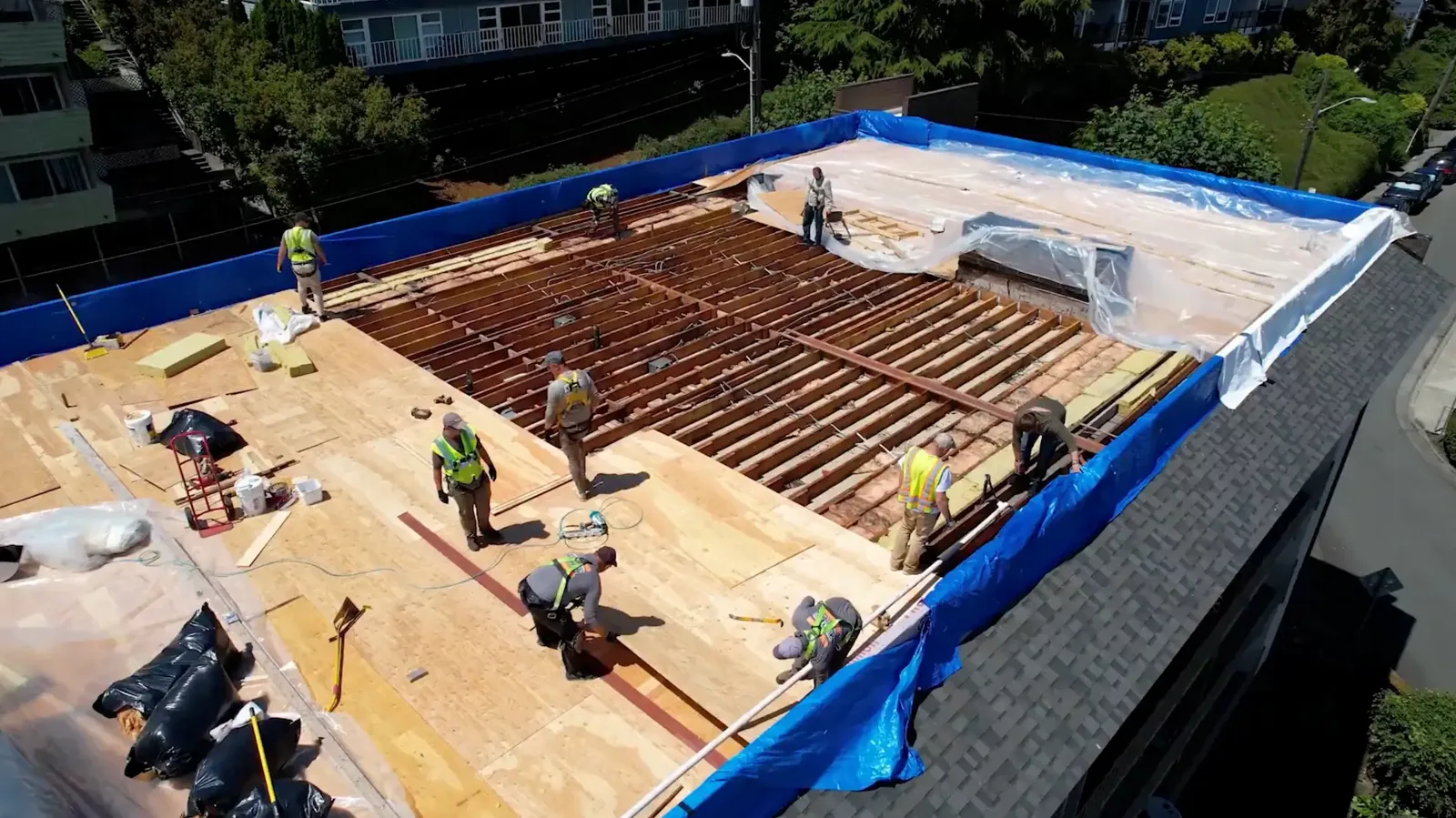
At a test cut, we record membrane, insulation, cover board, attachment, and deck condition. Wet insulation is removed only where confirmed and included in the agreed scope. If the deck is deteriorated, the repair plan may need structural or project-team review before close-in. We photograph the exposed layers and reseal the test opening within the planned work window.
A puncture under a unit service path may repeat if technicians must cross the same unprotected field. We identify the route and check for displaced walkway pads, loose screws, tool marks, or material abrasion. Coordinate roof access with HVAC and electrical vendors. A designated path can limit contact with the membrane, but it must not block drains or equipment clearance.
Where water remains around the opening, investigate the low point through ponding-water repair. If the puncture followed wind-lifted material or a pulled fastener, inspect the nearby edge and attachment details. The Golden Corridor has a mix of customer-facing and institutional properties; a maintenance route may need to avoid public hours. Mound corridor sites may coordinate roof access with industrial operations. Those are scheduling considerations, not evidence about a given roof.
We remove loose or incompatible material, clean the membrane, and extend a compatible patch beyond the damaged area to sound sheet. Thermoplastic membranes need a prepared, heat-welded tie-in when the material and conditions support it. EPDM and modified bitumen require different primers, adhesives, or flashing layers. A patch must fit the roof type and should not trap water at its edge.
Patch geometry matters. Round corners reduce peel stress at a repair edge, while the overlap and seam direction should follow the system detail. A patch across a field seam may need to wrap or terminate beyond that junction. We test the finished perimeter for bond or weld continuity and leave no loose corner that can collect water or catch service traffic.
If the opening reaches wet insulation or a damaged deck, remove affected layers to a stable boundary and rebuild the assembly as authorized. At a small isolated puncture with dry, sound surroundings, a local repair may be sufficient. When there are repeated holes, widespread abrasion, or aging membrane, compare repair frequency with a replacement evaluation. The decision follows verified area and system condition, not the number of visible marks alone.
Closeout photos show the original damage, any exposed layers, patch perimeter, weld or adhesive, and the roof-zone reference. We record whether a test cut confirmed moisture and what area remains untested. If a different trade caused or may have caused the damage, identify that route without assigning responsibility beyond the evidence. The facility team can use the record to brief future service vendors.
Nearby Detroit climate normals show winter snowfall and seasonal temperature variation as regional context. Snow, meltwater, and freeze-thaw can hide a puncture or affect when surface preparation is possible. These averages are not a site reading. We record weather and roof conditions on the repair date and return when concealed or unsafe areas can be checked directly.
For active water entry, leak investigation can continue after a temporary patch if the source is not confirmed. A recurring access issue may also need a scheduled maintenance visit to check pads, seams, and equipment routes. Send roof plans, service logs, interior symptoms, photos, and access controls so the repair addresses the puncture and the conditions that surround it.
No. We inspect the layers and use a test opening when moisture beneath the membrane could change the repair boundary.
Only if the underlying repair and membrane are sound and compatible. We remove loose or unsuitable material before preparing a stable tie-in.
Map vendor routes, check walkway pads, and keep travel clear of seams, drains, and unsupported areas. The path should suit equipment access.
No. Scanning can identify patterns for follow-up. A test cut confirms the materials at its selected location.
Provide service logs, roof access records, photos, equipment locations, interior leak notes, and the roof plan if available.
Send roof plans, photographs, service logs, leak locations, and access rules. We will identify the membrane, check the layers beneath the opening, and document a compatible repair boundary.