Home / Roof Damage Repair / Commercial Roof Snow and Ice Damage Repair
Share roof plans, access rules, drain locations, interior leak reports, and dated photos. We will identify safe inspection areas, document hidden conditions, and recommend repair after the assembly can be examined.
Ice, snow, and wet membrane can make a roof unsafe to enter. We confirm access with the site contact and do not walk a surface where traction, edge conditions, or structural concerns make the route unsafe. If snow hides a drain, seam, or curb base, we record the concealed area and arrange a return when it can be viewed safely. A photograph of the snow surface does not establish the condition underneath.
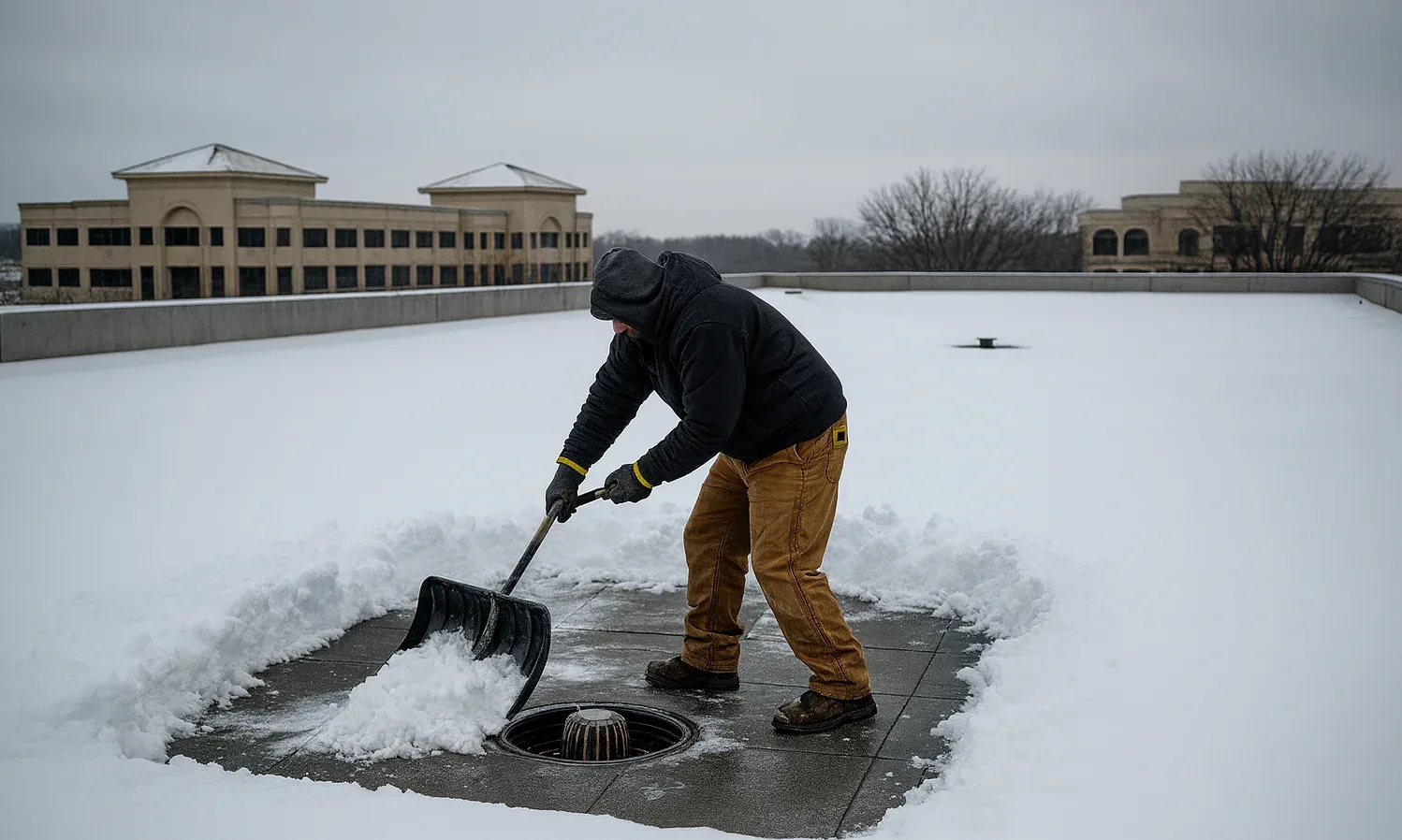
Roof snow can mask ponding, an open seam, loose metal, or a damaged curb. A snow rake or removal tool can also contact the membrane or edge detail if the route is not planned. We record visible displacement and avoid probing beneath packed ice. Any proposed removal should follow the property’s approved method and account for where the snow will be placed.
Before any removal, check the building’s roof access rules and the responsible professional’s direction for snow loading. Do not push snow into a drain, over a parapet, or against rooftop equipment. A roof inspection can document visible conditions after access is approved and identify areas that still require direct examination.
Thaw water can collect at a low point, then freeze when temperatures fall. A blocked strainer, crushed downspout, low deck area, or failed overflow can extend the time water remains near seams and flashing. We inspect drains, scuppers, gutters, roof slope, and the water line on the membrane. A clear outlet may still leave ponding if the deck or insulation has settled.
Look for signs that water has backed up: a tide line at the drain bowl, debris trapped at an overflow, ice below a scupper, or staining at a wall transition. Each mark can narrow the inspection route, but none alone confirms a membrane opening. We photograph the outlet and surrounding field, then check the same path after melt when the surface is visible.
Long-term observations near Detroit show recurring winter snow and a strong contrast between cold and warm months. The station is a regional reference. It cannot establish snow loading or ice conditions at this property. We record the conditions present on the visit date. If standing water remains after the outlet clears, a ponding-water assessment can check slope, insulation, and drain geometry before the roof is modified.
Ice can press against a weak flashing termination or hold water at a seam. We look for displaced coping, open laps, split membrane, punctures, and staining beneath the roof. A ceiling mark can be several feet from the entry because water moves through the assembly before it appears indoors. Compare its location with drains, deck direction, parapets, and any roof penetration above.
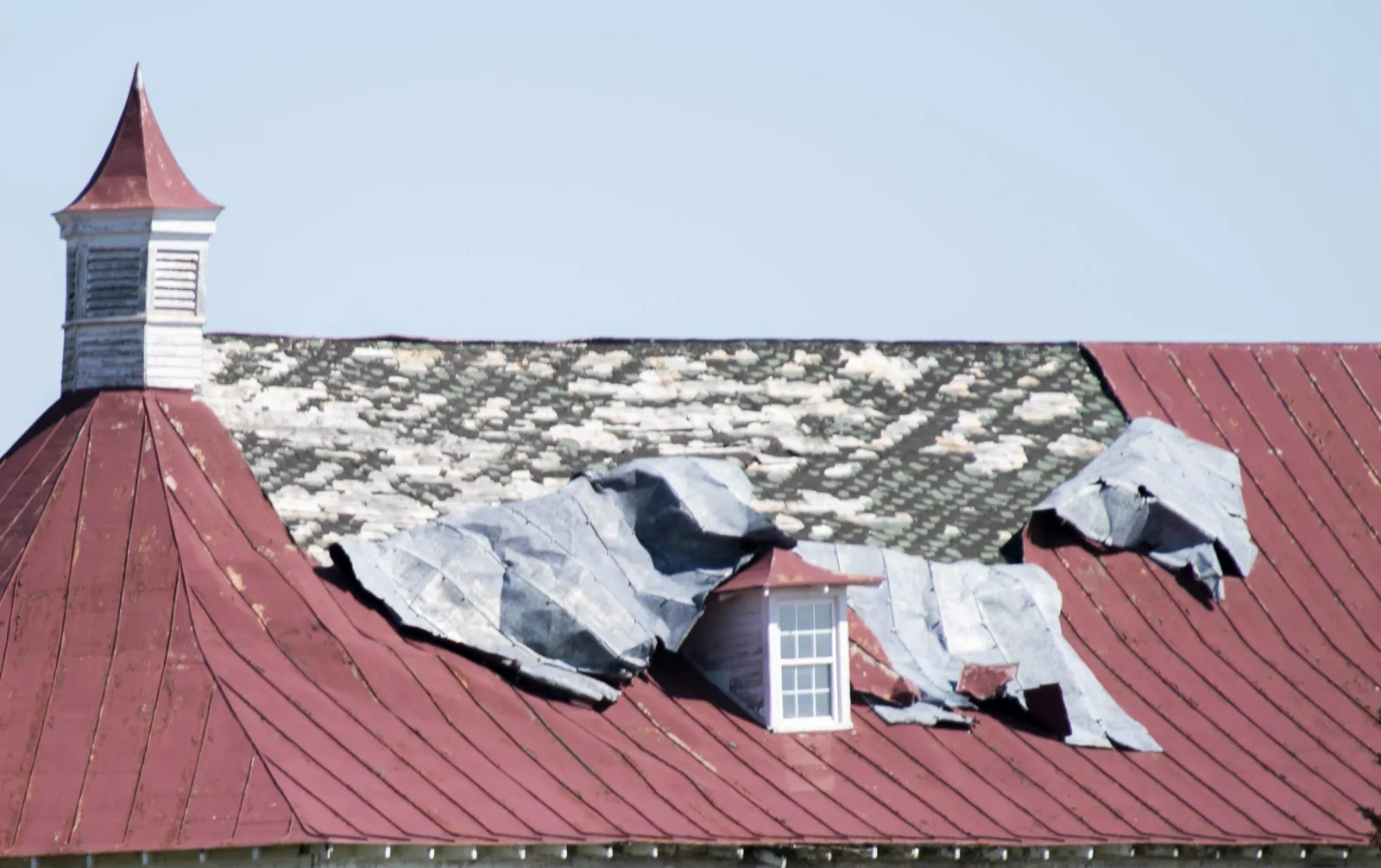
If melting water is entering now, leak tracing can follow the route and identify what is confirmed. A loose coping joint or open termination may need flashing repair after the substrate is checked. Damage at a lifted edge should also be compared with perimeter attachment if fasteners or edge restraint have moved.
Repair follows the assembly. A failed drain flange, open seam, punctured membrane, or loose metal edge each calls for a different detail. We remove failed material to a sound boundary, inspect insulation and deck where accessible, and rebuild with compatible layers. Confirmed wet insulation may need removal; a dry roof area should not be opened without a reason. Drainage correction is scoped separately from structural review.
When membrane temperature and surface moisture make welding or adhesive work unreliable, permanent repair may need to wait for a suitable installation window. Temporary protection can limit active exposure, but it should be monitored and recorded. We state what is provisional and what detail remains to be rebuilt once the roof is dry and safe.
Repeated refreezing around one outlet may point to a persistent low spot or a discharge issue. Correcting the surface can involve drain work, insulation slope, or deck evaluation. A repair should not cover a suspected structural deflection. We mark the condition and involve the appropriate building professional if movement raises a load concern. For temporary control during active entry, emergency roof service is available around the clock, including holidays.
After snow clears, photograph the drain, seam, edge, and low point from repeatable roof references. Record whether the water line remains, whether a patch lifted, and which areas were not accessible during the first visit. This separates a concealed winter condition from a verified spring observation. A return inspection is needed when snow or ice prevented direct review.
Compare any post-thaw movement or new opening with the original photos before removing a temporary patch. If water appears again, note the room and time as well as outdoor conditions. That information helps separate a returning roof entry from condensation or plumbing activity in the same space.
A pre-winter maintenance inspection can clear accessible drainage paths and document flashing before weather limits roof access. Along the Golden Corridor, customer hours and institutional schedules may influence the visit window; Mound corridor sites may coordinate with industrial operations. These local facts inform timing, not roof loading. Send roof plans, interior reports, dated photos, drain locations, and access restrictions so the damage record reflects what was inspected and what remains open.
No. That is nearby station climate context, not a building load calculation. Use the property’s design information and qualified review for snow-loading decisions.
Only where access is safe and the required detail is visible. Concealed or hazardous areas are listed as uninspected and checked later when conditions allow.
Water may remain at a low point or enter at a seam, drain, or flashing detail. We trace the path and verify whether insulation or deck material is affected.
No. Snow placement and removal require the building’s approved plan. Pushing material into drains or over edges can create new problems and hazards.
Review drains, overflow routes, seams, flashing, edge metal, and interior reports. We compare the same roof zones with the winter record.
Share roof plans, access rules, drain locations, interior leak reports, and dated photos. We will identify safe inspection areas, document hidden conditions, and recommend repair after the assembly can be examined.