Home / Roof Damage Repair / Commercial Roof Fire Damage Repair
Send the site release, roof plans, fire-area notes, suppression records, photos, and interior water reports. We will inspect accessible areas, document limits, and define the next repair or testing step.
Before entering, confirm that fire officials and the property representative have released the roof area for inspection. Check structural access, smoke conditions, electrical hazards, unstable materials, and any no-entry zone. We coordinate with the site lead and do not cross a damaged area to reach a photo target. If access is restricted, record the boundary and return after the responsible authority clears it.
Do not disturb damaged insulation, metal panels, or temporary covers until the site lead confirms they can be handled. A softened membrane may tear under a footstep. A loose panel can shift if wind enters the opening. We identify a safe observation point, use the approved access path, and document any condition that requires a separate structural or electrical review.
Photograph the roof from a safe position before debris or temporary coverings are moved. Record the affected zone, date, weather, interior reports, suppression activity, and any emergency opening. The context matters. Heat at a rooftop unit, a roof penetration, and a field membrane can produce different damage patterns. A roof inspection establishes the visible assembly and areas that still need testing.
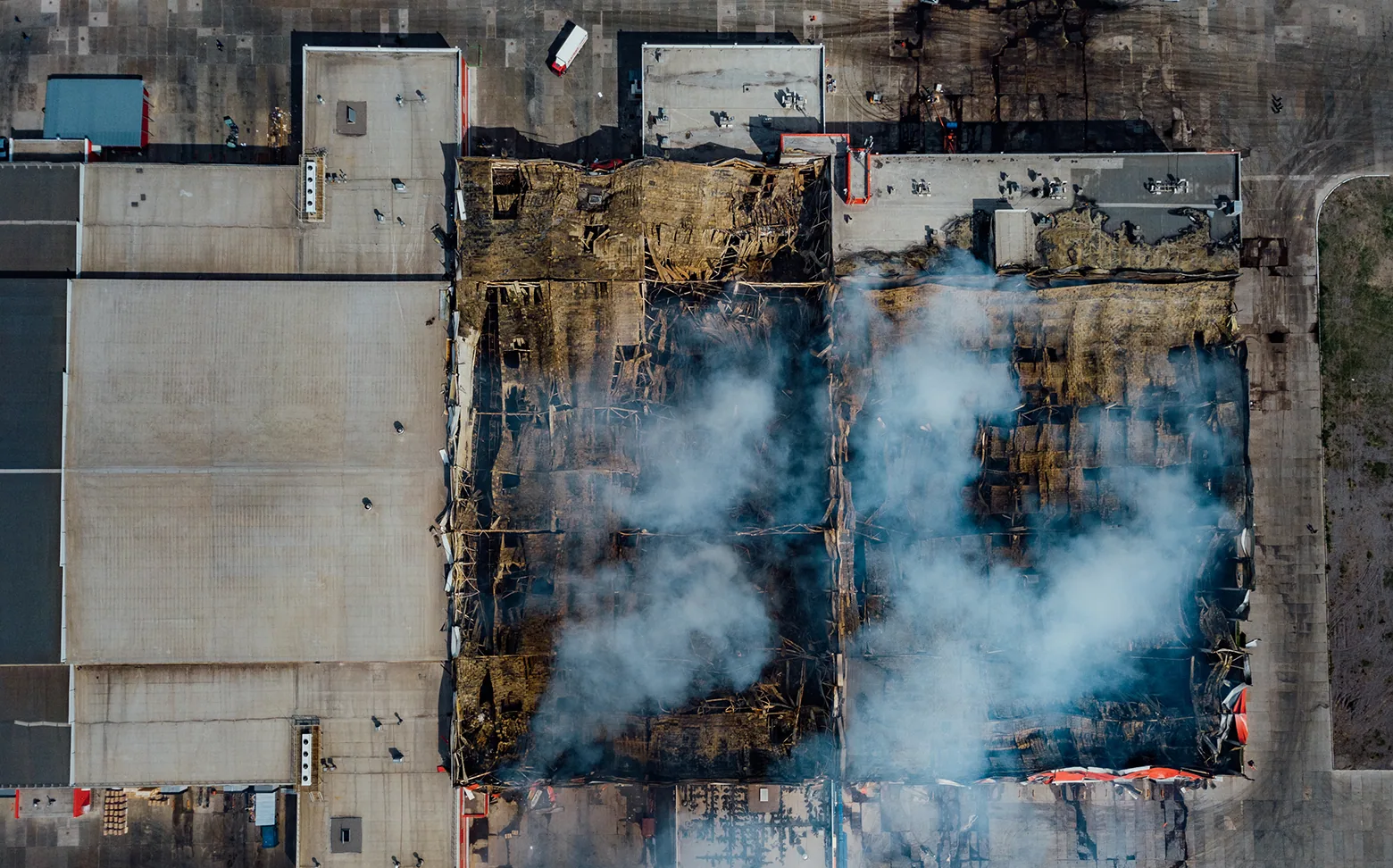
Heat can soften, blister, shrink, or distort a membrane. Metal may discolor, warp, or lose an attachment. Smoke residue can coat a roof surface and affect later adhesion if it is not removed. We inspect the membrane, seams, flashing, insulation, supports, and penetrations near the reported fire area. Look beyond the charred point because heat and airflow can affect adjacent materials.
We inspect the roof layers and any available temperature records before defining the depth of heat damage. We compare damage with the fire boundary, visible distortion, material type, and any available building records. Where hidden layers could change the repair, a test cut can identify membrane, insulation, cover board, and deck at that location. Results are mapped by roof zone and not extended to parts of the roof that were not opened.
Suppression can place a large volume of water on the roof, while emergency crews may open the assembly to release smoke or heat. We map the entry points, drains, overflow route, and interior rooms where water appeared. A ceiling mark can sit below a deck flute or seam some distance from the roof opening. Record the first observation, protection already installed, and areas that remain wet.
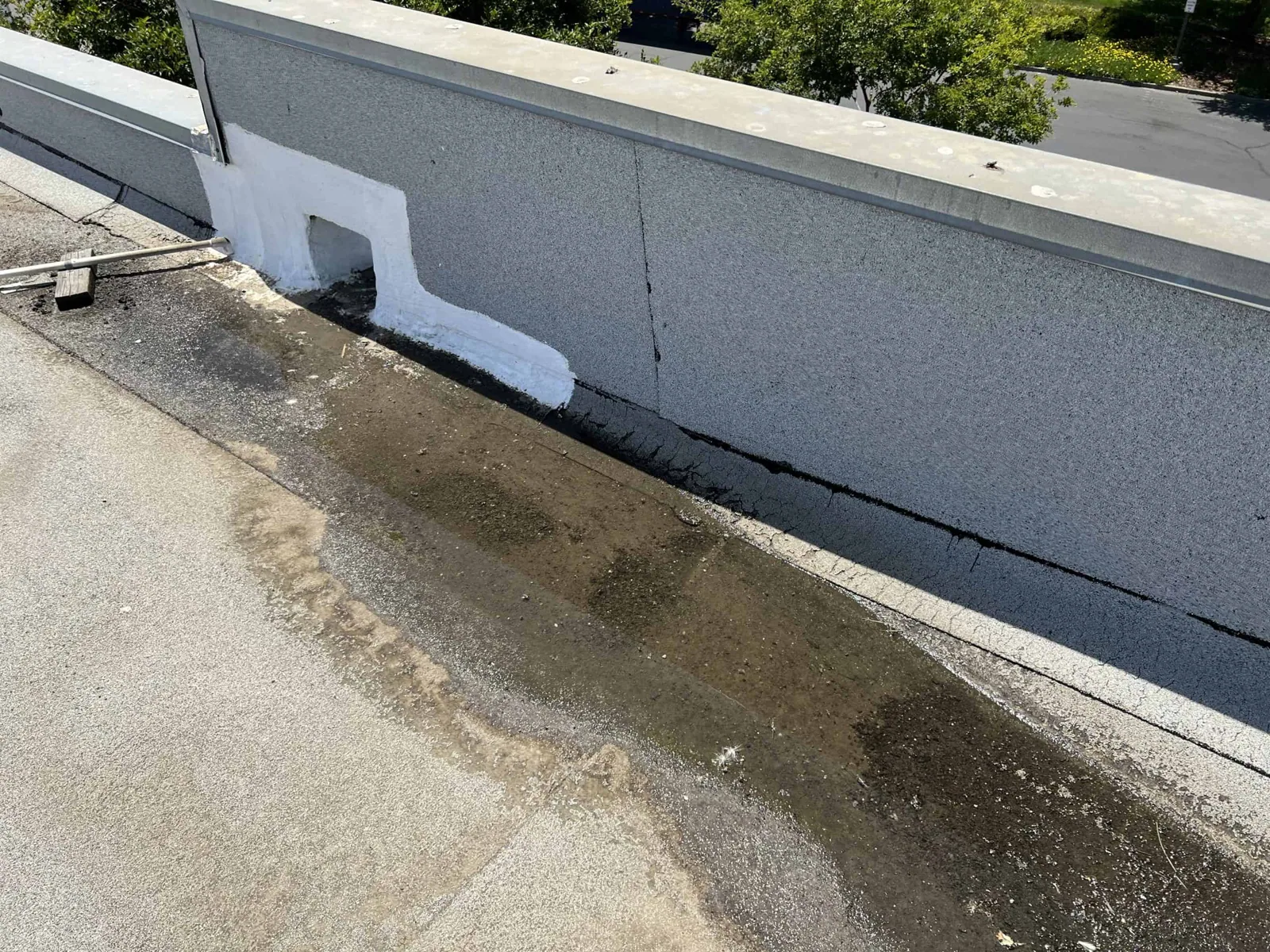
If active water continues, our emergency roof response can provide temporary control at any hour, including holidays. We document the covered area and return for permanent work after safe access and the fire boundary are confirmed. A puncture or emergency opening may need membrane repair after insulation and deck are checked. If water reaches a curb or wall transition, inspect the flashing detail separately so each path is addressed.
Drains can also carry suppression residue or debris. We check strainers and scuppers, note standing water, and verify whether an outlet remains clear before close-in. Do not cover a low point until the discharge route and membrane condition are reviewed. A test opening is selected where its result could change repair versus removal, and the layers are photographed and closed within the agreed work window.
A localized area with intact membrane and sound substrate may support repair. If heat has affected sheet strength, seams, attachment, insulation, or deck across several zones, a patch may leave a compromised assembly in place. We document the observed extent and any test result. Structural questions or hidden damage may need review by the appropriate design professional before roofing work proceeds.
Smoke residue, incompatible cleaning, and firefighting chemicals can affect the bond of new materials. The selected cleaning and repair method must suit the membrane and manufacturer’s system details without assuming a warranty or approval outcome. If broader removal is required, replacement planning can define tear-off, substrate review, protection, and daily close-in. A contained detail may instead fit targeted repair after the assembly is verified.
The record should separate initial conditions, temporary protection, testing, approved scope changes, and completed work. Each photo is labeled by roof zone and date. We identify areas not reached and distinguish visible heat damage from suspected concealed effects. That helps the owner, restoration contractor, and insurer review the same observations without treating a temporary cover as a permanent repair.
Organize the file chronologically: initial photographs, site release, temporary dry-in, test results, approved repair scope, and final closeout. Record which changes were made by emergency responders or restoration trades before roofing began. This sequence preserves what the roofing inspection actually found and helps identify where later work intersects the original damaged area.
After temporary protection, confirm whether vents, drains, and equipment were cleaned or altered during response. Debris and loosened flashing can remain after the fire area appears stable. A final review should identify those changed details before permanent roofing materials are installed.
For a commercial site near the Golden Corridor, customer routes and tenant operations may affect staging. In the Mound corridor, industrial access and production schedules may also matter. Those place facts inform coordination, not the cause or extent of damage. A roof claim documentation package can organize inspection findings and repair records; coverage decisions remain with the policyholder and insurer. Send site release details, roof plans, photos, suppression notes, interior reports, and access limits before the inspection.
Only after the responsible authority and property contact clear safe access. We document restricted areas and return when conditions permit.
The fire extent, material distortion, attachment, insulation, deck, and test results determine the scope. Surface appearance alone does not establish what remains serviceable.
It can enter through openings and migrate beneath the membrane. We trace the water route and verify concealed layers where the result changes the repair boundary.
Residue can affect surface preparation and bonding. We identify the membrane and select cleaning and repair steps that suit the assembly.
We document roof conditions and provide a repair scope. Coverage and claim decisions belong to the insurer and policyholder.
Send the site release, roof plans, fire-area notes, suppression records, photos, and interior water reports. We will inspect accessible areas, document limits, and define the next repair or testing step.