Home / Roofing Manufacturers / Versico Commercial Roofing
Send the membrane record, roof plan, leak details, access limits, and any exhaust or equipment information. We will inspect seams, flashing, drainage, and the supporting assembly before defining work.
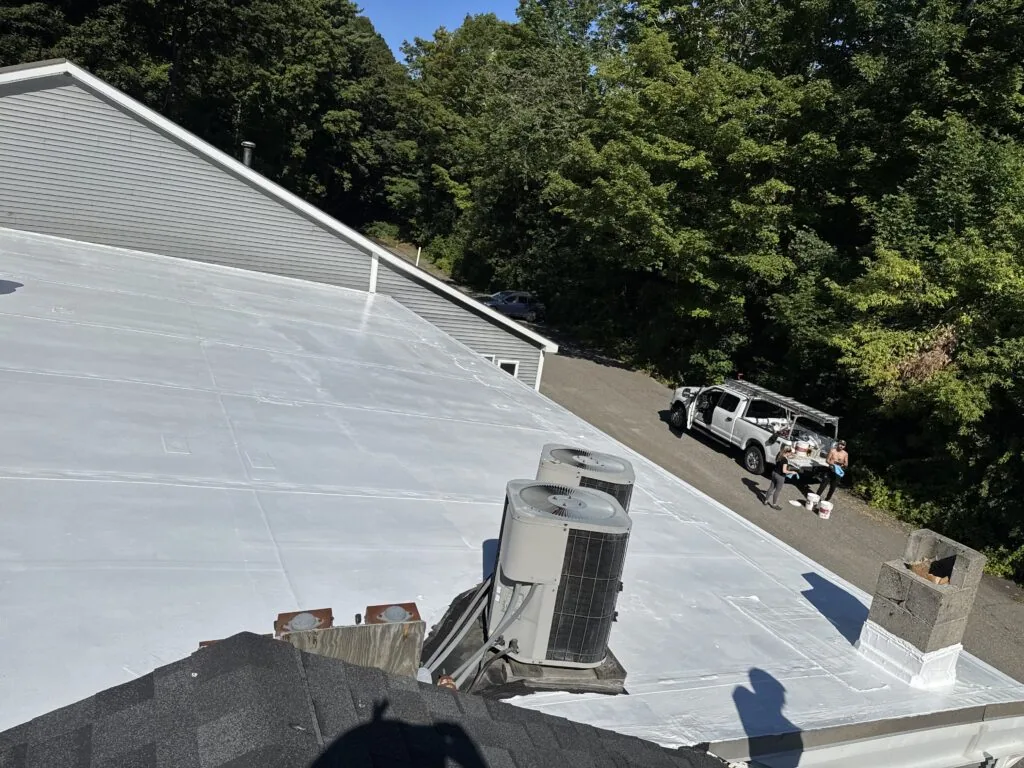
VersiWeld is Versico's TPO line, VersiFlex is its PVC family, and VersiGard identifies EPDM. VersiFlex also includes KEE variants and fleece-backed options. The terms should not be used as generic names for a roof. Check field markings, previous submittals, repair products, warranty records, and visible seam details. If the roof includes a later addition, identify it separately; a single building may contain different assemblies and repair histories.
TPO and PVC seams are heat welded, but membrane formulations and compatible accessories differ. EPDM uses a separate seaming approach and has its own accessories. A patch from the wrong family can fail at the transition or complicate later maintenance. Document which product is confirmed, where that identification came from, and which areas still need verification before ordering material.
The TPO system review can inspect thermoplastic welds and transitions. For a chemical-resistant PVC area, the PVC roof assessment can focus on compatible seams, penetration flashing, and field condition.
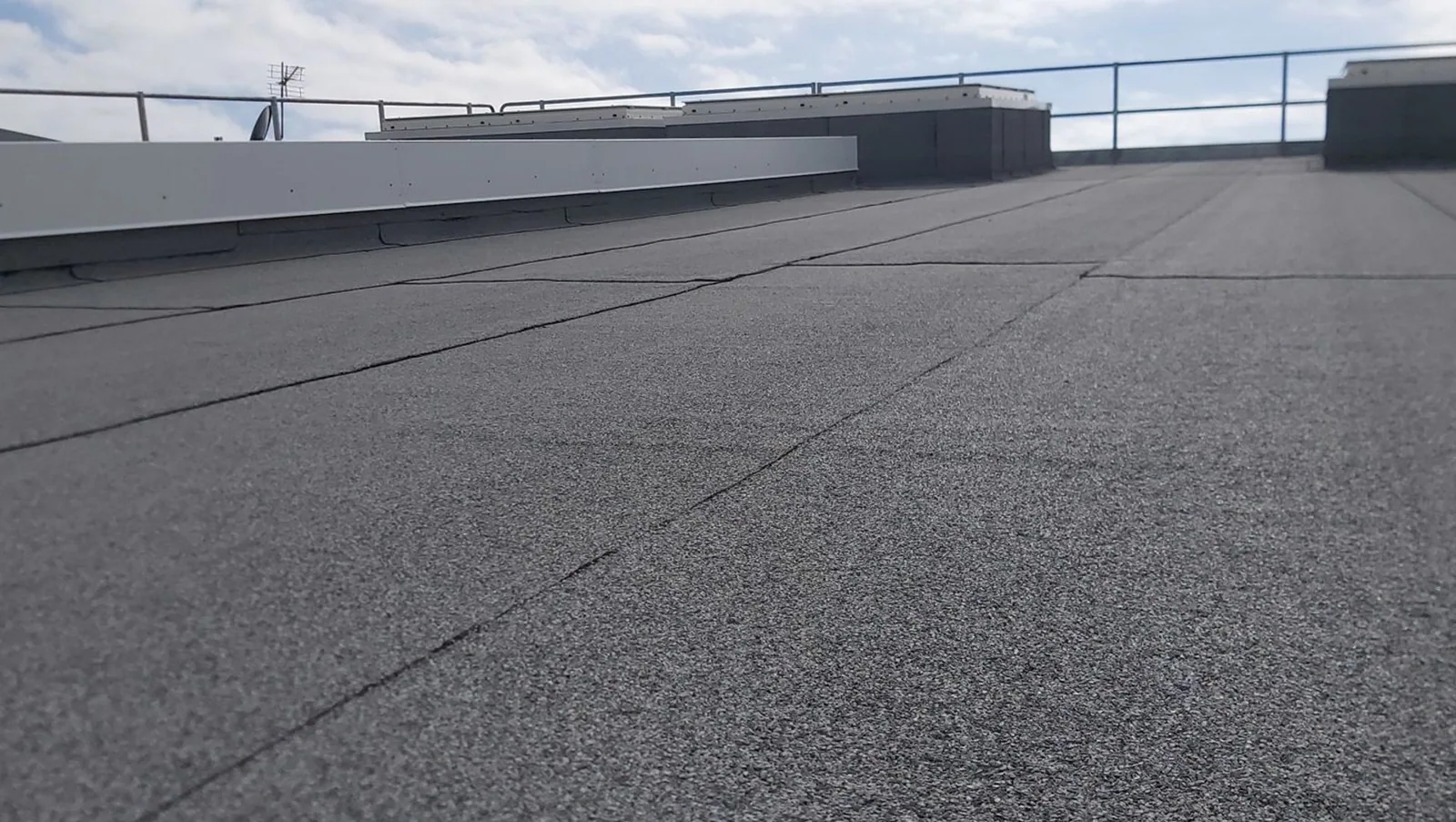
A field seam can separate at a corner or end lap while the long run remains intact. Probe accessible edges, inspect the weld at T-joints, and compare suspect areas with sound seams nearby. Note surface contamination, wrinkles, open edges, or a patch applied over a wet substrate. A test gives information only about its location. Map the condition before defining how much membrane needs removal.
At a curb or pipe, follow the flashing up the vertical face and into its termination. Check whether movement, equipment service, or metal edges have pulled on the detail. A boot that seals at the pipe may still leak at its base. An EPDM surface needs the correct primer, tape, and closure steps; a thermoplastic sheet requires the appropriate heat-welded flashing. Penetration flashing work should follow the identified material and close the full path where water can travel.
When a leak appears inside, do not assume the ceiling mark sits below the entry point. Trace the roof-side evidence from uphill details, seams, curbs, and drainage before placing a repair. Keep photographs from before and after work with the same roof-area identifier.
Versico's PVC range is designed to resist chemicals, grease, and fire, which can suit certain exposures. That property does not make every PVC membrane immune to damage. Exhaust chemistry, concentration, temperature, cleaning practices, and system selection matter. Inspect the area below exhaust discharge, the path where condensate travels, and nearby seams and flashing. Record the actual residue or deterioration instead of calling an exposure harmless from the membrane label.
For food-service exhaust or industrial discharge, evaluate the whole route from hood or fan to the roof. A repair may need to restore the field sheet, curb flashing, coated metal, or an accessory component. If the source has changed since installation, compare the current conditions with the original system design. Do not coat or cover a questionable surface before confirming adhesion and compatibility.
Elsewhere, VersiGard EPDM may be selected for a different roof condition. Reinforced and non-reinforced sheets have different uses, so identify the specific membrane and attachment. The EPDM inspection path follows the rubber sheet's laps, terminations, and accessory details.
Nearby Detroit climate normals record winter snowfall and a broad seasonal temperature range; thaw inspections should follow the outlet and seam paths. Snow can cover a drain bowl, while thaw and refreeze can leave water or ice at a low point. Inspect the drain, overflow, sump, surrounding insulation, and membrane termination as one assembly. A clear strainer does not prove the leader below is open.
If a PVC or TPO seam is exposed to recurring ponding, determine why water remains before adding a patch. The cause may be obstruction, a compressed board, settled deck, or a changed outlet. Repair the verified failure and document any unresolved slope or drainage question separately. A roof drain detail should not be represented as fixed if the downstream path was not checked.
GM Technical Center in Warren is a vehicle engineering and research campus. Confirm the installed membrane and access procedure with the facility contact before selecting a repair. Ask for the building's roof plan and coordinate inspection windows with its operations contact.
A localized puncture may take a patch after the surface is dry and the underlying board is sound. Failed welds over a wider area, wet insulation, recurring flashing separation, or displaced edges can require broader replacement. Before choosing a recover, verify existing layers, moisture, attachment, drainage, deck condition, and applicable code requirements. The field scope should identify system, removal depth, prepared substrate, perimeter details, equipment interfaces, and weather protection.
Occupied spaces require a clear daily close-in plan. Control debris and access around rooftop units, protect exposed deck, and coordinate shutdowns or deliveries before cutting out membrane. Occupied-building reroofing can sequence work so each zone has a defined watertight stopping point. Where a sudden opening needs protection, emergency roof repair can secure the area while the permanent scope is prepared.
On a mixed roof, Carlisle and Johns Manville products may adjoin Versico areas. Carlisle material details and JM system records should remain separate when checking a tie-in. Share Versico submittals, roof plans, repair notes, leak locations, equipment access, and any moisture findings. We will verify the assembly and state which areas can be repaired and which need further investigation.
Do not assume a direct tie-in. Identify each membrane and use an approved transition detail that matches the two materials.
No. EPDM seams use different accessories and preparation. Confirm the product and follow its system-specific detail.
It is a Versico PVC membrane variant. Confirm the installed product and project specification before choosing repair material.
PVC may resist certain chemical and grease exposures, but source, concentration, temperature, and duration still matter. Inspect the actual field condition.
Review wet insulation, deck, existing layers, attachment, drainage, edges, and code conditions before carrying a recover as an option.
Send the membrane record, roof plan, leak details, access limits, and any exhaust or equipment information. We will inspect seams, flashing, drainage, and the supporting assembly before defining work.