Home / Roofing Manufacturers / Johns Manville Commercial Roofing
Share JM product records, roof plans, prior repairs, test results, leak locations, and access limits. We will verify the layers and details before recommending a repair or replacement scope.
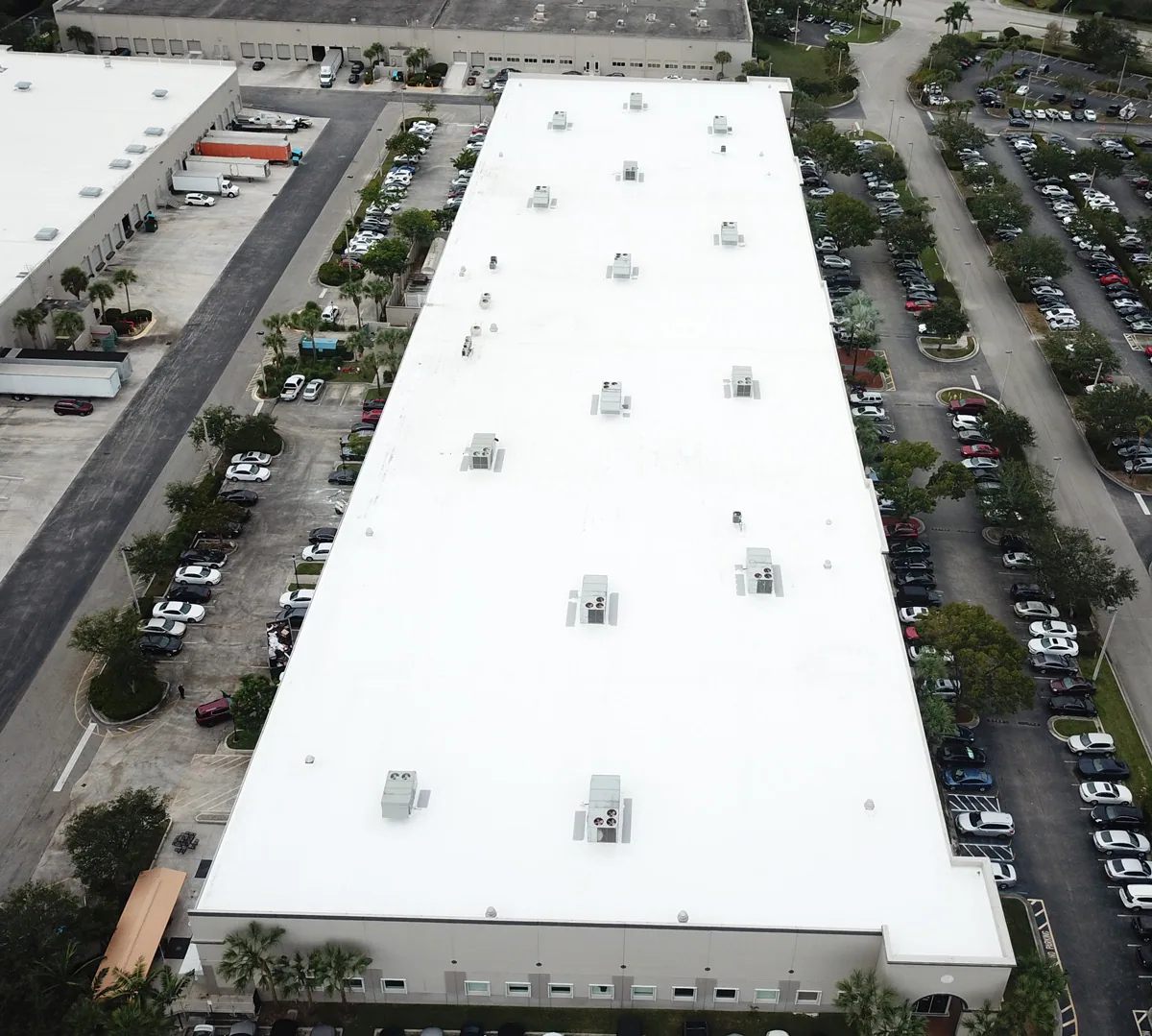
A single-ply membrane over polyiso and a cover board behaves differently from a multi-ply asphalt roof. JM's published commercial range includes thermoplastic membranes, EPDM, bituminous plies, insulation, and specialty roof accessories. We use the drawings, product labels, repair records, and field observations to identify the existing stack. If the record conflicts with the roof, mark that uncertainty before selecting a material or estimating removal depth.
JM TPO uses a reinforced thermoplastic sheet with heat-weldable seams. Its PVC range includes membrane formulations with different uses and accessories. EPDM seams call for their own surface preparation and joining method. SBS and APP systems build protection through bituminous layers, with reinforcement and application details that affect interply bond and flashing. A patch should match the roof's material and condition, not merely cover the visible tear.
For a thermoplastic roof, the TPO assembly review can focus on welds and transitions. The modified-bitumen assessment instead follows ply integrity, surfacing, adhesion, and water paths through the layered system.
Softness, blisters, staining, or repeated leaks can indicate moisture, but none proves how far it extends. Moisture can travel along insulation joints, deck flutes, or previous repairs. Use a survey to select test locations, then compare each result with the visible membrane and roof plan. Keep dry, wet, and untested areas separate. One test cut cannot stand in for an entire roof section or a later addition.
When the roof is open, record insulation type and thickness where visible, the condition of each layer, deck findings, and any separation at board joints. Dry insulation may remain in place if the selected system and design permit it; wet or damaged material generally needs removal. Do not promise a recover until layer count, attachment, drainage, deck capacity, and code conditions have been reviewed.
JM's roofing portfolio includes polyiso insulation and cover boards. Their selection affects thermal performance, substrate quality, attachment, and close-in. Confirm board type and fastening or adhesive method in the project details rather than inferring them from an old invoice. A moisture survey can help locate areas for verification when surface and weather conditions are suitable.
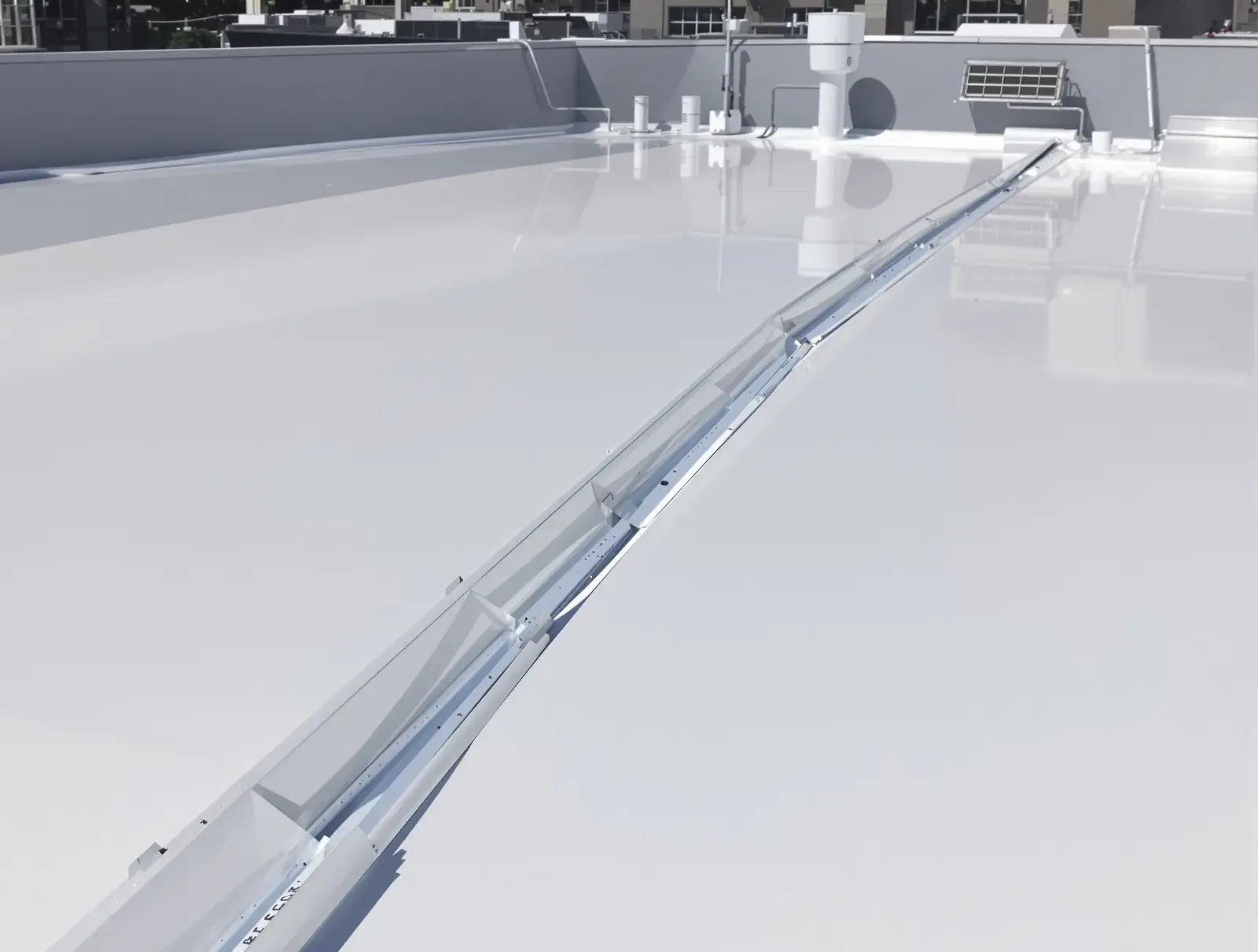
Roof failures often appear where material changes or movement concentrates. At a curb, parapet, drain, skylight, or expansion joint, the membrane turns, terminates, or connects to metal. Check adhesion, weld or lap continuity, fasteners, sealant condition, and whether the roof can move without pulling the detail loose. A new sheet placed over a failed termination only relocates the path water can follow.
JM lists specialty accessories such as edge metal, drains, expansion-joint covers, and tie-in flashing products for its systems. Compatibility still depends on the membrane family and detail. Identify what is installed, what is approved by the project design, and what must be fabricated. If rooftop equipment work disturbed a flashing, record the location before the equipment crew returns.
A edge and coping repair can address perimeter conditions; drain and scupper service can handle a defined outlet issue. Connect each repair to a marked roof location and photograph its closeout.
Nearby Detroit climate normals show an average annual snowfall near 45 inches and a wide seasonal temperature range. The source is regional, not a Sterling Heights roof measurement. Snow can block a drain or cover a lap, then meltwater may refreeze at the outlet. Temperature shifts also move membrane and metal at dissimilar rates. Note the inspected conditions and return to details that weather or surface cover prevented the crew from evaluating.
May's nearby Detroit normal precipitation is higher than February's; the station data do not predict a specific roof leak. For work planning, establish daily close-in, temporary tie-in, and forecast checks before removing material. Wet substrates, cold adhesive conditions, or a sudden change in weather can affect installation steps. The actual product data and project specification set application limits.
At an occupied property, coordinate noise, odor, deliveries, rooftop unit access, and exposed-area protection with operations. The occupied-building reroof plan can sequence removal and installation by zone. The plan should name which areas stay watertight if work stops before the next shift.
A limited puncture in otherwise bonded material may support a local repair. Seam separation across several areas, wet insulation, deteriorated board, or recurring detail failures may call for broader work. For an older multi-ply roof, confirm whether the surfacing or cap layer is intact and whether water has entered between plies. For single-ply, evaluate seam integrity, attachment, perimeter restraint, and compatible flashing. A product-family name cannot substitute for that inspection.
Repair costs and duration depend on access, tear-off depth, insulation replacement, deck repairs, equipment conflicts, staging, and daily dry-in. State which layer assumptions are confirmed and what could change after opening. Replacement work should define removal, substrate preparation, new assembly, perimeter metal, drains, penetrations, and the close-in method. A recover needs a separate review of weight, existing layers, attachment, and drainage.
If a site combines JM products with another manufacturer's older membrane, keep the seam, flashing, and substrate requirements distinct. Carlisle Sure-Weld TPO and GAF EverGuard thermoplastics also use manufacturer-specific details; Carlisle system conditions and GAF assembly review should follow their own documents, not a generic single-ply label. Share roof plans, test results, leak history, and access rules before we set the work boundary.
Yes. Its published portfolio includes TPO, PVC, EPDM, SBS and APP modified bitumen, and built-up systems, along with insulation and accessories.
Do not assume cross-material compatibility. Identify the membrane and use a repair detail designed for that assembly.
It shows the layers and conditions at that opening. Place additional tests where results could change the moisture boundary or repair scope.
That depends on the area, deck, attachment, system design, and code requirements. Wet or damaged material generally must be removed from the defined scope.
Provide product submittals, roof plans, insulation details, warranty documents, previous repairs, leak locations, and any test results.
Share JM product records, roof plans, prior repairs, test results, leak locations, and access limits. We will verify the layers and details before recommending a repair or replacement scope.