Home / Roofing Manufacturers / GAF Commercial Roofing
Share roof plans, GAF system records, repair history, leak locations, and access limits. We will inspect the membrane, attachment, transitions, and drainage before defining the repair or replacement scope.
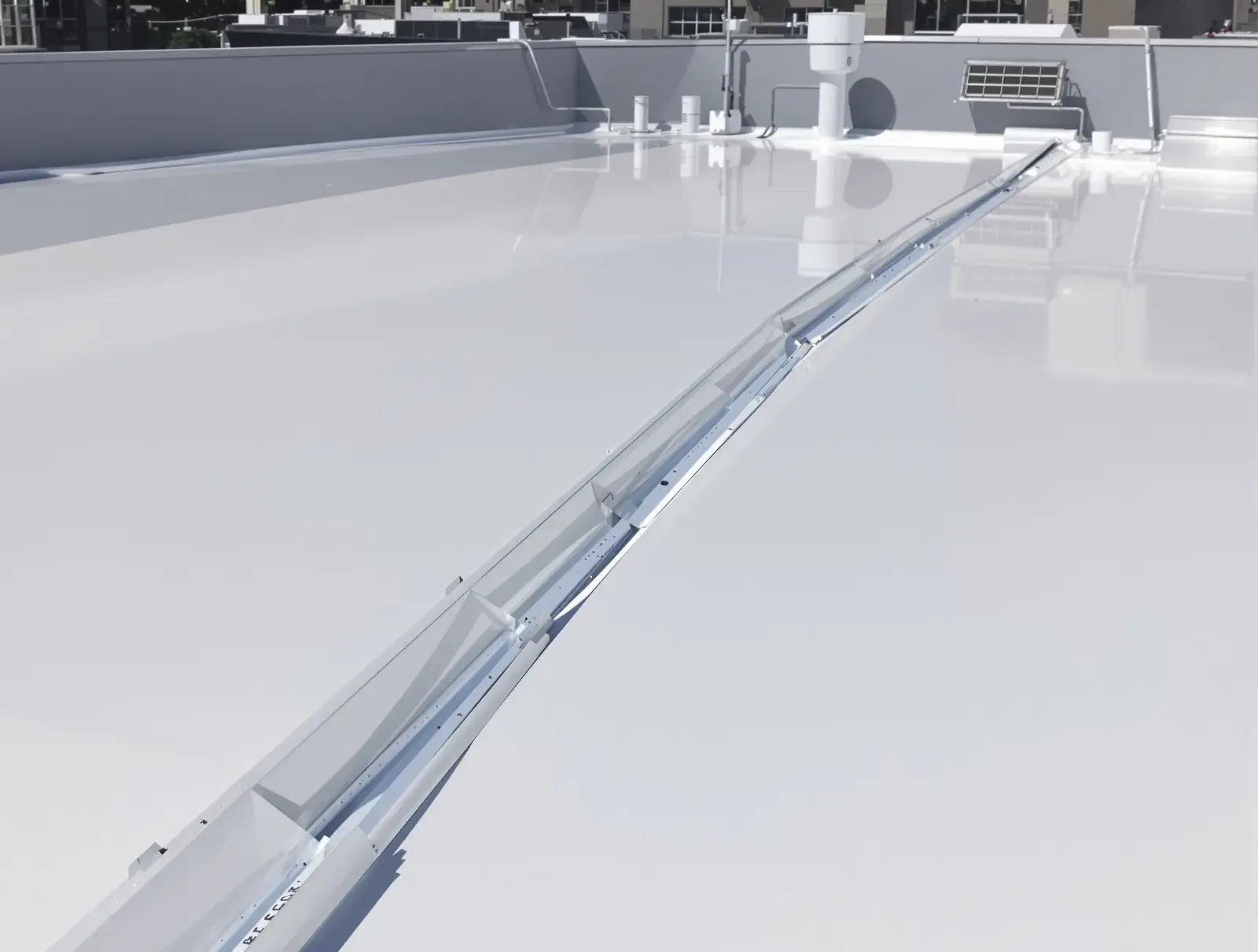
GAF's commercial catalog includes EverGuard TPO and PVC in adhered, mechanically attached, induction-welded, and other assembly configurations. PVC KEE options also appear in its system range. Those names describe different membrane formulations and details, not interchangeable sheets. We review rooftop exhaust, chemicals, grease exposure, traffic, substrate, and the project's design requirements before recommending a system. The assembly must also accommodate insulation, cover board, vapor control, edge metal, and transitions around curbs.
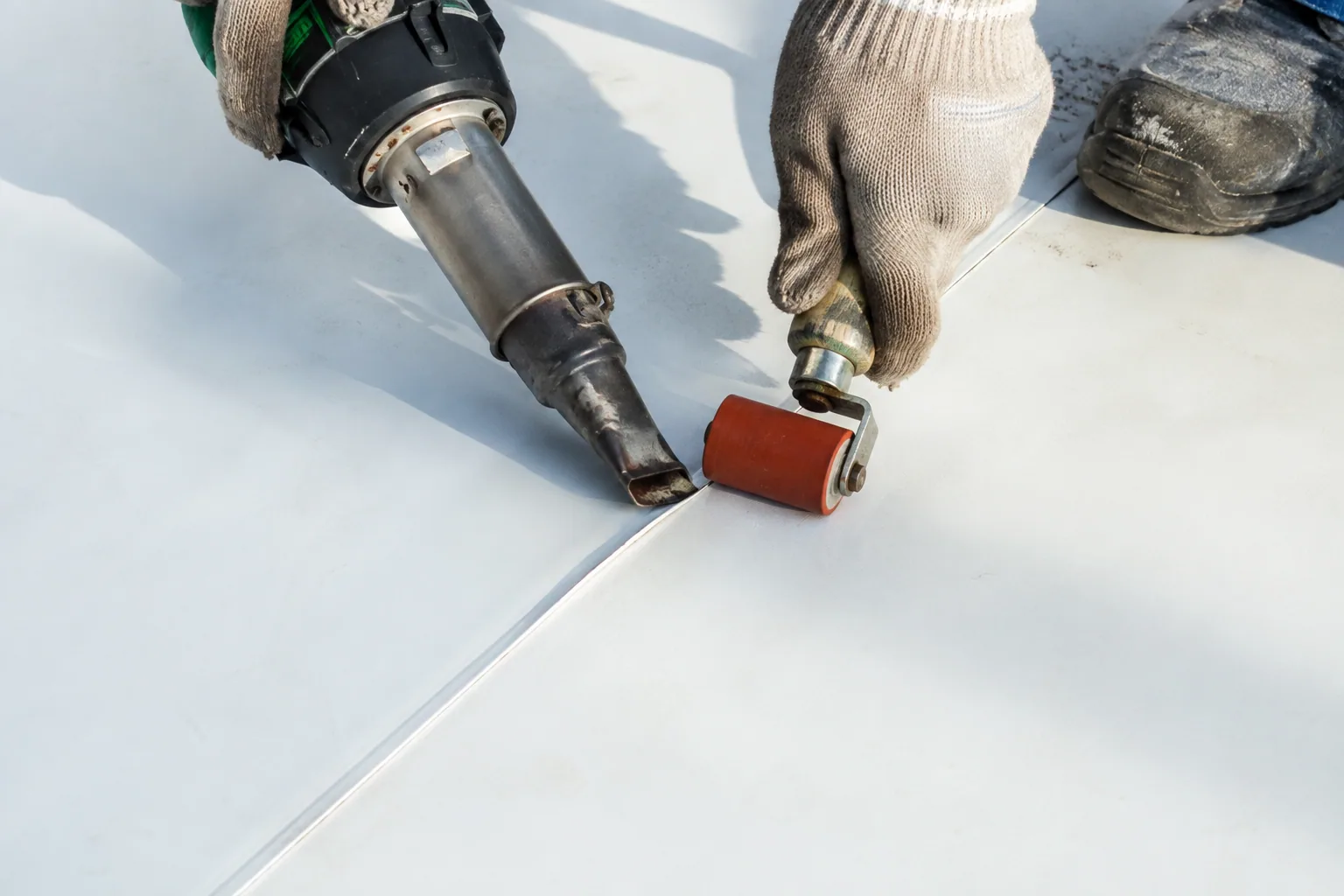
Thermoplastic field seams are joined with hot air. Temperature, speed, pressure, surface condition, and the welder's movement affect the bond. A repair inspection checks the seam, corners, patches, T-joints, and flashing terminations rather than judging a roof by color or a quick walk. GAF provides system specifications and details for several assembly types; the construction documents still need to match the actual deck, attachment pattern, and project conditions. If a property has a prior Carlisle or JM single-ply section, verify the membrane, flashing and accessory package before tying repairs across the transition. The Carlisle SynTec assembly details and Johns Manville roof system review address those distinct product families.
For an existing roof, TPO system review can compare membrane condition with the current assembly. Where chemical exposure or a different seam profile favors PVC, a PVC roof evaluation can establish compatibility and repair limits.
A clean-looking weld does not tell the entire story. We inspect representative seams, probe accessible edges, and open a test area only when that result will change the repair boundary or replacement decision. A weak weld may be isolated, tied to a detail, or part of a broader installation issue. Mark the location, document the condition, and compare it with adjacent field seams before assigning a whole-roof scope.
At curbs and pipes, field membrane has to transition into flashing that stays stable as the roof expands and contracts. Corners, pipe boots, stack seals, and metal terminations are common points to examine because several materials meet there. If rooftop service has disturbed a flashing, identify the displaced component and likely water path. A penetration and skylight flashing repair can address an isolated detail; larger membrane separation may need a separately defined scope.
Document current conditions before cleaning or patching. That gives facilities staff a reference for later visits and keeps temporary protection separate from a permanent repair. For active water entry, commercial leak investigation can trace symptoms beyond the interior stain.
The membrane transfers wind forces through its attachment to the roof assembly and deck. Fastener spacing, plate placement, adhesive coverage, board joints, and edge restraint all matter. A plan that shows a roof type but not the actual deck or attachment condition leaves an important question open. We review available drawings and field evidence, then identify where a test or design check is necessary before selecting a replacement assembly.
Insulation can be wet or compressed beneath a surface that still sheds water. Roof cuts and moisture surveys need deliberate placement, because one sample does not characterize every addition or repair zone. A moisture survey can help map areas for further investigation when conditions support that method. If a recover is considered, confirm layers, weight, drainage, attachment, and code requirements before carrying it as a viable option.
Project requirements depend on the existing assembly, the design documents, and the permitting authority. Confirm applicable code provisions before the assembly is selected; a product brochure alone does not establish project approval.
Nearby Detroit climate normals record roughly 45 inches of annual snowfall, with snow concentrated in the colder months. This is regional context rather than a Sterling Heights station measurement or a roof-load value. Snow cover can hide drains and membrane details; thaw can expose a blocked outlet or leave water at a seam. A service visit should document whether the low points were visible and whether a return inspection is needed after cover clears.
Standing water can stress seams, patches, and penetrations over time, but the surface pond alone does not reveal why drainage slowed. Check drain bowls, strainers, leaders, sumps, overflow paths, insulation slope, and any equipment blocking flow. Drain and scupper service can remove obstruction and repair defective components, while recurring ponding may require a wider assembly review. On a manufacturing property, coordinate access around process equipment rather than moving or disconnecting it without authorization.
Detroit Arsenal sits south of Sterling Heights in Warren and includes TACOM and the Ground Vehicle Systems Center. That nearby defense presence is regional context only; a roof's access rules and specifications belong to its own owner and project documents.
A local seam failure may be repaired with compatible material after the substrate and moisture limits are checked. Broad deterioration, widespread wet insulation, poor attachment, or repeated failures can shift the decision toward replacement. A coating or recover is not a shortcut around condition testing. We identify known defects, unresolved areas, tie-in limits, drainage changes, roof openings, and close-in sequence so the chosen work addresses the actual failure mechanism.
Occupied operations also affect the method. Work around rooftop units, deliveries, shift changes, and weather windows can change staging and daily protection. The occupied-building reroofing plan can sequence areas and temporary weatherproofing. A replacement scope should state tear-off depth, insulation and deck assumptions, perimeter work, and what happens if concealed conditions differ from the inspection.
Share the GAF system documents, roof plan, leak locations, repair history, access limits, and any open manufacturer correspondence. We will inspect the assembly and lay out the next decision, from a local repair to a larger project, without treating the brand name as a diagnosis.
The right choice follows exposure, assembly, deck, attachment, and project requirements. EverGuard TPO and PVC are different system options, not automatic replacements for one another.
A localized weld or flashing defect may be repairable after we test the bond, inspect nearby details, and rule out broader moisture or attachment problems.
No. Surface review can identify indicators, while test cuts or a suitable moisture survey are needed to assess concealed layers.
A recover is considered only after layer count, moisture, attachment, drainage, deck, and applicable code conditions are reviewed.
Provide the roof plan, system records, repair history, leak locations, equipment access rules, and any sections that could not be entered previously.
Share roof plans, GAF system records, repair history, leak locations, and access limits. We will inspect the membrane, attachment, transitions, and drainage before defining the repair or replacement scope.