Home / Commercial Roofing Services / Commercial Skylight and Penetration Flashing
Send roof and interior photos, access rules, and any unit or assembly records. We will inspect the opening, trace the membrane transition, and identify the repair or test needed to close the water path.
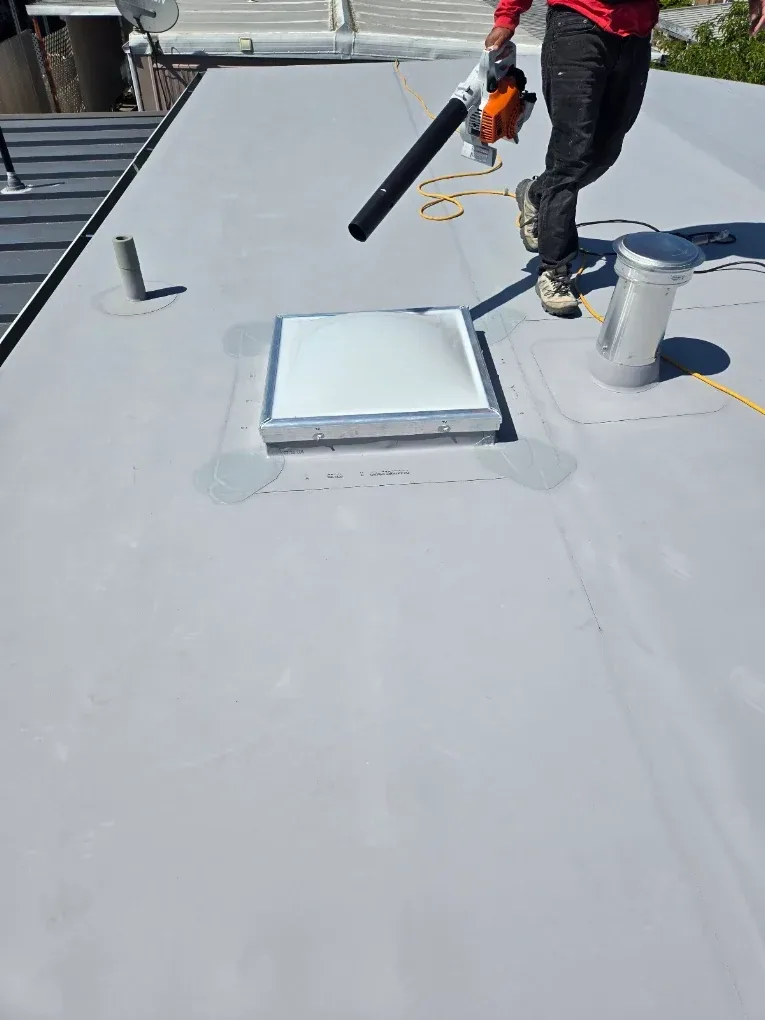
At a skylight, we check the glazing, frame corners, fasteners, gasket, curb cap, and curb base. A cracked lens can admit water directly. A failed seal at the frame may show staining near a corner. A membrane split at the curb base can let water enter farther down the roof assembly. Those defects can produce similar ceiling marks, so we photograph the frame and roof-side detail separately. If condensation is possible, we consider indoor humidity and surface temperature before assigning the mark to an exterior opening.
For a pipe or conduit, the boot or field-fabricated flashing should fit the object and remain bonded to the roof membrane. We look for a split at the collar, a loose clamp, an unsupported pipe, or a patch that has separated at the edge. Excess movement can fatigue the flashing. A hard sealant ring may crack if the pipe shifts or expands. We check whether the support itself is stable and note when mechanical work is needed to stop movement before the roofing detail is rebuilt.
Roof membrane and a skylight curb respond differently to temperature. The curb may be metal or another rigid material while the roof field expands and contracts. A flashing detail bridges that movement. If the membrane is pulled tight, poorly bonded, or cut too close, the transition can split. If a sealant bead is expected to carry movement by itself, it may crack or detach. We check the flashing height, laps, corners, and attachment before selecting a repair material compatible with the roof system.
Snow can collect against a raised curb or drift near a roof projection. During thaw, water may remain at the base or refreeze along the frame. Nearby Detroit normals show snowfall concentrated from November through April and cold winter averages. After snowfall or thaw, we inspect the curb base for ice damage, distorted metal, and open seams, then set access around conditions at the building.
Before repairing a curb, we identify the membrane and how it is attached. TPO, PVC, EPDM, modified bitumen, and coating systems require different preparation and transition details. A patch material that appears to cover the opening may not bond to the existing surface. We confirm compatibility, clean and prepare the substrate, and rebuild the termination with the specified flashing method. If the field membrane is brittle, wet, or poorly attached, the curb repair may need a larger boundary to reach sound material.
Water can approach a curb from above and collect along its uphill face. A small cricket or saddle may be needed to split the flow where the roof geometry directs water toward a broad curb. We inspect the slope, the surface on both sides, and the nearest drain. If water is ponding at the opening, we check whether the roof has settled or the insulation has compressed. Rebuilding flashing alone will not redirect a persistent pool. A drainage correction may need tapered material or a deck review, depending on what the assembly shows.
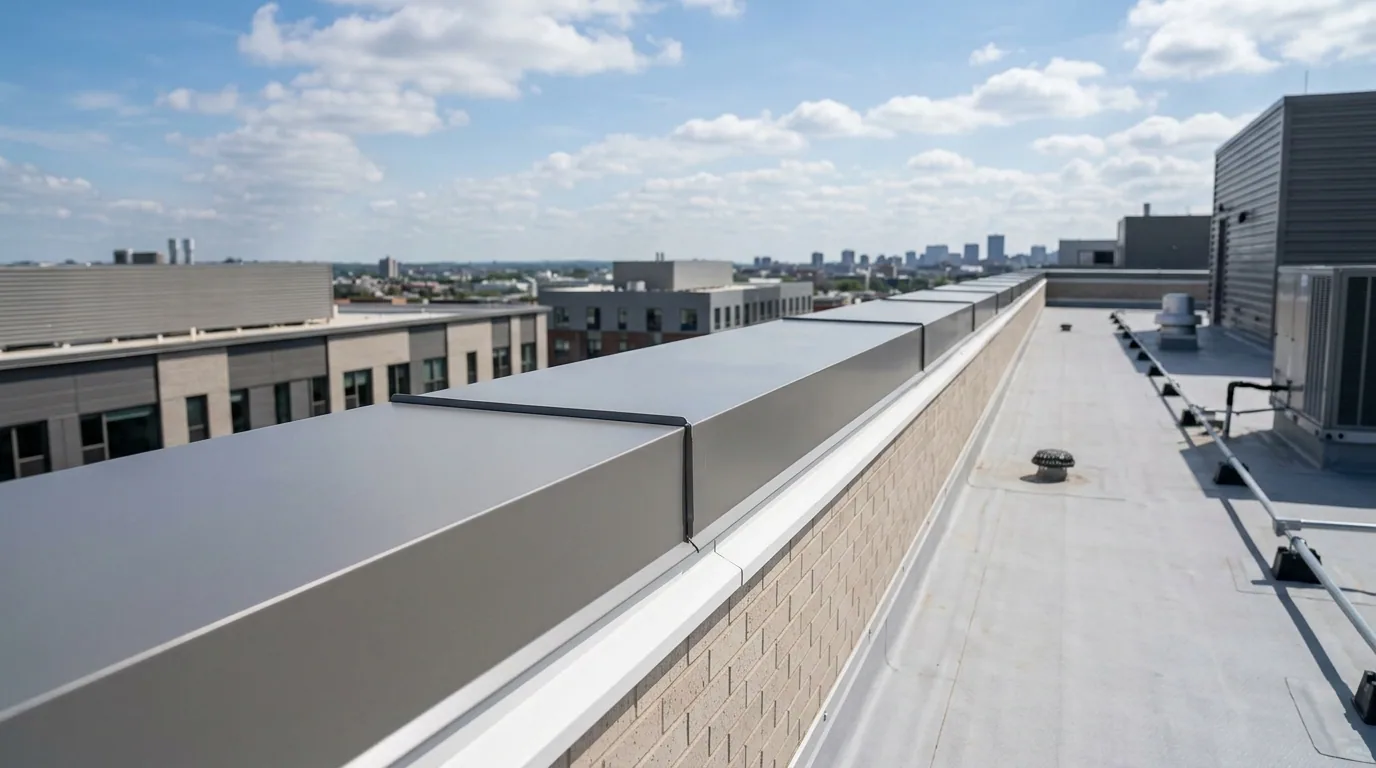
At a wall or parapet, a skylight can sit close to the roof edge. We inspect the curb corner with the adjacent wall flashing and coping so a repair does not leave a gap between trades. A low termination may be exposed to splash or backed-up water. We map the route from the opening toward the nearest drain or scupper and record any blockage. The final scope should say whether water control depends on flashing alone or on correction of the surrounding slope.
The Sterling Heights Golden Corridor along M-59 includes retail and commercial uses; the Sterling Innovation District between Mound Road and Van Dyke includes manufacturing and high-tech activity. For a multi-building portfolio, keep a curb record by address with each opening, its roof condition, and repair history.
We remove loose or failed flashing until sound material and a stable curb are exposed. The repair area is cleaned and prepared for the roof system, then the membrane or flashing is rebuilt with compatible materials. Corners and changes in plane receive particular attention because cuts and folds concentrate stress. A pipe boot may require replacement; a curb may need new flashing and counterflashing; a damaged skylight frame may require glazing or unit work. We define the actual components instead of using “reseal” as a complete scope.
Skylight and penetration work may take place above production lines, occupied offices, or equipment that cannot be exposed to debris. We confirm the interior zone, roof access rules, shutdown needs, and any intake or exhaust concerns before starting. Work near an operating facility in the Mound and Van Dyke industrial corridor can require coordination with the site contact and mechanical staff. We use the building’s procedures rather than assume a standard access arrangement.
For a larger property, repeated openings can be tracked in a roof condition report or a roof asset management record. That record lets the facilities team compare repair history and monitor changes across roof zones. If a full system decision becomes necessary, we can evaluate a recover or replacement against the verified condition of the assembly. The recommendation should fit the roof, access, moisture findings, and intended service life.
Yes. Moist indoor air can condense on a cold frame or curb. We inspect the exterior flashing and compare the moisture pattern with interior conditions before assigning the cause.
Usually the repair can stay local if the surrounding membrane is sound and compatible with the replacement flashing. We check the bond and substrate before setting that boundary.
The water path may be at the curb base, corner, or membrane termination. We inspect those layers separately from the glazing and frame.
That depends on curb condition, dimensions, support, and the selected unit. We verify the curb before including reuse in the scope.
The support or connection may need adjustment before the flashing can be rebuilt. We document the movement and coordinate the mechanical work needed to give the roof detail a stable interface.
Send roof and interior photos, access rules, and any unit or assembly records. We will inspect the opening, trace the membrane transition, and identify the repair or test needed to close the water path.