Home / Roofing Capabilities / Commercial Roof Due-Diligence Surveys
Send the property list, closing or refinancing date, available roof records, access contact, and the questions the decision team needs answered. We will define a practical inspection scope and document its limits.
Before a site visit, confirm the address, number of buildings, roof access, transaction schedule, and the question the survey must answer. A buyer may need a concise condition summary and near-term repair exposure. A lender may need a documented roof review within an underwriting window. An owner refinancing may need current photos and a list of material gaps in the maintenance file. These assignments share field methods but should not be treated as identical engineering or legal reviews.
Request whatever records are available: roof plans, prior inspections, leak logs, repair invoices, replacement dates, system descriptions, warranties, permits, and contractor closeouts. Missing paperwork does not prove poor roof condition, just as a recent invoice does not prove the whole assembly is sound. We list records received and unavailable so the reader can see what supported the conclusions.
A commercial roof inspection documents accessible conditions. The photo-based condition report format can organize findings by roof area, and roof asset management can carry the resulting record forward after closing.
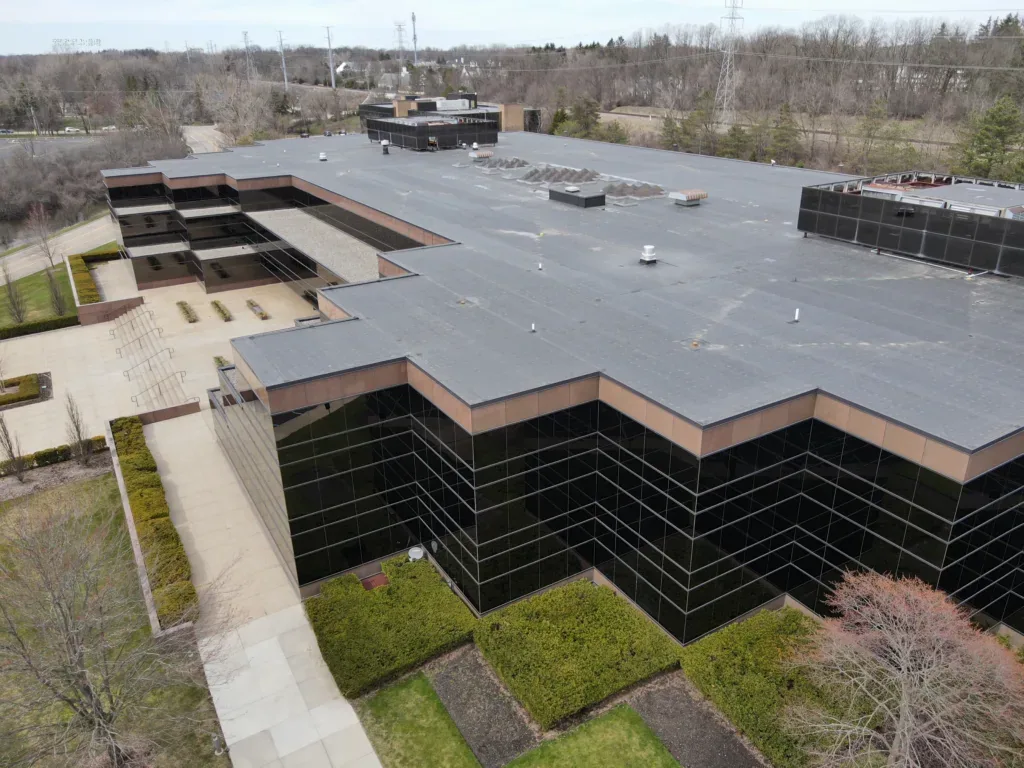
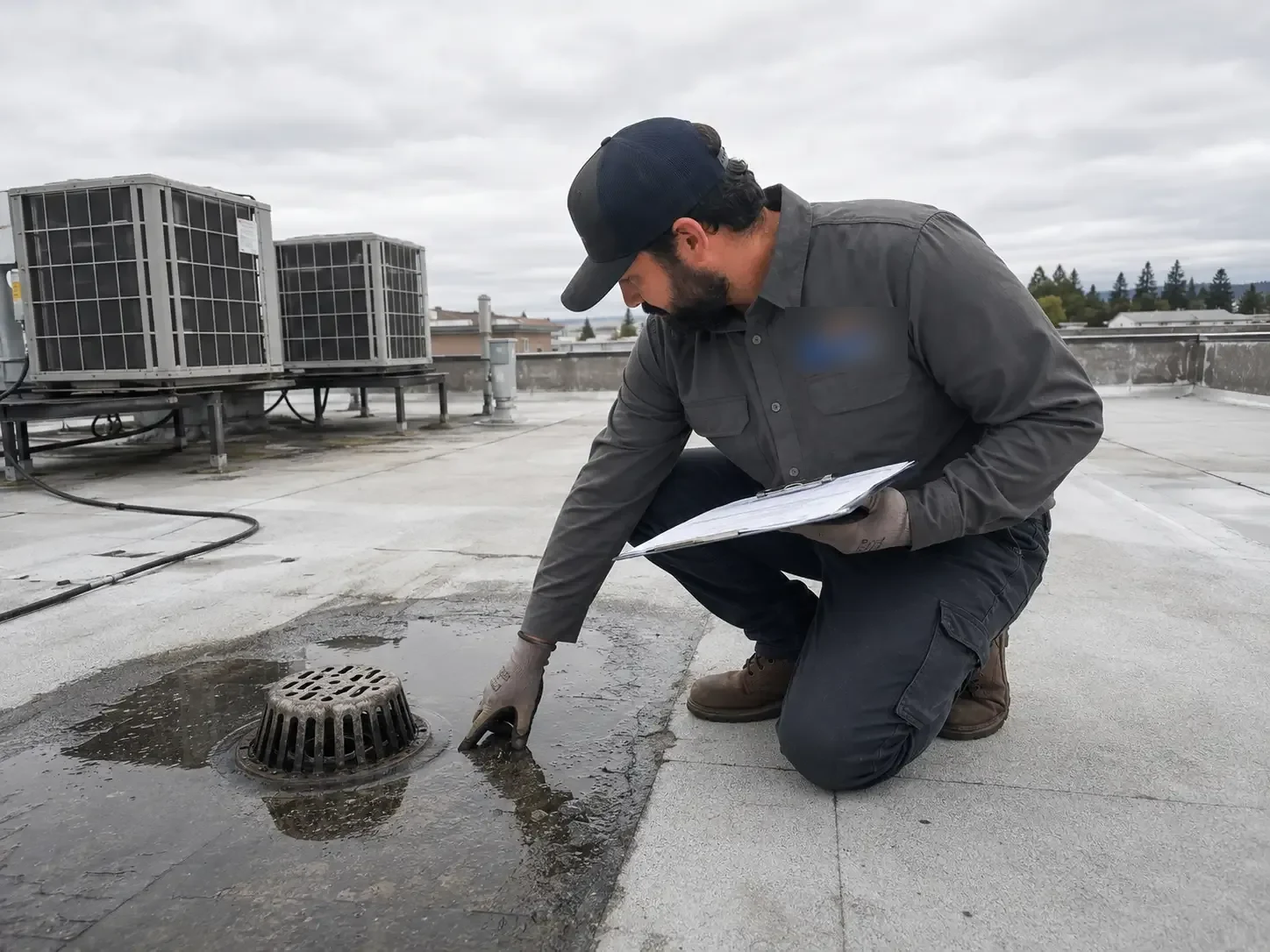
On site, review visible field surfaces, seams or joints, perimeter conditions, penetrations, drains, scuppers, curbs, access paths, and any safely accessible interior indicators provided for the survey. Identify distinct additions or roof sections rather than assuming the building has one uniform assembly or repair history. Photographs should show context and close detail, with captions tied to a plan or repeatable location marker whenever possible.
A visual survey cannot see through concealed layers. A stain may support a moisture concern but does not alone identify the entry point. A surface that appears intact does not establish dry insulation or sound deck. Where evidence warrants additional investigation, describe the test or qualified review that could reduce uncertainty. An infrared moisture survey may help map suspected wet areas under appropriate conditions; the report should identify that as separate scope and not imply it was included unless performed.
Access matters to the conclusion. Note locked hatches, unsafe edges, occupied zones, weather, snow, rooftop equipment, or other areas not inspected. Nearby Detroit climate normals indicate winter snowfall and seasonal temperature variation, which can affect scheduling; regional normals do not describe the roof's observed condition or loading. If weather prevents a reliable review, specify the return visit needed.
Organize findings by observed condition, location, apparent extent, consequence, and recommended next action. Flag open penetrations, active water, failed perimeter details, or other conditions needing prompt protection. Keep routine maintenance, further investigation, and capital planning in separate categories. State whether a repair recommendation is based on a confirmed condition, a visible indicator, or an unresolved question.
Where roof age or replacement timing is unknown, avoid presenting a precise remaining-life number from a brief visual survey. Instead, describe the wear observed, record uncertainty, and explain which records or tests would improve the estimate. A capital planning review can compare near-term work with larger options after the evidence and decision criteria are clear. The report should show a buyer what is known today and what should be investigated before committing funds.
For roof-system questions, note the visible material and any available records without claiming manufacturer approval or warranty status. Keep pricing separate from condition findings unless a defined proposal is requested. This protects the diligence report from becoming a substitute bid with hidden assumptions. If the seller's scope and the inspected condition differ, identify the gap rather than resolving it by inference. A follow-up photo, record request, or test can make that distinction explicit. For a portfolio buyer, note whether the file uses consistent roof-area names, dates, and repair statuses; inconsistent labels can conceal missing follow-up. Preserve the seller's original records and distinguish them from observations made during the new survey.
When a recommendation depends on seller access or a response from a third party, identify that dependency. The buyer can then decide whether the unresolved item belongs in a repair request, closing condition, budget reserve, or post-close investigation.
A useful deliverable begins with a concise summary of the inspected buildings, scope, major observations, and key limitations. Follow with roof-area notes, labeled images, a prioritized action list, records reviewed, and unresolved items. If the transaction team needs a repair budget, identify the scope and assumptions required to develop one. A high-level condition observation is not a contractor's firm price or a construction specification.
Recommend specific follow-up when the evidence supports it: obtain a missing warranty, authorize a test cut, request a specialist's review, clarify access for an omitted area, or ask the seller for repair closeout documents. Include who needs to decide and by when when that timing is provided by the client. At Lakeside City Center, the city-approved redevelopment concept includes residential, office, retail, dining, parks, and civic uses. The Sterling Innovation District is an industrial and high-tech corridor between Van Dyke Avenue and Mound Road. Those plans describe district context, not any one asset's roof; diligence must follow the specific building and transaction scope.
After acquisition, keep the report beside certificates, maintenance visits, repair records, and capital decisions. A maintenance program can address routine observations, and replacement evaluation can define a larger project when findings warrant it. Share the transaction deadline, document list, access contact, and intended reader before scheduling so the report answers the real decision.
No visual survey can make that promise. It records accessible conditions, evidence, limitations, and follow-up needed to reduce uncertainty.
Timing depends on access, building count, records, roof complexity, and weather. Share the deadline early so the inspection scope can be scheduled realistically.
A condition report can flag work and assumptions. A reliable price usually requires a defined scope, measurements, access plan, and sometimes testing.
The survey can document the gap and observed condition, then recommend records requests, testing, or specialist review where needed.
No. It can list documents and visible conditions, while warranty status and coverage must be confirmed with the issuer under the actual certificate.
Send the property list, closing or refinancing date, available roof records, access contact, and the questions the decision team needs answered. We will define a practical inspection scope and document its limits.