Home / Roofing Capabilities / Commercial Roof Capital Planning

Share roof plans, condition reports, repairs, leak locations, access restrictions, and budget timing. We will separate urgent work from planned projects and identify tests or approvals that could change scope.
Build the plan from membrane or panel type, drainage, seams, flashing, insulation, deck observations, and documented repairs. Mark a finding as confirmed, suspected, or not inspected. A wet test cut in one zone does not establish the condition of a separate addition. The plan should retain the location, date, method, and limit for each observation.
A roof condition report can carry the photos and action list into an ownership review. Pair it with the broader asset record so warranty documents, access notes, and completed repairs remain attached to the same property. When records are incomplete, list the missing evidence and the next inspection or test needed before assigning a larger scope.
Active water, open edges, and damaged flashing need prompt attention. A worn surface without active leakage may be scheduled for closer inspection or repair planning. We state why a work item is urgent, what could worsen if it waits, and whether a temporary measure is already in place. This makes the timing basis clear without implying a roof has a fixed life from its appearance alone.
Group work into near-term protection, scheduled repair, investigation, and larger replacement consideration. Each item should include the area, action, access requirement, and decision that remains open. Preventive maintenance can address drainage and minor details between capital projects. When an active opening cannot wait, emergency response can limit exposure while the permanent scope is developed.
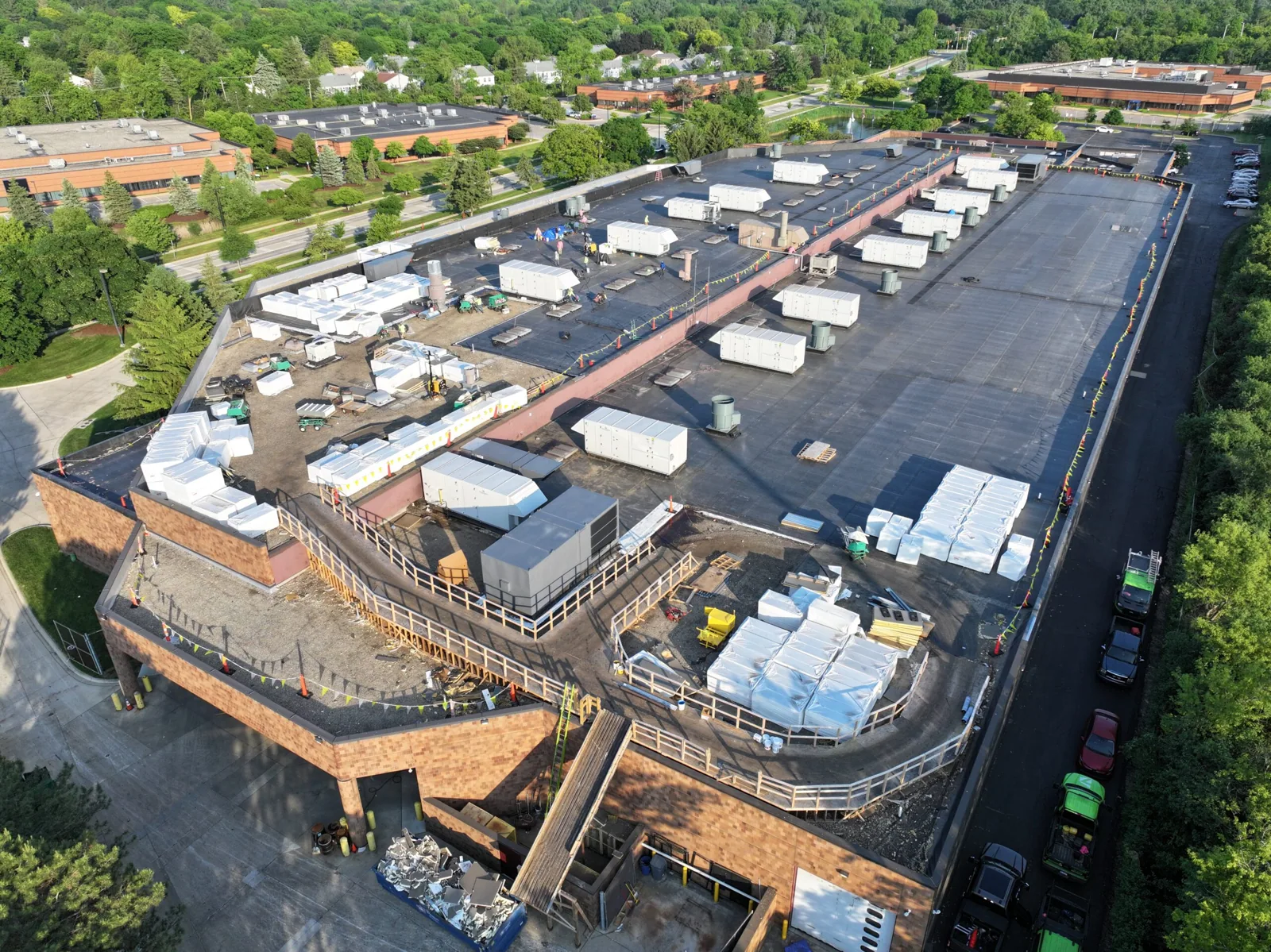
Cost and timing depend on tear-off depth, wet insulation, deck repair, edge metal, penetrations, material compatibility, staging, and the ability to close the roof each day. Occupied-space controls, lift placement, weather windows, and equipment shutdowns also affect sequencing. We identify these drivers before the budget is treated as a firm construction amount.
If concealed layers could expand the repair, specify how they will be checked and who approves a field change. A recover may reduce removal but adds weight and changes curb and perimeter details. Attachment, drainage, code, deck condition, and layer count need review before carrying a recover into a capital plan. A replacement evaluation can define those questions; it is not a substitute for a project-specific design when one is required.
For budget timing, Detroit-area climatology documents winter snow and pronounced seasonal temperature shifts. Treat that table as regional context, not a site reading or a basis for roof design loads. If snow hides a drain or edge, carry a return inspection as a scheduling dependency; do not convert an inaccessible feature into an assumed repair quantity.
Operating constraints differ across the Mound corridor and M-59’s Golden Corridor. Production schedules may govern an industrial property’s access; customer hours, deliveries, and clinical operations can shape work at commercial sites. Those are planning questions, not assumptions about a specific building. We confirm actual access with the property contact and set realistic inspection, material, and close-in windows.
For every project, record the condition basis, proposed scope, exclusions, test needs, access constraints, and approval status. If a budget uses allowances for deck or insulation, explain the condition that would trigger their use. Keep a distinction between an early planning estimate and a scope ready for procurement. A later inspection can revise timing when new evidence changes the repair boundary.
For acquisitions, due-diligence roof surveys can identify gaps that should be resolved before the first capital plan. For a portfolio, multi-site roof coordination can align review dates without blending the condition of separate assets. Share building plans, roof records, current work, access rules, and the budget cycle. We will return a prioritized plan that shows what is known, what remains open, and which decision comes next.
A useful capital discussion can compare more than one path. The base case may cover visible, measured work and documented access. A second case can show what changes if exploratory openings find wet insulation or damaged deck. A third can carry a larger replacement option when repair limits or system compatibility remain uncertain. These are planning alternatives, not promises that every concealed condition will occur. Identify the evidence behind each scenario and the decision point that would move the project from one case to another.
Keep quantities traceable to roof areas, elevations, or marked plans. If two roof sections differ in age, assembly, drainage, or repair history, list them separately rather than blending them into a single average. Note whether the estimate includes protection, temporary weathering, disposal, edge work, curb transitions, and restoration around rooftop equipment. Explicit exclusions matter: unknown structural repairs, electrical relocation, interior finishes, and after-hours work should not disappear inside a broad allowance.
When comparing repair with replacement, show the work each option actually covers and the conditions that make it viable. A lower initial scope may leave known deficiencies or require repeat access. A larger project may depend on testing, design, permitting, tenant coordination, or funding approval. The comparison should let an owner ask a specific next question, such as whether to authorize a test cut or confirm a shutdown window, instead of treating a single number as a complete decision. A written record of that choice prevents the planning estimate from being mistaken for an approved construction scope.
Set a review date for each open assumption. If no test is authorized before budget approval, keep that uncertainty visible in the next estimate cycle rather than silently converting it into a confirmed quantity. The date and owner of the next decision make the plan actionable.
It can show condition, assumptions, and planning horizons. New inspection findings, concealed layers, access, code review, and budget approval can change the timing.
We compare verified condition, active exposure, consequences of delay, testing needs, access, and the scope required to make each roof weather-tight.
A planning allowance can be identified when an unknown layer may change scope. The plan should state what test or field condition would activate it.
Maintenance can address drainage and small defects before they spread, but it does not reverse widespread moisture, failed attachment, or deteriorated deck.
Provide roof plans, inspection reports, repair history, warranty records, access limits, active leak reports, and the approval calendar.
Share roof plans, condition reports, repairs, leak locations, access restrictions, and budget timing. We will separate urgent work from planned projects and identify tests or approvals that could change scope.