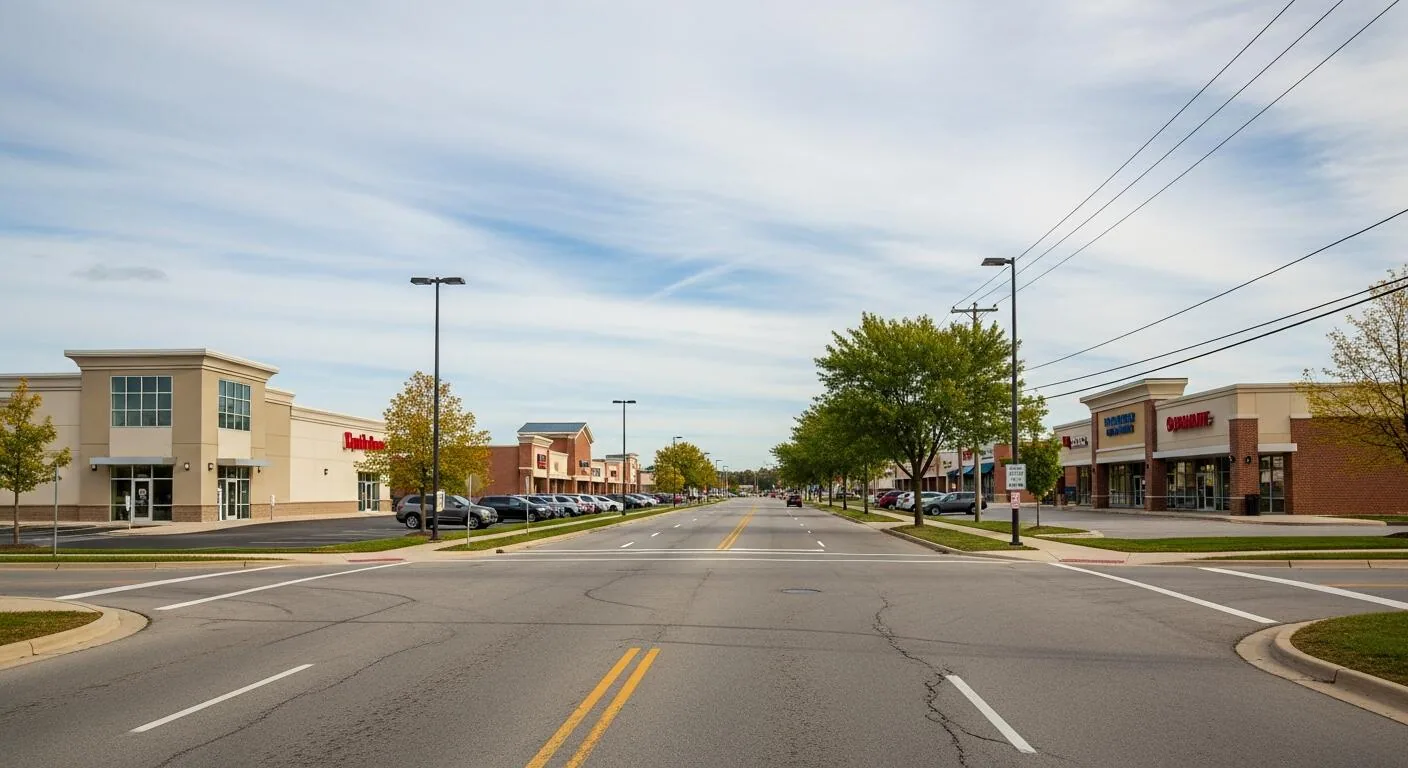
Home / Service Areas / Shelby Lakeside and Hall Road District, Shelby Township
Send the property address, tenant schedule, roof plans, known leak locations, access routes, and repair records. We will inspect drainage, transitions, and the reported roof area.
Roof work above a retail-service property can affect storefront access, deliveries, and occupied space below. We confirm which entrances remain open, where lifts can be placed, what hours limit noise, and how material reaches the roof. Those choices come from the property plan and tenant contact, not from the district label. If a retail entrance sits below the work zone, the scope identifies overhead protection and a safe route while the roof is open.
The district's proximity to Henry Ford Macomb Hospital and regional malls does not imply that every nearby building serves healthcare or retail tenants. The property contact confirms actual use and any sensitive interior area. For an occupied roof replacement, a phased reroof schedule divides the field into areas that can be protected and closed in within each shift. If an active leak occurs outside normal hours, our round-the-clock repair response can protect the opening while the cause is assessed.
Shelby Township's 23 Mile Road corridor is a separate district with commercial, office, and industrial property. The Golden Corridor in Sterling Heights has its own mixture of retail, healthcare, dining, education, entertainment, and industrial destinations. Each address still needs its own access and roof plan.
A clean-looking drain top does not confirm that the outlet is open below. We remove accessible debris, inspect the strainer and sump, check visible discharge where available, and trace the membrane slope into the drain. If water remains after cleaning, we look for a shallow low area, a raised repair, or an insulation transition that interrupts flow. The overflow route matters too; a primary drain repair should not leave the secondary path blocked.
Nearby Detroit climate normals show about 45 inches of snowfall in an average year, concentrated between November and April. That is regional context, not a measurement for a Shelby Township roof. Snow can cover the drain and scupper; thaw water may collect at a low point and refreeze when the temperature falls. We mark any outlet that cannot be safely examined and return when visibility and access improve. A roof drain and scupper inspection records the primary and backup routes and identifies whether the work is clearing, repair, or further investigation.
Detroit's January and July normal temperatures also show substantial seasonal variation. We inspect metal joints and perimeter details for movement and check whether the membrane remains tied to those transitions. A winter damage assessment connects any observed opening or ice-related obstruction to the actual detail rather than a climate average alone.
A stain near a sales area or service counter may sit far from the roof opening. Water can follow a deck flute, a pipe, or a framing member before it appears indoors. We document the interior mark and timing, then inspect the roof above, upslope, and around nearby curbs and seams. If there are several possible paths, we can use a controlled test or selective opening to isolate the source. The report distinguishes observed evidence from an unconfirmed cause.
Where the water path crosses a seam, we check bond and material compatibility on both sides of the opening. A localized puncture can be patched if the adjacent assembly is dry and secure; repeated leakage, wet insulation, or a loose seam may require a wider repair. A commercial leak investigation records the evidence and repair boundary. If the opening is at an upstand, a flashing detail repair should tie into sound membrane and substrate.
Delay can allow water to spread through insulation or reach interior finishes, but the affected area is verified with inspection or testing. We do not use the stain size as a proxy for roof damage. If moisture extent changes the scope, a test cut provides a sample at a selected location and is closed after documentation.
We identify the existing membrane, insulation, deck, attachment, previous overlays, and warranty terms before selecting a coating, recover, or replacement. A coating needs a suitable substrate and sound bond; it does not dry wet insulation or correct a failing deck. A recover requires an assembly that can support new attachment and reliable terminations. If those conditions are unknown, we state what record or test would resolve them.
A recover assessment checks moisture, attachment, layer count, edge restraint, and transitions. A roof restoration review checks substrate condition, preparation, drainage, and adhesion before coating is considered. When removal is warranted, a replacement scope defines tear-off sections, deck allowances, protection, and the daily close-in boundary.
The state implementation dates are April 9, 2025 for the 2021 Michigan Building Code and April 22, 2025 for its commercial energy code. These state effective dates inform project review; they do not by themselves decide what a particular roof scope must include. We confirm applicable requirements for the work and document proposed insulation or assembly changes before ordering materials.
The proposal should identify the roof area, verified defects, repair method, protection, access hours, and assumptions. Cost varies with measured area, number of layers, wet insulation, deck repairs, penetration count, edge length, disposal, and staging. Tenant schedules or restricted entrances can change the sequence. We show the allowance for concealed conditions separately and explain what finding would change it.
At closeout, we photograph the repaired detail, record the roof location, and list any follow-up item. That is useful to a property manager coordinating multiple tenants or planning the next inspection. A photo-based condition record can keep findings, limitations, and next actions together. The Hall Road district's regional retail and healthcare connections do not make the area one uniform property type; access instructions and roof history should remain tied to the address.
Provide roof plans, current tenant hours, access restrictions, leak reports, warranty records, and prior repair notes. We will inspect the drain path and reported area, then state whether the evidence supports a repair, test, recover, or replacement decision.
No. It describes regional connections. We confirm the use at the specific address and plan interior protection around its actual tenants.
Yes, when debris is the obstruction and the outlet functions. If water remains, we inspect slope, insulation transitions, and the accessible outlet path.
We agree on staging, lift placement, protected routes, delivery windows, and overhead work zones with the property contact before mobilization.
We map the interior stain and timing, inspect the roof above and upslope, and test when more than one detail could explain the path.
No. We first identify moisture and substrate condition. Coating selection depends on a sound, compatible surface and does not replace wet insulation or deck repair.
Send the property address, tenant schedule, roof plans, known leak locations, access routes, and repair records. We will inspect drainage, transitions, and the reported roof area.