Home / Commercial Roofing Services / Storm Damage Roof Repair
Send access instructions, the interior leak location, available roof records, and the detail that should be checked first. We will assess safe access, protect an active opening, and document the permanent repair scope.
Loose metal, displaced equipment covers, broken skylights, standing water, and fallen branches can create hazards before the leak is located. We check access conditions and isolate unsafe areas before walking the roof. If water is entering, our emergency response is available at any hour, including weekends and holidays. The first task is to limit additional entry with a compatible temporary cover or dry-in. A temporary repair protects the building while we document what happened; it does not replace the permanent scope.
For an occupied property, we coordinate roof access with production, loading, tenant circulation, and any equipment that cannot be shut down. A leak over an electrical room or active process area may need interior protection while the roof is assessed. We photograph the initial condition, record the affected room or equipment, and note whether water is still moving. A 24-hour emergency roof response can stabilize the opening and establish what needs a closer inspection.
The ceiling stain does not always sit below the roof opening. Water can travel along a deck flute, insulation joint, pipe, or wall before it becomes visible. We start at the reported interior area, then inspect the related roof details uphill and along the likely water path. The roof inspection checks seams, patches, penetrations, curbs, metal transitions, drains, and scuppers. We mark each finding so the repair boundary follows the confirmed condition instead of the stain alone.
At the Stellantis assembly and stamping campus, General Dynamics defense manufacturer, or another industrial property, the roof arrangement and operating limits must be verified at the site. The city’s employer information establishes the local manufacturing and defense base, not any individual building’s roof type or storm damage. We confirm the deck, membrane, equipment, and access instructions before entering a work zone. A service call should identify the specific affected area and distinguish observed damage from unrelated aging or old repairs.
A storm may lift a seam, loosen edge metal, puncture a membrane, or move flashing at a curb. We compare those conditions with surrounding surfaces and prior repair records where available. A fresh break, displaced component, or debris impact can support a repair decision. General wear, old sealant, or a previous patch may need attention too, but should be documented separately. That distinction keeps the scope clear when the owner is tracking repairs or discussing an insurance claim.
Winter weather adds another inspection path. Snow can hide a drain, and thawing water can refreeze at a low point or behind a parapet. Nearby Detroit normals report about 45 inches of annual snowfall, concentrated from November through April; document the actual storm date and observed roof damage. We check accessible drains, overflow routes, seams, and metal laps as conditions allow. Our snow and ice roof damage work addresses damage that is actually present, not a conclusion drawn from the climate record alone.
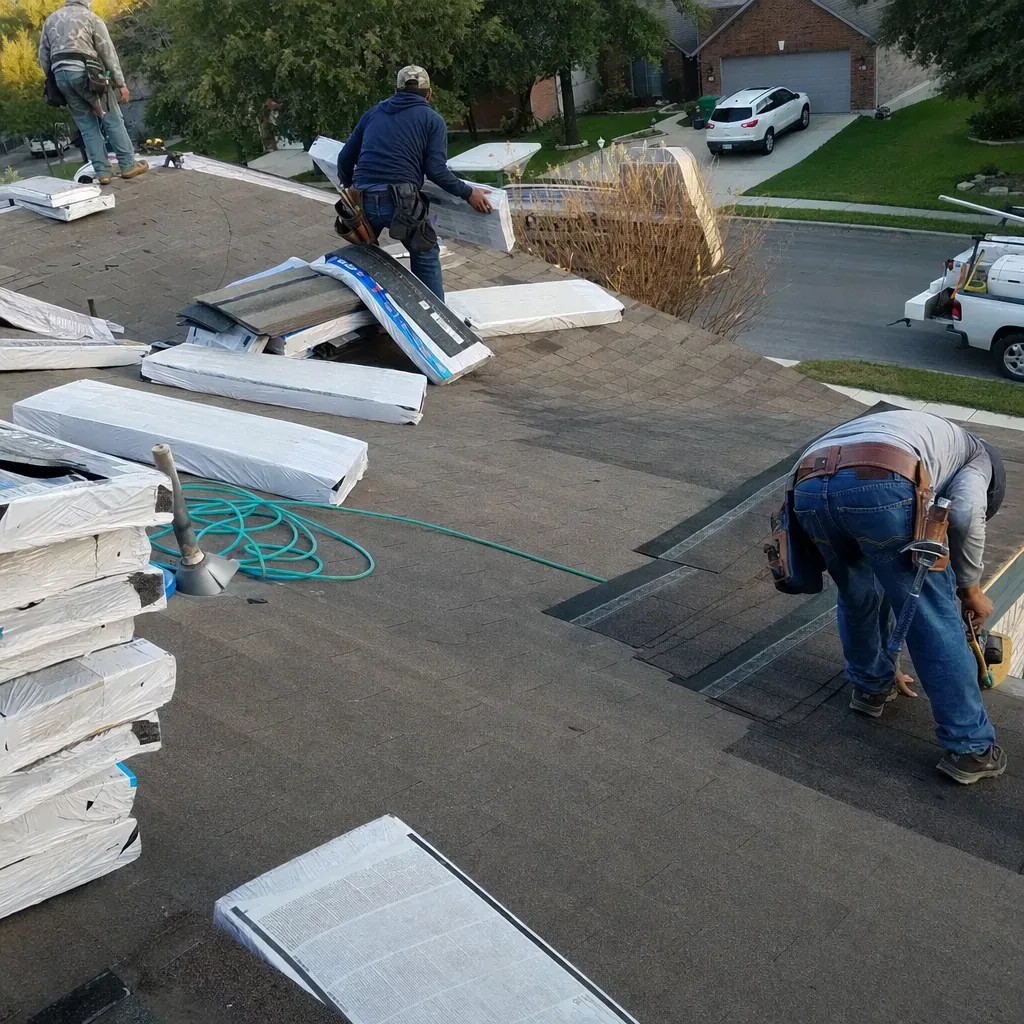
A temporary cover needs secure edges and a route that keeps water from collecting beneath it. We select the protection method for the opening, roof system, and forecast. A loose tarp can become another wind hazard, so we fasten or ballast it appropriately and check where runoff will go. If the leak traces to a split seam or damaged curb flashing, the cover must protect that detail without trapping water against an adjacent wall or drain. We record what was installed and what condition remains after the temporary work.
Interior controls matter as well. We can identify where to place catchment, move vulnerable materials, or restrict access while the exterior repair is pending. The property contact should know what area remains at risk and what signs require another call. If the opening is isolated and the roof can be safely repaired, our wind-damage repair can address lifted edges, displaced metal, or membrane damage in the permanent scope.
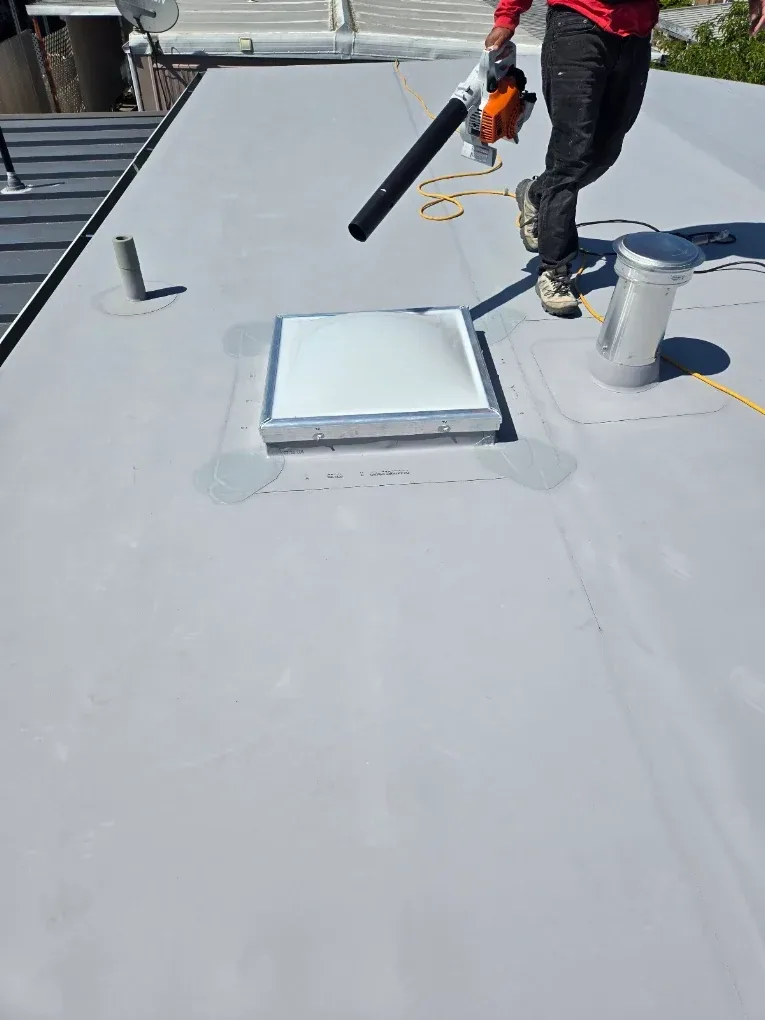
The permanent repair follows the verified assembly. We remove loose or damaged material, inspect insulation and deck where the opening exposes them, and install compatible membrane or flashing. A repair should extend to sound material and close at a stable edge. If water reached the insulation, we determine whether a small section can be dried and repaired or whether saturated material needs removal. The boundary is based on test results and visible condition, not a fixed patch size.
Drainage may need correction if the storm shifted a strainer, bent a scupper, or left debris across the outlet. We inspect bowl attachment and the overflow path, then repair the detail that failed. The drain and scupper scope can be sequenced with membrane or edge repairs so water has a clear route after close-in. We finish by checking the patch perimeter, termination, and nearby details, then photograph the completed work and any remaining limitations.
A useful damage record includes the reported event date, interior leak locations, roof observations, temporary protection, and permanent repairs. We separate what was observed from what still needs confirmation. Photographs should show location and scale, not only a close-up without context. When the owner is preparing a claim, the report can help organize the roof findings and repair documents. The related claim documentation support can keep the repair scope, images, and follow-up records together.
Send roof access instructions, assembly records, photos from the interior, and the detail or leak area that needs inspection first. We will stabilize an active opening, map the affected roof area, and show which work is temporary and which repair is permanent. If weather or unsafe access limits the first visit, we will state what could not be checked and set the next inspection step.
No. Report active water entry and protect interior equipment or materials if it is safe to do so. We can assess access and stabilize the opening. Wet or icy roof conditions may limit the exterior inspection, but they do not prevent us from planning the next safe step.
We can install temporary protection suited to the opening and forecast. The permanent repair follows after the affected layers and tie-in points are clear. We document what remains at risk while the temporary cover is in place.
We compare the affected area with surrounding material, prior repairs, and any available earlier photographs. Fresh displacement or impact is recorded separately from general aging. The report describes what we observed without assigning damage to an event that cannot be confirmed.
No. The Detroit normal is regional climate context, not proof of damage or a structural load calculation for one building. We inspect the actual drain, seam, metal, and interior conditions and document what is present.
Send the building address, safe roof access instructions, interior leak location, and any photos or assembly records available. Note equipment or operations that cannot be interrupted. Those details help us plan the first inspection and protection step.
Send access instructions, the interior leak location, available roof records, and the detail that should be checked first. We will assess safe access, protect an active opening, and document the permanent repair scope.