Home / Roofing Manufacturers / SOPREMA Commercial Roofing
Send roof plans, SOPREMA product records, repair history, leak locations, test results, and access restrictions. We will inspect the layers and transitions before recommending a repair scope.
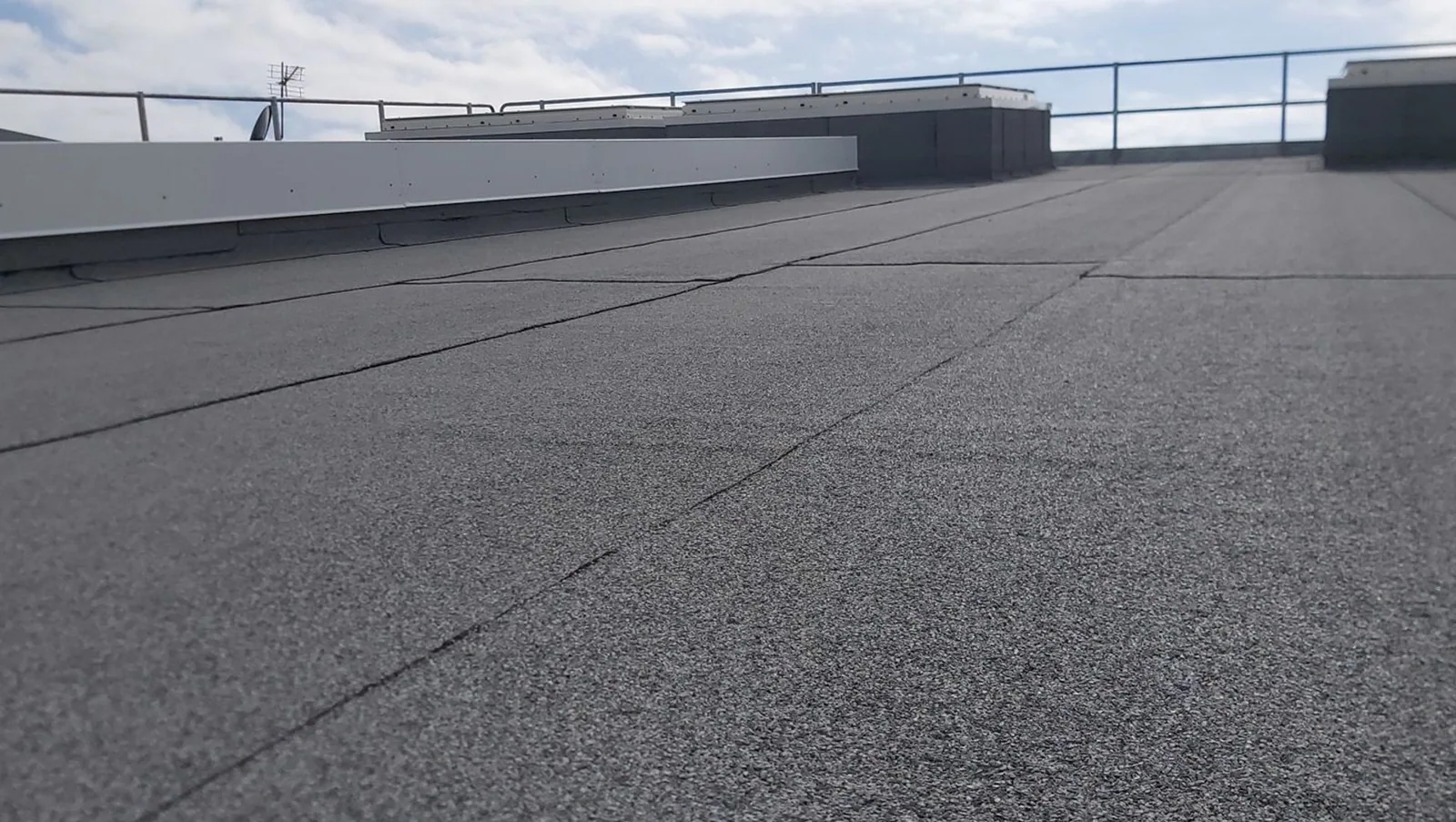
SOPRALENE is an SBS-modified bitumen product family; ELASTOPHENE includes SBS-modified sheets with glass-fiber reinforcement. A roof may combine base plies and cap sheets, with a surfacing layer that protects the membrane from exposure. Check product markings, invoices, drawings, and visible edges at drains or curbs to establish the system. A repair plan needs to know whether the damaged layer is the field cap, base ply, flashing ply, or more than one.
SBS modified bitumen can be applied using different methods, including heat welding, cold adhesive, or self-adhered products depending on the selected sheet and approved assembly. Application matters at laps and transitions. A poorly fused lap, contaminated surface, incompatible adhesive, or open end lap can create a path beneath the cap. Inspect the surfacing and interply bond; do not treat every crack or blister as the same failure.
The modified-bitumen roof review can follow the layers and surfacing. If the existing roof is built-up rather than modified bitumen, a built-up assembly inspection should identify its felts, asphalt, and cap condition before work is chosen.
A surface crack may be limited to the cap sheet, or it may extend through more than one ply. A blister may contain air or moisture. We inspect its shape, firmness, surfacing, and relation to seams or drainage before opening it. If a test cut is needed, identify what decision it will answer, record the layer sequence, and close the opening with a compatible detail the same day.
Moisture can travel along insulation joints or between bituminous plies, so the visible defect may not define the wet boundary. Use a moisture survey or selective cuts to map the affected area. Keep confirmed, suspected, and untested zones separate. If wet insulation reaches a deck seam, replacement scope may extend beyond the top-layer repair. Confirm substrate and insulation condition before carrying a recover forward.
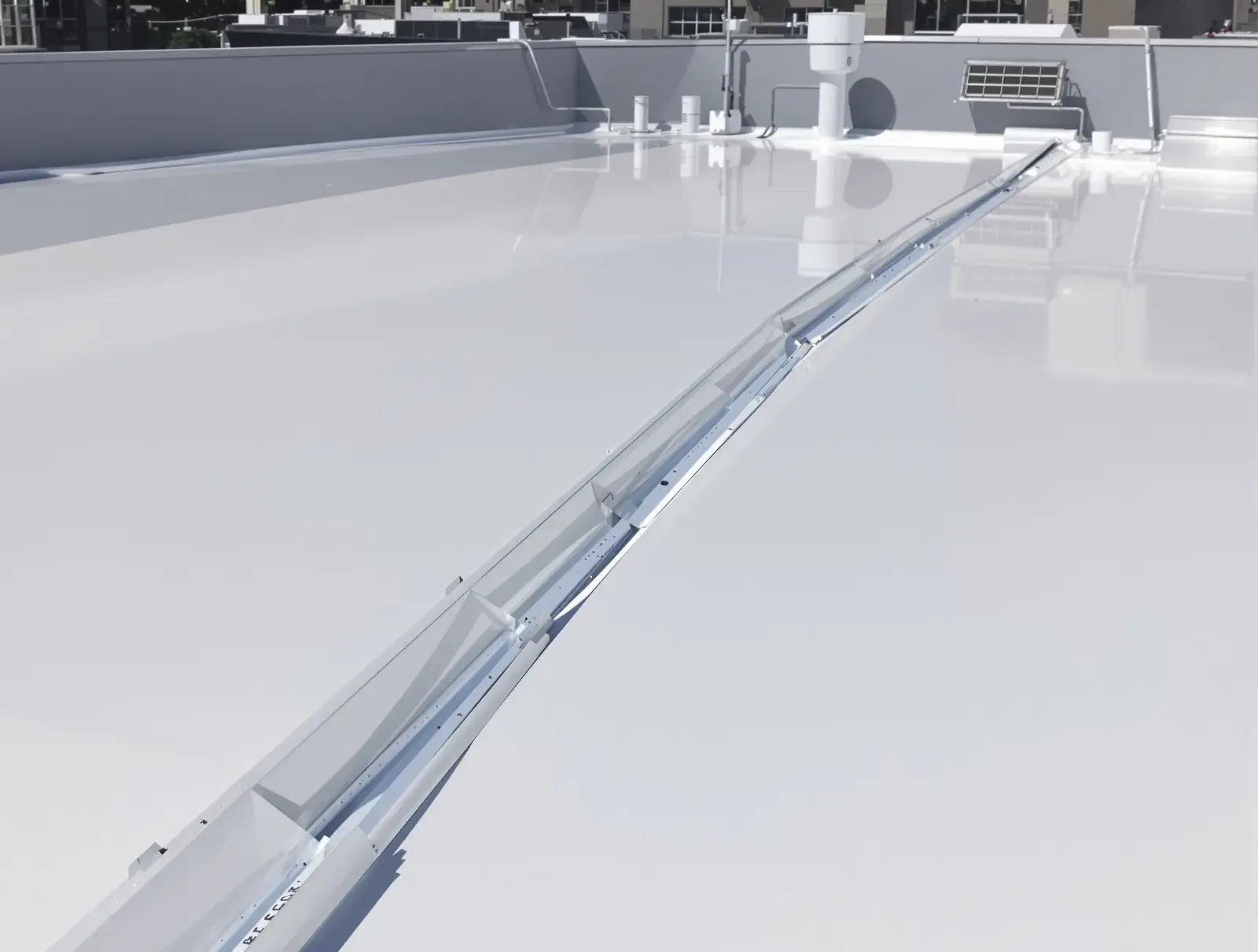
Aged SBS or PVC areas can be adjacent on a phased building. Keep their primers, laps, reinforcement, and patch materials separate unless system documentation confirms a compatible transition. Carlisle's and Johns Manville's bituminous and single-ply ranges have their own details; Carlisle system notes and JM roofing records should be checked for those separate sections.
Liquid-applied resin can be used for certain flashing and detail conditions, but the substrate and reinforcement determine the result. Remove loose material, check dryness and compatibility, prime where specified, and embed the required fleece without folds or voids. Build the termination into sound material and respect the published application window. A liquid detail cannot bridge a moving joint or restore wet insulation below it.
SOPREMA's ALSAN liquid-applied systems include PMMA/PMA products. Select them for a defined detail that suits the existing roof and project requirements, not as a generic sealant for every seam. Document the primer, resin, reinforcement, overlap, cure conditions, and close-in boundary for the repair. If the base sheet is split or the assembly moves, correct the underlying condition before coating the surface.
Metal edges, pipe boots, drains, and equipment curbs need a transition designed for their movement and exposure. A edge metal and coping repair should connect the field membrane to secure metal rather than smear a surface patch over an open termination. A liquid flashing repair may complement that work where the approved assembly calls for it.
Detroit City Airport precipitation normals range from 1.41 inches in February to 3.49 inches in May. That nearby station record is useful for seasonal scheduling, not a leak diagnosis at a Sterling Heights building. After thaw, inspect the laps, drains, and flashings that were concealed by snow, and document any area that still needs a test.
Water at a drain may point to a clogged strainer, a blocked leader, a low spot, compressed insulation, or a damaged flashing ring. Check the bowl and overflow path, then inspect the surrounding surface and underlayment evidence. On a multi-ply roof, water can move between layers before reaching a ceiling. On a single-ply section, follow the seam and flashing path without assuming the nearest interior stain marks the entry.
The drain and scupper inspection can address a defined outlet or flashing defect. If the system needs broader work, preserve the evidence and define the repair or replacement limit before removing material.
A localized split in a dry, bonded cap sheet can sometimes be repaired by removing loose surfacing and installing a compatible detail. Widespread cracking, exposed reinforcement, repeated wet insulation, or separated interply bonds point to a broader scope. A coating or liquid flashing system does not remove trapped moisture. Test the assembly and assess drainage before comparing repair with recover or tear-off.
Scope drivers include the number of plies, removal depth, substrate preparation, insulation replacement, metal transitions, access, staging, disposal, and daily protection. In winter, dry-in windows matter. Specify the area to be opened, the temporary tie-in, and how the work will stop if temperatures or precipitation fall outside product limits. For occupied sites along M-59, coordinate deliveries, customer access, and work areas with the property contact; do not infer those operations from the district name alone.
Share SOPREMA product records, roof plans, repair history, test results, drainage concerns, and the first detail to inspect. We will identify the installed assembly, document the observed condition, and define whether the next step is localized repair, additional testing, or a larger replacement plan.
It is an SBS-modified bitumen product family used in approved multi-ply roofing and flashing assemblies. Verify the specific sheet and ply role.
Not until its contents and bond are checked. Moisture, loose surfacing, and interply separation can require different work than a dry, isolated blister.
Use it where the specified liquid-applied system matches the substrate, movement, reinforcement, and application conditions at that transition.
A recover requires review of existing layers, moisture, attachment, drainage, deck, and the approved system details before it is considered.
Inspect drains, low points, laps, cap-sheet cracks, and flashing for conditions that were concealed. Record what was visible and what still needs testing.
Send roof plans, SOPREMA product records, repair history, leak locations, test results, and access restrictions. We will inspect the layers and transitions before recommending a repair scope.