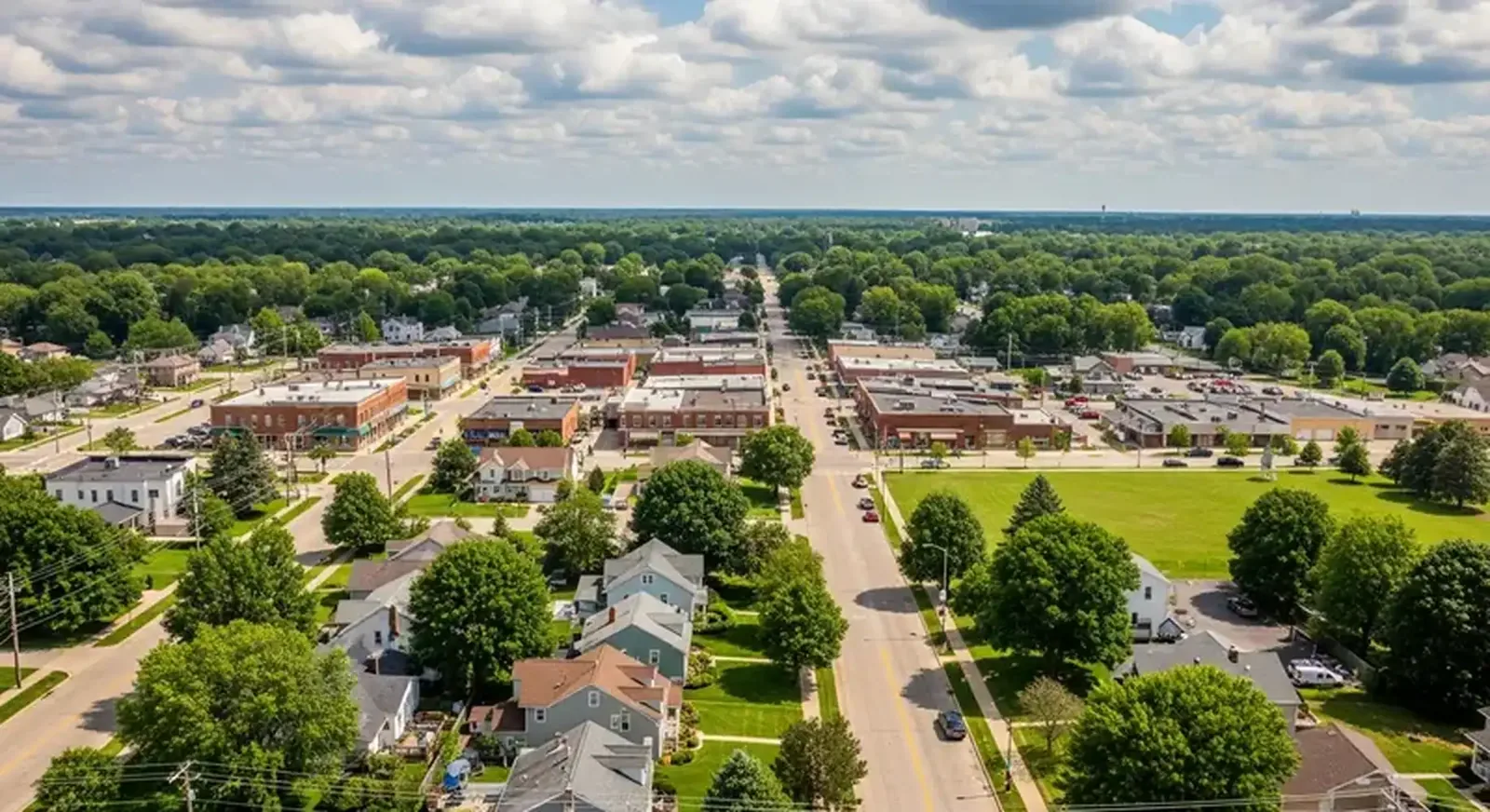
Home / Service Areas / 23 Mile Road and North Avenue, Macomb Township
Share current demolition or construction status, roof records, proposed details, access routes, and leak history. We will inspect the existing or planned interface and document the close-in requirements.
Demolition and anticipated development create two different roofing questions. An existing neighboring property needs an inspection of its current membrane, penetrations, drains, and repair history. A proposed new structure needs its own drawings, assembly design, access plan, and trade sequence. Demolition of the former CVS building began in July 2026, and a Sheetz development is planned for the cleared parcel. We confirm the active phase with the property contact before scheduling or describing work.
At an active project, temporary waterproofing may be needed at a roof edge or curb before the permanent tie-in is ready. We identify the substrate, membrane termination, drainage route, and party responsible for the final wall or equipment detail. For a new assembly, the design team provides roof plan and insulation requirements; our inspection can then focus on the tie-ins and close-in sequence. A cover-board and insulation review can check substrate preparation and layer compatibility against the project documents.
Macomb Township Town Center is a separate civic and commercial project around Broughton Road. Shelby Parkway Corporate Park is a different township business area. Neither anticipated development nor business-district labels establish the roofing system at this corner.
For an existing commercial roof near construction, we inspect the boundary exposed to dust, trade traffic, or a changed drainage route. We check metal flashing, membrane edges, seams, drains, and equipment curbs for a disturbed bond or open fastener. A leak inside may originate at an upslope detail or wall transition, so we map the path before repairing the nearest visible opening. If new work connects at the roofline, we document both existing material and proposed tie-in.
A commercial roof inspection records the visible assembly and access limits. If the suspected leak is not clear, a leak investigation compares interior evidence with seams, penetrations, and drainage. A test cut is useful when concealed layers could change the repair boundary; we photograph the layers and restore the approved opening after sampling.
Construction dust or debris can reach a drain from another roof section. We inspect the strainer, sump, overflow, accessible outlet, and the membrane around the low point. A drain and scupper assessment identifies whether the problem is a blockage, a restricted outlet, or a roof-plane condition.
Nearby Detroit normals record winter snowfall concentrated between November and April, with an annual average near 45 inches. This regional data does not give a snow measurement for a Macomb Township property. Snow cover can hide a temporary edge, seam, or outlet, and thaw water can collect before refreezing at a drain. We note any area that cannot be seen or reached safely and return when visibility permits.
Nearby Detroit monthly normals also show a wide difference between winter and summer temperatures. During that cycle, we check metal joints, curb corners, and membrane terminations for movement. The inspection records an observed separation or water path, not a defect inferred from a regional normal. A temporary close-in must shed water while it is exposed; a permanent tie-in follows the final wall or equipment detail.
Construction schedule and weather window affect how much roof can be opened each shift. We plan a stopping boundary before removal begins, then inspect drains and temporary edges before leaving. A phased roof sequence can coordinate work beside occupied properties and active project areas.
For an existing roof, we verify membrane type, insulation, deck, attachment, overlay history, and past repairs. A recover is considered only when the assembly is dry, secure, and compatible with the planned detail. Wet insulation, a weak bond, repeated openings, or damaged deck can make removal the sounder choice. We use test cuts where they answer a specific question about concealed layers or moisture extent.
For new work, design documents identify the assembly and transitions to other trades. We check the roof deck, cover board, attachment, edge restraint, drains, and penetrations against the approved details. A recover assessment covers existing assembly suitability, while a replacement scope states removal limits and close-in for an existing building. The actual site stage determines which one applies.
Michigan's 2021 Building Code has been in effect since April 9, 2025. The Commercial Energy Code followed on April 22 that year. These statewide dates inform project review; they do not specify the roof assembly at a proposed Sheetz site. The applicable documents and scope determine what must be built or replaced.
A useful handoff records the roof section, membrane termination, condition, approved repair, and any trade dependency. If a wall, curb, or service penetration remains incomplete, the report identifies what must happen before the roofing connection is final. Photos locate the detail and show the boundary between temporary and permanent work. The record should reflect the actual phase when the visit occurred.
Cost and timing depend on roof area, new or existing assembly, layers to remove, wet insulation, deck repair, edge and penetration count, access, staging, and the amount that can be closed in before work stops. We show allowances separately and identify what finding could change them. After construction activity ends, routine roof checks can record drains, seams, and transitions over time.
Provide the current site plan, demolition or construction schedule, roof records for existing buildings, proposed roof details, access route, and leak reports. We will confirm which phase is active and scope work only against the assembly and details that can be inspected.
The Sheetz development is planned for the former CVS parcel. We confirm current construction and occupancy status before scheduling work.
No. Its construction date does not establish the roof's present layers or condition. Records and field inspection are needed for any neighboring or retained building.
We identify the active phase, temporary boundary, final tie-in owner, access route, and close-in limit before opening an area.
The membrane, wall detail, substrate, drainage path, and transition sequence must be confirmed. The new connection should not rely on an unverified old edge.
Send current construction status, roof drawings, access instructions, leak reports, and records for existing buildings. Those details set the area and decision under review.
Share current demolition or construction status, roof records, proposed details, access routes, and leak history. We will inspect the existing or planned interface and document the close-in requirements.