Home / Commercial Roofing Services / Commercial Roof Coating
Send roof access instructions, assembly records, and the detail or leak area you want inspected first. We will check moisture, adhesion, drainage, and edge conditions, then compare coating with the roof options that fit the verified assembly.
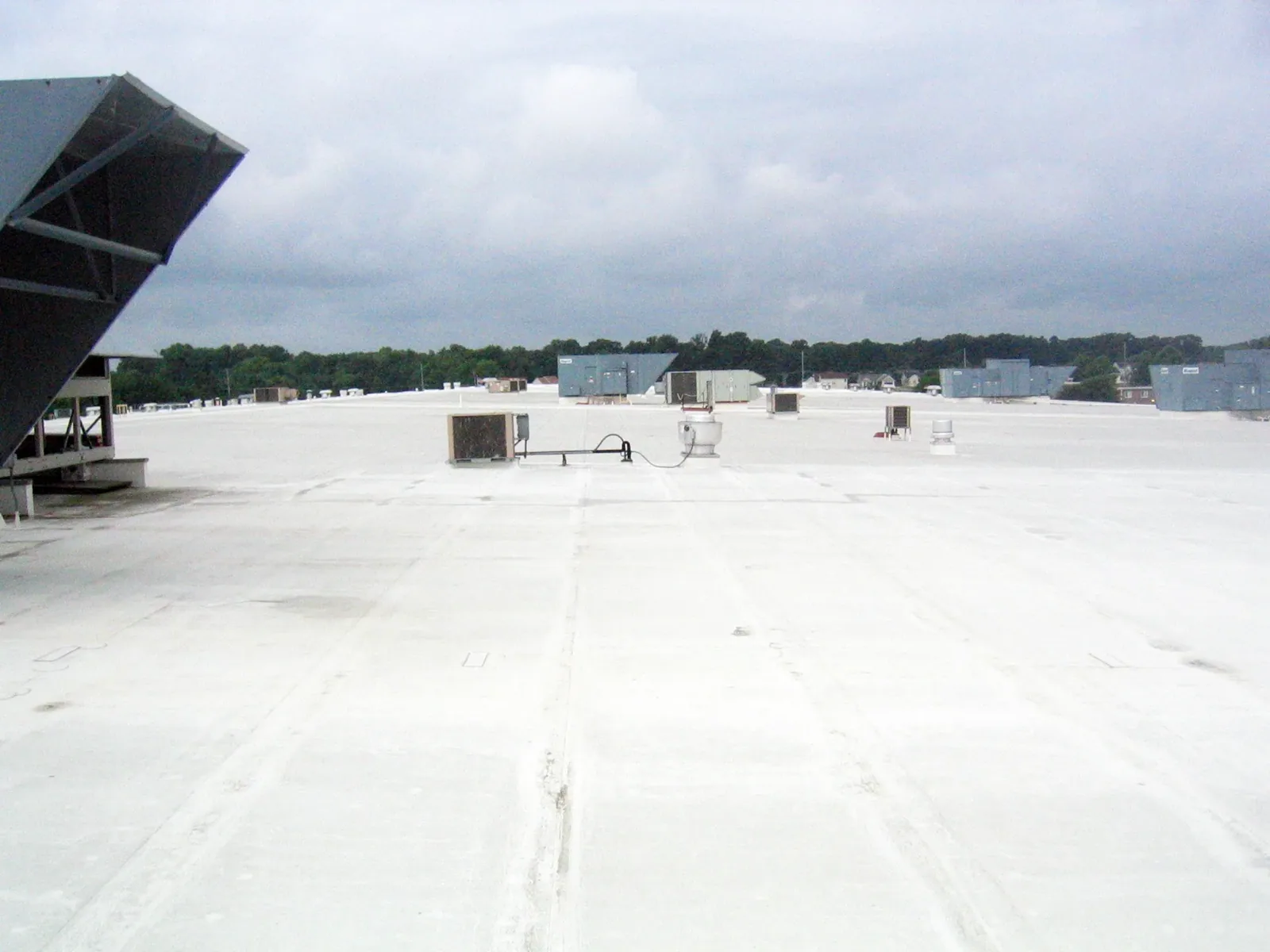
Preparation starts by identifying the membrane or surface material. We look for dirt, chalking, loose coating, oil, open seams, failed patches, and areas where adhesion has been lost. A roof with several repair materials may need compatibility checks before a coating is selected. The inspection maps the field, edges, penetrations, and areas of ponding, then marks where adhesion tests or test cuts would change the work. An even color can hide debonding; test adhesion and inspect joints before application.
Moisture below the membrane changes the plan. Infrared indications can help locate temperature differences across a large area, while test cuts confirm what is in the assembly. If insulation is wet or the deck is unsound, coating over it can preserve the visible surface while the underlying failure continues. We document the affected limits and compare repair, selective removal, and another system. A coating scope should explain what stays, what is repaired first, and why the selected material can bond to the prepared substrate.
Silicone and acrylic coatings do not behave the same way. We select by existing membrane, surface condition, drainage, exposure, and the detail being restored. Silicone can be considered where ponding exposure is part of the verified condition and the product system supports it. Acrylic options have different water and application requirements. Select the material from the existing membrane, drainage, exposure, and product requirements. The silicone coating system or acrylic coating system must match the prepared surface and manufacturer instructions for that assembly.
Adhesion testing can prevent a broad application over a surface that will not hold it. We prepare sample areas as required, allow them to cure under suitable conditions, and evaluate the bond. If the test fails, the scope may need more cleaning, a primer, a different coating, or another roof option. We also identify seams, fasteners, and flashing that require repair before the field receives coating. A continuous film cannot make a moving or open joint sound.
Low spots, drains, and scuppers need attention before a new coating closes over them. We remove debris, check the outlet and overflow route, and look for standing water that may signal a slope or insulation problem. A coating may tolerate a specific exposure, but it does not remove water from a depressed section. If water reaches an open seam or a loose drain flange, we repair that detail first. The drain and scupper scope records the outlet, the defect, and any work needed to keep the water path clear.
Nearby Detroit climate normals show a wide seasonal temperature range and recurring snowfall. Meltwater can collect at a drain or refreeze near a seam, so we inspect the field and outlet together. A coating may be unsuitable if the roof cannot drain as intended or if the moisture source is still active. Where a recover fits better, we compare it with another membrane layer after checking assembly height, attachment, and moisture.
Surface temperature, moisture, and forecast affect cleaning, primer, and coating application. We plan work for conditions that let the system cure as specified, with enough time to protect each treated area before weather changes. The calendar should account for wash water drying, repairs curing, and access limits. If the surface stays wet or temperatures fall outside the product range, application moves. That decision protects adhesion and keeps the edge of each work section from becoming a weak point.
On an occupied building, overspray control, air intakes, loading, and foot traffic also shape the work zone. We identify equipment and operations that need protection or coordination. The Sterling Heights Mound Industrial Corridor includes major industrial and advanced-manufacturing uses, but we do not assume a specific facility's operating schedule. We confirm the roof access and site rules with the owner. Each day's section is sized so its perimeter can be finished and protected before crews leave.
Open laps, loose patches, corroded metal, and damaged penetration flashings need a repair detail before coating. We mark the location, determine whether the material can be repaired in place, and confirm that the new detail will bond with the system. Roof curbs and pipe boots can move at a different rate than the field. A coating does not remove that movement. We repair the flashing, reinforce where the system allows, and keep changes to equipment or penetrations coordinated with the trade responsible for them.
Edges carry a separate water and wind path. We inspect coping, fascia, termination bars, and wall transitions to see whether the coating can end at a secure boundary. Where metal needs repair or replacement, we define the tie-in instead of ending the film at loose metal. A written condition report can record the test area, preparation, repairs, and remaining limitations, giving the owner a clear record of what the restoration addressed.
A sound substrate, stable seams, dry insulation, compatible surface, and workable drainage all support a coating review. Failed attachment, broad wet areas, soft decking, or unresolved ponding can point to a different scope. We explain those findings by roof section so the owner can compare coating with repair, recover, or replacement. The city’s 2022 planning record describes nearly 30 million square feet of industrial and high-tech space in the Van Dyke and Mound corridor. On the roof in scope, adhesion, moisture, drainage, and attachment determine whether coating is an option.
Send roof access requirements, assembly records, and the leak or detail to inspect first. We will map the surface, test compatibility where needed, and identify repairs that must precede a coating. The proposal should state what preparation is included, which areas are excluded, how edges and penetrations terminate, and what weather limits control each work window.
Sometimes a surface detail can be repaired without removing broad areas, but the leak source must be identified first. If insulation is wet or the membrane has failed beneath the surface, a coating alone does not resolve it. We verify the layers where that answer changes the scope.
We identify the membrane, clean a test area, and check adhesion using the selected system’s preparation instructions. A failed test can call for primer, further cleaning, another material, or a different roof scope.
No. A coating may tolerate a defined condition, but it does not correct a depressed deck or blocked outlet. We inspect the slope, drain, and overflow route and include corrections where the roof can support them.
Temperature, moisture, and forecast affect preparation and cure. We stage the work so each section can be completed within the material requirements. Wet surfaces or unsuitable temperatures move the application window.
The scope should name the surface preparation, repairs, primer or coating system, test results, edge terminations, excluded areas, and weather limits. We show where the existing roof remains and what the restoration changes.
Send roof access instructions, assembly records, and the detail or leak area you want inspected first. We will check moisture, adhesion, drainage, and edge conditions, then compare coating with the roof options that fit the verified assembly.