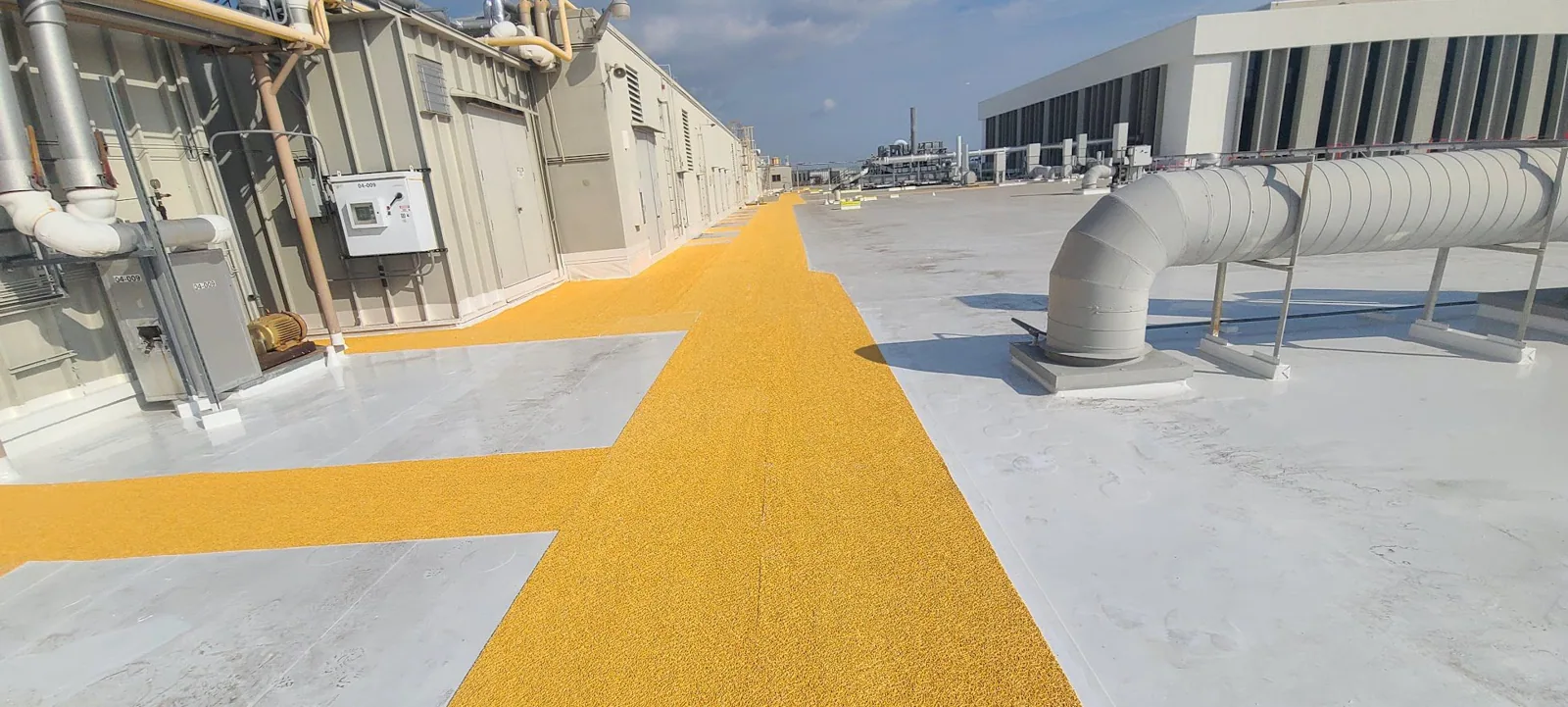
Home / Roof Systems / Silicone Commercial Roof Coatings
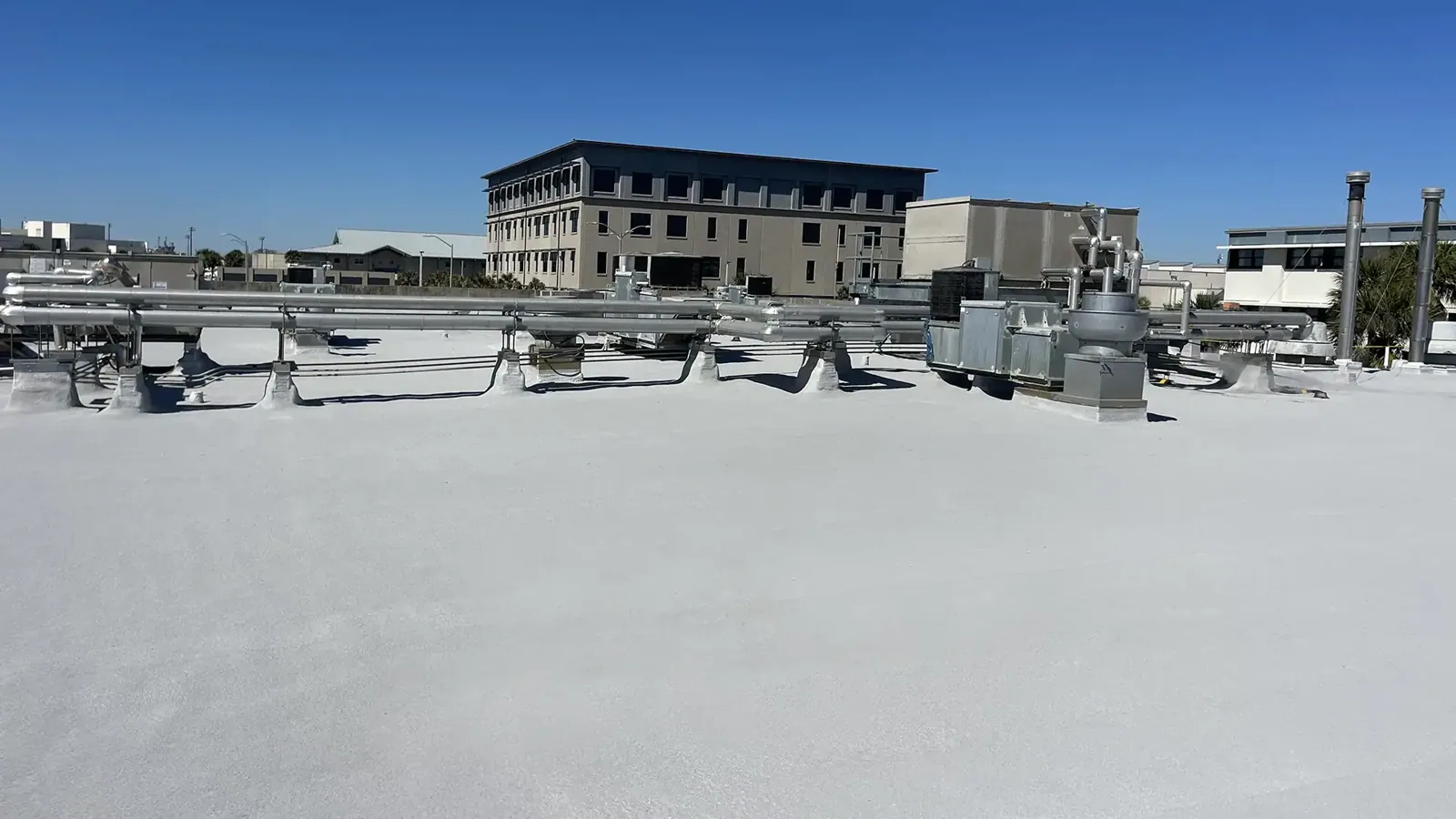
Send roof records, prior coating details, leak locations, and access information. We will inspect the substrate, drains, and transitions, then define the repairs and preparation needed before silicone application.
We look for peeling, pinholes, blisters, thin coverage, dirt pickup, open seams, and exposed substrate. Around a drain, curb, or wall, the coating must bridge the detail without blocking flow or separating at a change in plane. A clean-looking field does not confirm adhesion everywhere. We test representative areas and inspect prior patches before estimating how much preparation or reinforcement is needed.
Moisture below the coating changes the decision. A test cut can reveal wet insulation, a weak deck, or an older layer that should not be covered. We choose the opening based on the water path and repair question, photograph the layers, and close the test area after documenting it. If the roof has multiple material types, we identify each substrate because one coating may not bond equally across all transitions.
Silicone coatings are used on some roofs where standing water is a concern, but the specific system, thickness, preparation, and warranty conditions matter. A coating cannot drain a low spot or repair a soft deck. We inspect the duration and location of ponding, outlet condition, and the substrate beneath it. If water remains because a drain is blocked or slope has failed, that correction belongs before restoration.
Freeze-thaw exposure can stress coating transitions, while application still depends on clean, dry substrate and the manufacturer’s temperature and cure limits. We record the actual surface condition and forecast at the time of work. We inspect actual coating wear, freeze-thaw separation, and water entry. Application depends on a clean, dry surface and the product’s temperature and cure limits, so timing follows the forecast and roof readings on the workday.
Silicone may be installed over a compatible existing roof after the substrate is cleaned, repaired, and confirmed dry and stable. Existing coatings, membranes, and sealants can affect bond. We review product records and test adhesion where the system calls for it. If the test shows poor bond or a material conflict, we do not apply a full coating over the problem. The scope identifies the preparation and repair required to create a suitable surface.
At penetrations, seams, and metal edges, the coating detail must preserve movement and water shedding. We inspect flashing, fasteners, and the termination before covering them. Wet insulation or failed attachment needs repair beneath the coating. If a different system is more suitable, we may compare acrylic coating or SPF restoration only after confirming substrate and exposure requirements.
Coating must stop at the drain detail without narrowing the throat, bridging a loose ring, or sealing an overflow. We inspect the bowl, clamping ring, strainer, and slope into the outlet. If the roof has a persistent low area, tapered work or outlet correction may be needed before coating. A drainage repair can be coordinated with the restoration when both conditions share the same path.
Commercial activity spans the Golden Corridor and the North Van Dyke area, but those districts do not identify an existing coating or drain layout. We map each roof’s outlets, edges, and test locations before setting a restoration boundary. We map the actual outlets, edges, and test locations so the restoration scope stays tied to the inspected assembly. Where several roof zones differ, each receives a separate preparation and coating boundary.
We remove loose coating, clean the surface, and repair seams, penetrations, and damaged substrate before application. Test patches confirm adhesion where needed. Coating coverage, reinforcement, and cure follow the system requirements and the condition of the roof. At a wet or structurally weak area, we remove and rebuild the affected layers instead of sealing the surface over it.
Wind control and overspray protection matter during application. We identify nearby vehicles, air intakes, equipment, and adjacent properties, then stage the work and protect those surfaces. We monitor weather and stop when moisture or temperature prevents proper application. The finished roof is checked at transitions, repaired seams, drains, and coating terminations. A roof inspection can record the completed condition and open follow-up items.
The proposal identifies substrate condition, preparation, localized repairs, coating areas, drain details, and exclusions. It distinguishes a protective surface application from work needed below the membrane. We include photos and test results so the owner can see why a coating was selected or declined. The maintenance plan should keep outlets clear, avoid unprotected traffic over the finish, and record any new cuts from later equipment work. During follow-up, we compare coating wear at drains, walk paths, and flashing transitions with the original close-in photos. That makes a small repair easier to define before loose edges or exposed substrate spread across a larger area. We note who maintains each roof zone and where access is limited during each follow-up inspection and preserve the record. If replacement is more appropriate, the comparison should state the wet insulation, weak attachment, or other finding driving that decision.
Send coating records, roof plans, repair history, leak locations, and access limits. We will inspect adhesion, ponding, and flashing, then determine whether silicone restoration fits. A condition report can retain coating dates and test locations, while replacement planning remains an option where the assembly cannot support another surface layer.
Some silicone systems tolerate standing water, subject to product requirements and substrate condition. We still check slope, outlet function, and the layers below before specifying it.
Compatibility and adhesion need confirmation. We inspect the existing finish and perform the applicable bond check before setting the preparation scope.
Not reliably if a seam, flashing, insulation, or deck has failed. We locate and repair the defect before applying a protective coating.
Contamination, trapped moisture, poor preparation, or an incompatible surface can weaken bond. We inspect the edge and outlet detail to find the cause.
Surface moisture, temperature, wind, cure time, and protection needs all affect the work window. We confirm conditions before opening the full roof area.
Send roof records, prior coating details, leak locations, and access information. We will inspect the substrate, drains, and transitions, then define the repairs and preparation needed before silicone application.