Home / Roof Systems / Spray Polyurethane Foam Roofing
Send system records, prior coating details, leak locations, and access information. We will check foam condition, coating bond, drainage, and penetrations, then define which areas need repair or restoration.
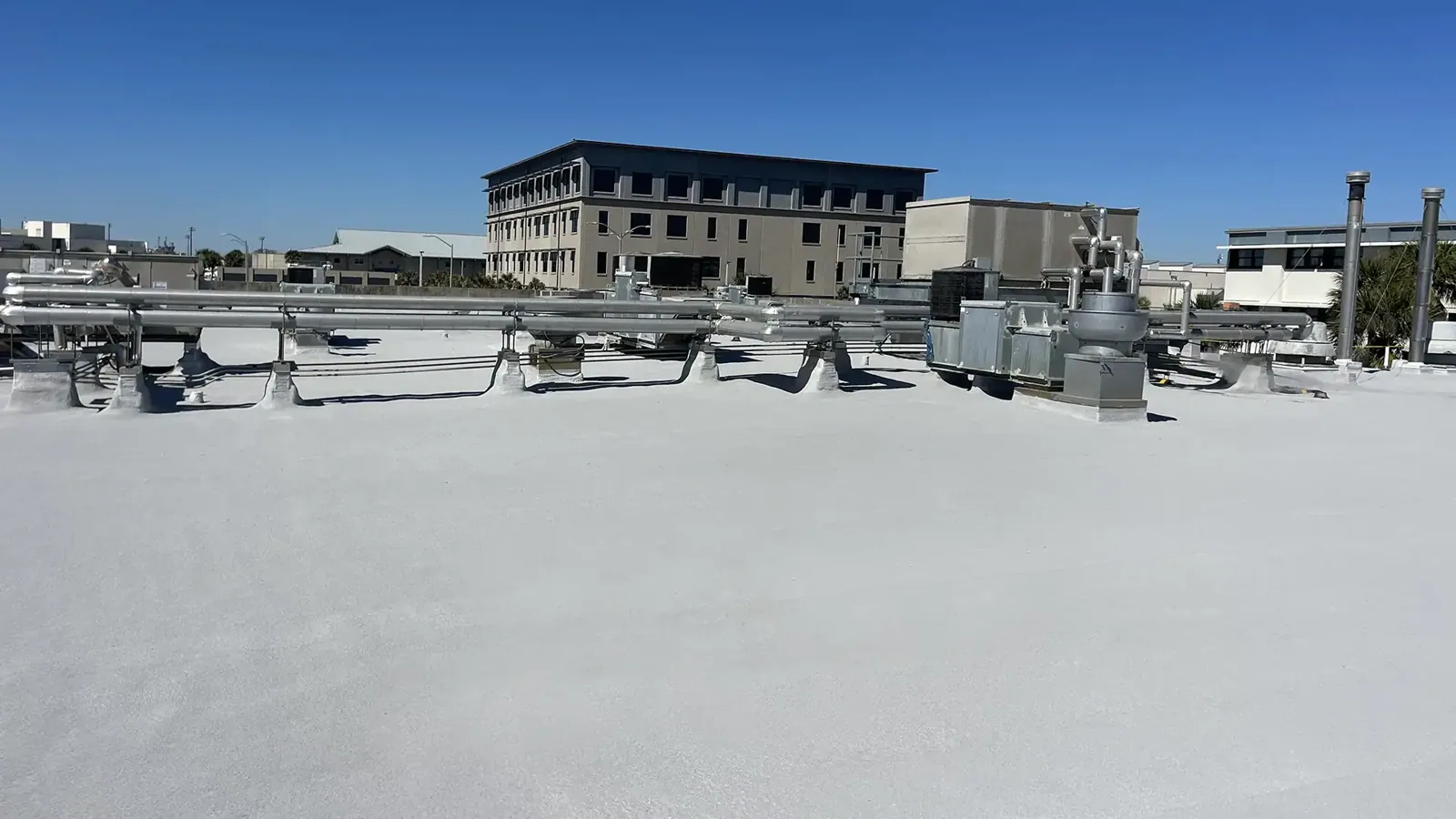
SPF roofing uses spray-applied polyurethane foam shaped to the roof, then protected with a coating. We look for exposed foam, erosion, cracks, blisters, punctures, loose coating, and places where water has collected. A thin or worn finish can leave the foam vulnerable. We map each area and check whether the damage stops at the coating or continues into the foam and substrate.
Foot traffic, service work, and falling tools can cut the protective surface. We inspect around curbs, pipes, drains, and equipment paths, including prior patches that may have separated. If a soft area or stain suggests moisture below, a small test area can confirm the foam and deck condition. We photograph the opening and restore it after recording the layer condition.
The coating protects SPF from water and ultraviolet exposure. Once that layer wears through, water can enter the foam or move along a damaged interface. A new coat does not solve wet substrate, failed drainage, or foam that has lost bond. We identify whether the surface can be cleaned and recoated or whether damaged material must be removed first. The preparation and coating system must be compatible with the existing roof.
Nearby Detroit July normals average highs in the low 80s Fahrenheit, while winter brings cold and snow. Those regional conditions help frame seasonal access and coating windows. They do not establish current surface temperature or product cure conditions. We use the actual roof, weather, and product requirements to schedule application. Moisture or low temperatures can delay the work because a coating needs the stated substrate conditions to bond and cure.
Sprayed foam can form slope around drains, curbs, and equipment, but the existing profile must be inspected. We check thickness where the scope needs it, surface firmness, adhesion, and whether water routes to outlets. A low area may reflect design, settlement, or damaged foam. Adding coating cannot reshape a roof or correct a blocked drain. If the profile needs correction, we define foam work separately from the protective finish.
At a curb or penetration, foam and coating turn into a flashing detail that must remain intact through movement and service access. We inspect the coating termination, counterflashing, and any area where another trade has cut or patched the system. If a test reveals wet foam or a weak deck, removal and replacement may be required. A compatible acrylic coating can be considered only after the substrate and exposure are checked.
Coating at a drain should terminate without reducing the opening or bridging a loose ring. We inspect bowls, strainers, overflow outlets, scuppers, and the surrounding slope before recoating. The work area must shed water rather than create a ridge. If a low point remains, we consider drainage correction before coating. Edge metal and parapet transitions are reviewed because water behind a termination can bypass the foam protection.
Commercial and business-development areas such as the Golden Corridor and Velocity SmartZone cover a range of property uses. We verify the installed foam profile and drainage at each building before selecting a repair method. We inspect the actual coating and drainage at the building and record which low areas were accessible. For a portfolio, a condition report can track recoating dates, test areas, and follow-up locations by roof zone.
We remove loose coating and damaged foam to a sound, dry boundary. The surface is cleaned, repaired, and allowed to reach the conditions required for the new system. A test patch can help confirm adhesion when compatibility is uncertain. We apply coating at the specified coverage and check transitions, penetrations, and repairs as work progresses. The proposal states areas that need foam replacement separately from those receiving only surface restoration. Preparation can take longer than the spray pass when loose finish, embedded dirt, or old patches cover the work zone. We define those removal and protection steps before pricing or scheduling, because they affect access, dry time, and the daily close-in boundary. A sample area can confirm preparation needs before the crew moves across the full roof.
Wind, temperature, humidity, and overspray controls affect application. We confirm protection for vehicles, intakes, equipment, and adjacent property before spraying. If the forecast or substrate conditions change, we stop at a protected boundary and reschedule rather than coat a damp surface. The finished roof is inspected for continuity, drain clearance, and coverage at repaired areas. A restoration scope should record the product and location for future review.
The inspection record should show coating wear, exposed foam, test locations, moisture, drainage, and any repairs that need monitoring. We distinguish a finish issue from foam or deck deterioration. Photographs include context and close details so the owner can locate each area later. If the roof has a maintenance history, we compare it with current findings before proposing another coating cycle.
Send roof records, coating product information, previous repair notes, leak locations, and access rules. We will inspect the surface, transitions, and outlets, then state what can remain and what needs removal. An asset record can preserve the baseline and schedule future checks. The scope follows the foam and the protective layer actually present.
It may be recoatable if the foam remains dry, sound, and well bonded and the new coating is compatible. We inspect and prepare the substrate first.
No. Coating protects the surface but does not reshape the foam or clear a blocked drain. We assess the profile and outlet before setting the restoration scope.
We inspect visible damage and use a targeted test area when moisture confirmation changes the work. The opening shows the foam and layers at that point.
We plan for wind and overspray around vehicles, air intakes, equipment, and adjacent surfaces. Site-specific protection is confirmed before material is applied.
The coating condition, product requirements, exposure, and inspection findings set the timing. We document wear and recommend a review based on the roof’s actual condition.
Send system records, prior coating details, leak locations, and access information. We will check foam condition, coating bond, drainage, and penetrations, then define which areas need repair or restoration.