Home / Property Types We Roof / Grocery Store Roofing
Send leak locations, roof and floor plans, refrigeration notes, and delivery constraints. We will inspect the related roof details, separate confirmed water entry from other moisture sources, and set a repair boundary that can be closed safely.
We log the affected aisle, case, back-room area, time, and weather. Grocery stores combine public sales areas with coolers, freezers, food preparation, offices, and receiving space. Each zone can have different temperature and humidity conditions. A water mark near a cold case may come from roof entry or from a refrigeration component. We document the pattern and coordinate with the store’s refrigeration contact when needed.
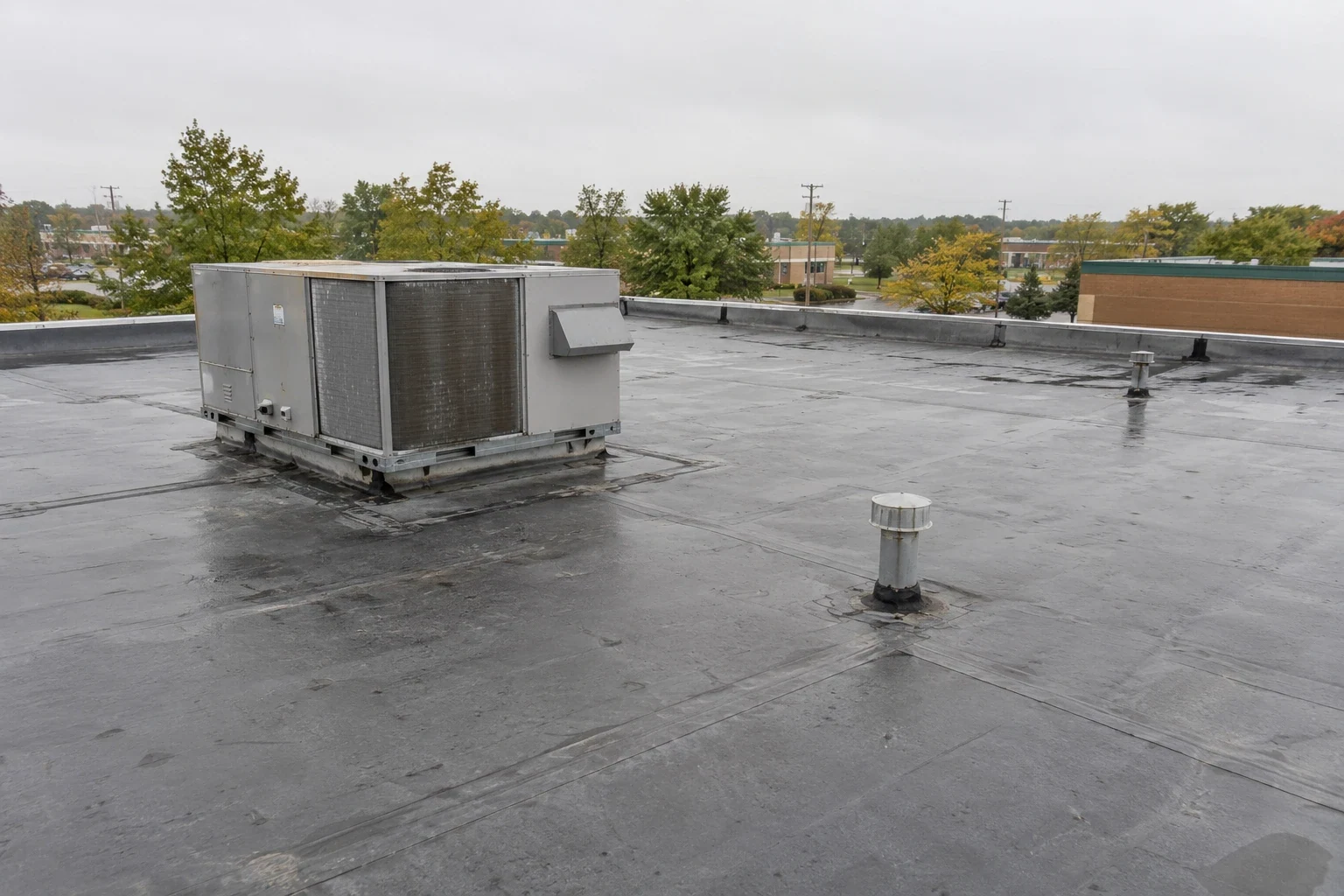
On the roof, we inspect the membrane, seams, penetrations, drains, rooftop units, and the route above the reported area. Inside, we look for the stain’s edge, ceiling condition, corrosion, and any sign that water followed a pipe or deck flute. A moisture scan can show whether insulation is wet beyond the visible mark. We use a test cut only when its result will change the repair boundary, and we close the opening the same day.
Separate reports stay separate until evidence connects them. A leak over receiving may have a different entry detail from a recurring wet spot beside a freezer. The inspection record marks confirmed paths, unresolved symptoms, and equipment items that need another trade. That gives the manager a useful repair decision without assigning the cause from location alone.
Warm, humid indoor air can meet a colder surface and condense. A roof leak follows a different path, often showing wet insulation, an open seam, or water aligned with a penetration. Both conditions can appear around mechanical equipment. We inspect the roof detail and ask for refrigeration or humidity records before deciding which repair belongs to the roofing scope.
Nearby Detroit climate normals show a wide seasonal temperature range and winter snowfall. These readings are regional context, not a store-specific weather or roof-load measurement. Freeze-thaw can leave meltwater at a low point, then refreeze around an outlet or metal transition. We check primary drains, overflows, scuppers, slope changes, and the discharge path.
Inside, we distinguish water from roof entry, plumbing, refrigeration, and condensation as evidence permits. We identify where those scopes meet so the roof repair does not close over an unresolved source. Confirmed drain and scupper work can be coordinated with membrane restoration.
A grocery roof may have separate sections installed during store additions or equipment replacements. We map membrane type, attachment, insulation, deck, curb locations, and previous repairs. A compatible repair needs sound substrate and the right preparation for that system.
Refrigeration piping, exhaust, vents, and replacement units can create penetrations or support changes. We inspect curb corners, pitch pans, abandoned openings, fasteners, and flashing terminations. A loose or low curb can admit water even when the surrounding field appears intact. If the roof has an overlay, a test cut checks layer count and moisture before anyone proposes another layer.
Cold-room and kitchen operations can limit interior access. We plan the inspection around food protection rules supplied by the operator and avoid moving merchandise or equipment without approval. Where a store belongs to a larger portfolio, a repeatable condition report helps compare roof zones across locations.
We coordinate roof access, lift staging, receiving hours, customer entries, fire lanes, and delivery routes with store management. Grocery operations continue through early morning and evening windows. The store identifies food areas, merchandise, and equipment that need protection. We set a work boundary that does not leave an open roof over occupied or temperature-controlled space.
Each repair zone has a start point, close-in time, and weather limit. The crew removes only the failed assembly needed to reach sound roofing, replaces wet insulation if confirmed, and closes the roof at the boundary. If hidden moisture changes the scope, we protect the opening and get the owner’s direction before expanding.
Traffic and business patterns around M-59 can affect deliveries, but a corridor’s general activity cannot establish a store’s loading access. The Golden Corridor and Lakeside City Center area provide local commercial context; store rules govern the work.
We inspect roof drains, overflow outlets, gutters, scuppers, coping, fascia, and the membrane termination around mechanical curbs. A backed-up outlet can leave standing water; a failed curb corner can admit water even when the drain works. We record each detail’s condition and follow the suspected path to the affected interior area.
Store refrigeration work can leave unused penetrations or temporary openings. We look for cut membrane, unsupported piping, loose pitch pans, and sealant that has separated from the substrate. The mechanical contractor may need to secure piping or adjust equipment support. We state the coordination point and document which trade must complete it before permanent close-in.
At the edge, an open coping splice may direct water into a wall. At an outlet, discharge staining may show overflow beyond the roof drain. For confirmed perimeter failures, our coping and edge-metal service can be scoped with the roof work.
We remove failed roofing to a sound boundary and check the exposed deck and insulation. Wet insulation is replaced when verified; the roof is rebuilt using compatible materials and the attachment required by the existing assembly. At a curb or drain, the flashing must connect to a stable detail. If moisture extends farther than expected, we document the new boundary and ask for the owner’s direction rather than cover an unverified area.
Temporary protection addresses active water while permanent work is planned. An emergency repair does not by itself show that the whole roof needs replacement. Test results and assembly history drive the recommendation.
For renewal planning, a roof recover review can determine whether an existing roof is a candidate for another layer. We verify moisture, attachment, deck condition, and total assembly before recommending that path.
The closeout names the roof zone, interior symptom, assembly, confirmed entry path, moisture test, work performed, and open coordination items. Photos show the detail and enough surrounding context to find it again. We distinguish roof repair from plumbing, refrigeration, or humidity investigation when the evidence points outside the membrane.
Send a marked floor plan, roof plan, store hours, delivery schedule, leak history, refrigeration service notes, and previous roof work. Identify any customer or food-protection constraints before access is set. We will prioritize the reported zone, map related drains and curbs, and return a repair boundary with the next action. Kitchen exhaust and occupied service areas also shape restaurant roofing work. Retail roofs with shared storefront and loading zones have different access patterns, described in shopping-center roofing.
Where several stores share the same roof system, consistent records help facilities compare recurring conditions. We state what is confirmed, what remains unknown, and how each open area will be secured at the end of the shift.
Yes. Both can wet ceilings near cold areas. We inspect the roof path and coordinate with refrigeration staff before assigning the source.
Often, with a defined work zone. We coordinate access, deliveries, customer routes, food protection, and same-day close-in with store management.
Send a marked floor plan, leak dates, weather notes, roof plans, refrigeration service records, and prior repair details.
No. We verify the wet area, assembly, and deck first. A localized repair or recover may be suitable when inspection supports it.
No. They provide regional context only. We base the scope on the store’s assembly, drainage, and documented conditions.
Send leak locations, roof and floor plans, refrigeration notes, and delivery constraints. We will inspect the related roof details, separate confirmed water entry from other moisture sources, and set a repair boundary that can be closed safely.