Home / Property Types We Roof / Shopping Center Roofing
Send tenant plans, operating hours, roof records, and leak locations. We will trace the water path, inspect drains and perimeter details, and set a repair sequence around customer access.
We record which tenant, corridor, entry, loading space, or shared mechanical room shows moisture. Water can move beneath the membrane before it reaches a ceiling or wall, and tenant improvements may conceal the route. We compare the interior report with roof slopes, drains, parapets, curbs, and expansion details. The closest visible roof defect is not always the source.
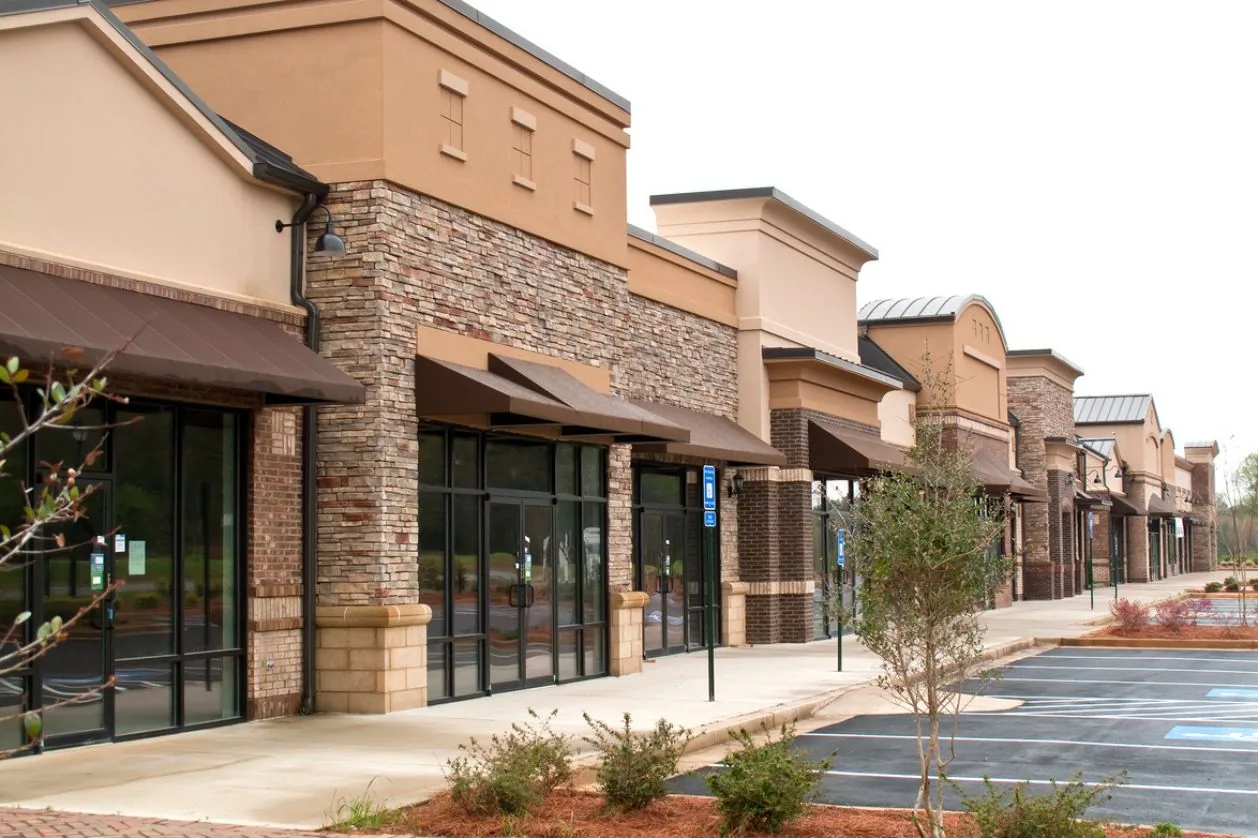
Shopping centers often have several roof zones, canopies, and tenant-specific penetrations. We inspect membrane seams, previous patches, HVAC curbs, signage supports, and transitions between different roof heights. If wet insulation or deck damage changes the repair boundary, a test cut can verify the layers. The opening is coordinated with the tenant and closed after documenting the finding.
Water may enter at an open lap, drain, or wall flashing and travel across a long roof section. A low bay or blocked outlet can redirect flow toward a neighboring tenant. We check drains, overflows, scuppers, and slope changes around the reported area. If the roof has multiple levels, we trace the path from the upper plane through the lower transition and into the discharge point.
Nearby Detroit normals show winter snowfall and seasonal temperature movement; schedule a return after snow clears to inspect low spots and outlets. During thaw, we inspect whether water is standing against an edge or refreezing at an outlet. If snow or ice hides the detail, the report records what remains to be checked.
Shopping centers may be remodeled by tenant bay, leaving different roof systems or penetrations across one address. We compare roof records by tenant bay, noting membrane age, attachment, insulation, and any later curb or exhaust work. A test opening at the suspect bay can show whether damp layers or an earlier recover change the proposed scope.
Restaurants may add exhausts, and retail tenants may add signs or rooftop equipment. We inspect support and flashing around the relevant work, then coordinate any removal or adjustment with the tenant’s contractor. A large-format retailer can have different roof and delivery needs; big-box retail roofing is reviewed on its own roof and operating schedule rather than folded into the center’s general scope.
We coordinate store hours, loading docks, customer entrances, accessible routes, lift staging, and debris removal with property management. A repair above a busy entrance may require barriers or a timing window. Tenants identify any equipment or merchandise needing protection. The property team decides which routes can close and sends notices; our sequence fits those constraints. We confirm the route for waste and replacement materials before the first roof opening.
We open only enough roof to inspect and close the area safely within the work period. If tear-off exposes wet insulation, the crew secures the boundary, records the location, and presents the additional scope before expanding. Materials and waste follow a defined path away from customer traffic. The daily close-in check includes membrane transitions, drains, and any temporary protection above occupied space.
We inspect coping, fascia, storefront canopies, gutters, scuppers, and downspouts near the leak route. A blocked gutter can overflow behind metal; an open coping joint can send water into a tenant wall. We can coordinate edge and gutter repair with drainage work if inspection confirms both are involved.
The open-air Mall at Partridge Creek and Sterling Heights Golden Corridor represent different retail settings for occupied roof work. We map the inspected property’s outlets, tenant bays, and wall details, then keep that roof record with the correct center.
We remove failed roofing to a sound boundary, replace wet insulation where confirmed, and rebuild the membrane and flashing with compatible materials. The work plan protects storefronts, roof openings, and drains. If moisture extends beyond the repair area, the owner receives photos and a scope decision while the roof remains protected. That is safer than closing over an unverified layer.
If water is entering during store hours, temporary containment can be coordinated at any time, including weekends and holidays. The closeout separates that immediate protection from the permanent repair decision. At completion, we check the close-in seam, outlet, parapet, and canopy transition. If a broader project is needed, recover planning can be compared with replacement after moisture and attachment are known.
The report identifies roof zone, affected tenant, confirmed entry route, test results, access limits, and permanent repair. Photos include enough context to locate the area from the roof and inside. A property manager can use that record to notify tenants, protect merchandise, and distinguish an active repair from a future maintenance item.
Send a tenant map, roof plans, store hours, loading routes, leak reports, and previous repair records. We will inspect the roof and set a secure work boundary with daily close-in points. Condition reports can preserve roof-zone history, and restaurant roof planning can address exhaust and service details where food tenants have separate conditions.
We coordinate work areas, barriers, delivery routes, and timing with property management. The roof opening stays within a boundary the crew can protect and close during the shift.
We map the reported interior location and compare it with roof slopes, drains, and transitions. Water can travel across a bay before it appears inside.
We inspect the canopy, wall flashing, gutter, and roof transition together. The scope identifies whether the defect is in the canopy assembly, roof edge, or both.
Yes, after we coordinate interior protection and choose a location that answers a repair question. The opening is documented and closed before the area is released.
Send roof drawings, tenant and loading maps, access hours, leak locations, and repair history. Mark storefronts or deliveries that need a protected route.
Send tenant plans, operating hours, roof records, and leak locations. We will trace the water path, inspect drains and perimeter details, and set a repair sequence around customer access.