Home / Property Types We Roof / Restaurant Roofing
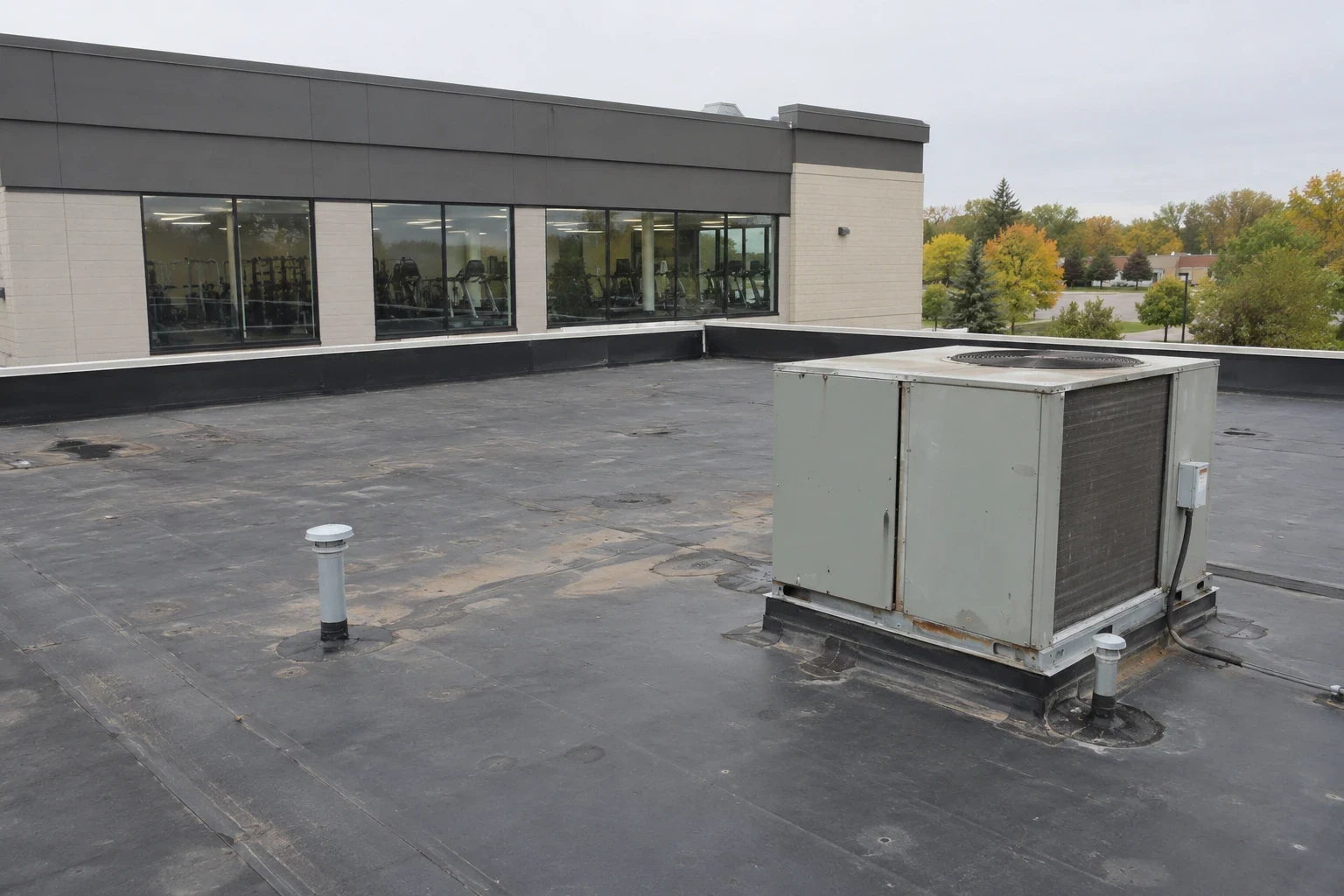
Send roof plans, equipment records, leak dates, and the preferred work window. We will inspect the relevant membrane and transitions, identify any mechanical coordination, and close each approved area against weather.
We record the affected dining room, kitchen line, walk-in, restroom, or service area. We compare the interior location with deck direction, roof slope, drains, and equipment layout. Grease residue can obscure a membrane surface, while condensate or plumbing can resemble roof water. We separate these sources where inspection evidence permits.
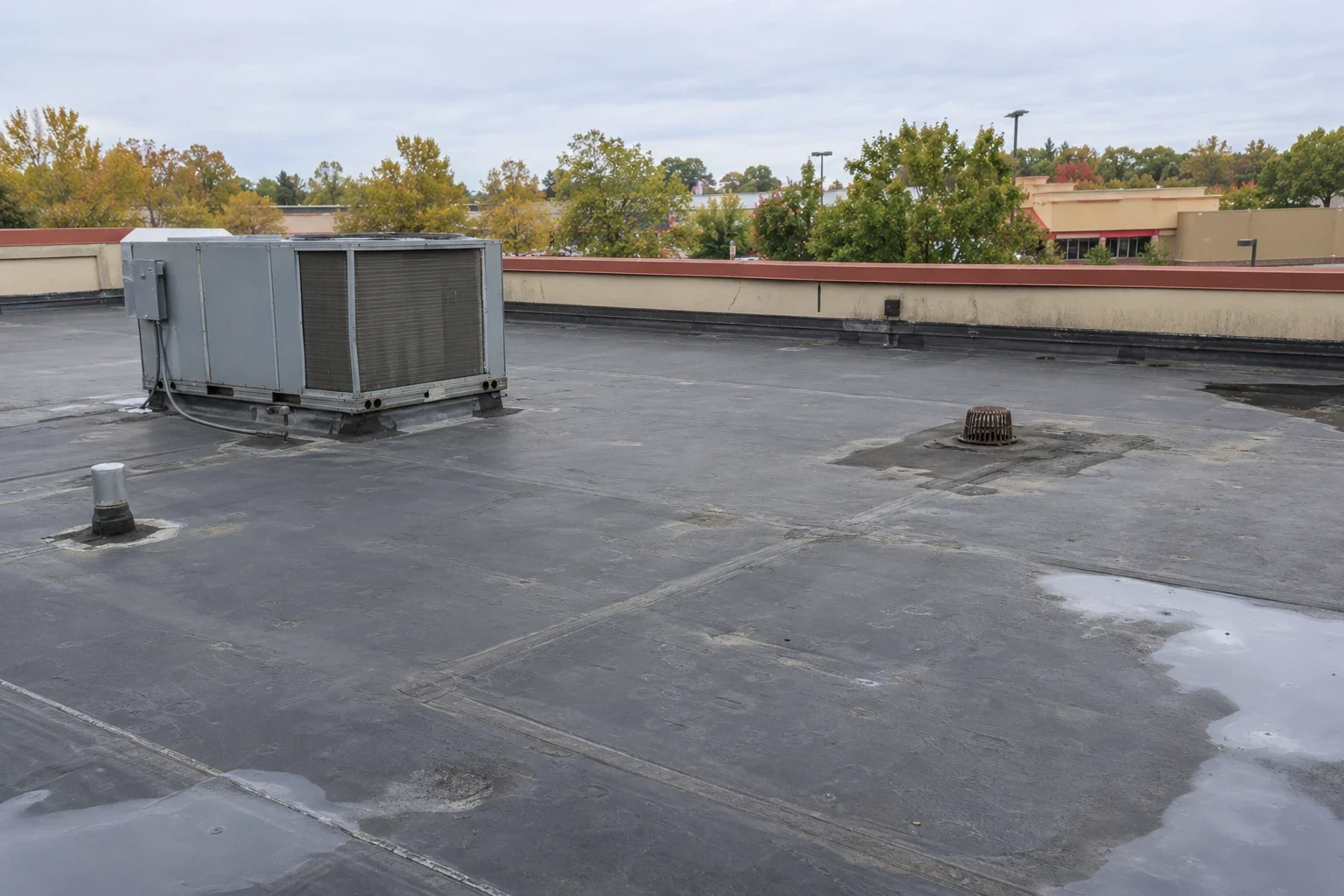
On the roof, we map exhaust fans, make-up air units, refrigeration condensers, vent stacks, signs, and past patches. The detail at each curb matters. We inspect corner seams, metal flashing, fasteners, pitch pans, and the surface around service paths. Any approved opening is closed the same day.
Inside, we note whether a leak follows cooking hours, equipment cycles, or weather. That timing can help identify condensation, but it does not prove a cause. The record links confirmed roof defects with the affected interior areas and lists unresolved equipment or plumbing questions for the proper trade.
Cooking exhaust can carry heat, moisture, and grease to a rooftop fan and its curb. The actual discharge and equipment condition determine what the roof experiences. We inspect the flashing and membrane near the unit for residue, movement, open seams, and water entry.
Temperature differences between the kitchen and roof can create condensation around ducts or penetrations. Roof leaks usually show a route through a seam, curb, drain, or perimeter detail. We compare the roof observations with interior moisture patterns and equipment notes. If the evidence points to a duct or mechanical system, we identify the coordination boundary rather than sealing the roof over an unresolved source.
Meltwater may refreeze near low outlets or metal edges. We check drains and overflows along with the reported curb, then map the discharge route. For a confirmed outlet issue, drain and scupper repair can be combined with membrane work.
Restaurants often replace fans, condensers, or exhaust ducts without replacing the full roof. We identify the membrane, attachment pattern, insulation, deck, and repair history before cutting or welding a patch.
We inspect abandoned penetrations and supports as well as active equipment. An old opening left beneath a patch can collect water. Loose fasteners or movement at a curb can break a seam. Where another trade must move equipment or secure a duct, we list that work before permanent close-in. Roofing materials and sealants must be compatible with the verified assembly and exposure.
A recover is not chosen from appearance alone. We check attachment, moisture, deck condition, and the additional load before considering an overlay. If that review supports another layer, the scope defines how drains, curbs, edges, and transitions will be raised or rebuilt. Otherwise, localized removal may provide a more reliable repair boundary.
We coordinate roof access around deliveries, cooking schedules, patio hours, customer entrances, and fire lanes. The restaurant identifies food-preparation areas, sensitive equipment, and any route that must remain open. Lift staging and debris movement are planned with the site contact. No roof opening is left over an occupied area or exposed to weather at shift end.
Work proceeds in compact zones with a stated close-in point. The crew removes enough material to reach sound roofing, replaces wet insulation if confirmed, and completes the membrane detail before moving to the next area. If hidden damage changes the boundary, temporary protection secures the opening while the owner reviews the added scope. A repair above a kitchen may need a timing window that matches both roof access and interior operations.
Mount Clemens identifies Macomb Street as a restaurant and business center; it does not establish conditions at a Sterling Heights site.
We inspect exhaust curbs, duct penetrations, coping, fascia, gutters, scuppers, roof drains, and any canopy over a customer entrance. A failed corner can admit water behind the flashing. We trace the path and report each finding separately so that cleaning, sheet metal, and membrane work have clear scopes.
Grease residue can hide cracks or affect how a repair surface should be prepared. We note the residue and confirm the proper cleaning method before applying compatible roofing materials. A fan curb that rocks or a duct that moves needs mechanical attention before flashing can remain stable. If exhaust equipment is replaced, the owner should coordinate curb height and closure details with the roofing scope.
At the perimeter, wind and thermal movement can open a coping splice or loosen edge restraint. We inspect the metal attachment and the membrane termination, not just the visible sealant. For confirmed failures, our edge metal and coping work can be scoped with the roof repair. The repair record identifies any detail that needs monitoring after equipment service.
We remove failed membrane to sound material and replace wet insulation where inspection confirms it. The replacement layers match the assembly and attachment. At a curb, flashing terminates against a stable, prepared surface. At a drain, the detail ties into the bowl without restricting flow. We document hidden conditions and keep repair boundaries visible in the closeout photos.
Temporary leak protection is separate from permanent repair. If the deck is deteriorated or moisture extends past the initial opening, the owner receives the finding and options before we expand.
For planning, a roof condition report records roof zones, active leaks, tested areas, and recommended timing. It helps compare a near-term repair with a larger renewal plan, while leaving design decisions to the appropriate project team.
The closeout identifies the roof zone, interior report, assembly, observed failure, moisture result, repair performed, and any coordination item. Photos show the curb or seam in context.
Send roof plans, leak dates, kitchen equipment schedules, exhaust service notes, access hours, and prior repairs. Mark dining, preparation, and receiving areas that need special coordination. We will inspect the affected roof zone, trace nearby drainage, and set a secure work boundary. A grocery-store roof may have similar refrigeration interfaces. Hotel roof work needs a separate guest and event schedule; roof repairs above guest areas must protect those occupied spaces.
At close-in, we check membrane edges, curbs, drains, loose materials, and the path from the work area. The final recommendation states what is confirmed, what another trade must verify, and when a follow-up observation is useful. That leaves facilities with a decision they can connect to the next maintenance or capital plan.
No. Residue can be present without causing a membrane failure. We inspect the curb, seams, and equipment discharge before assigning the cause.
Sometimes. The site must confirm safe access, equipment shutdown needs, weather limits, and a close-in window before the crew opens the roof.
We compare interior moisture patterns with roof conditions and equipment records. If evidence points to a mechanical source, we identify the trade coordination needed.
Provide roof plans, leak dates, fan and refrigeration records, prior repairs, and operating constraints for dining and kitchen areas.
Roofing scope covers the roof and flashing. Fan operation or duct repair belongs to the appropriate mechanical contractor; we coordinate the interface.
Send roof plans, equipment records, leak dates, and the preferred work window. We will inspect the relevant membrane and transitions, identify any mechanical coordination, and close each approved area against weather.