Home / Property Types We Roof / K-12 School Roofing
Send roof plans, leak locations, access rules, and school dates. We will inspect the assembly, map drains and transitions, and sequence repairs around occupied areas and secure close-in.
We record the room, corridor, kitchen, gym, or library affected and whether water appeared after rain, thaw, or rooftop service. Water may run along a deck flute before it reaches a ceiling tile. The visible stain narrows the search but does not prove the entry point. We map the interior report against roof slopes and nearby seams, curbs, penetrations, and drains.
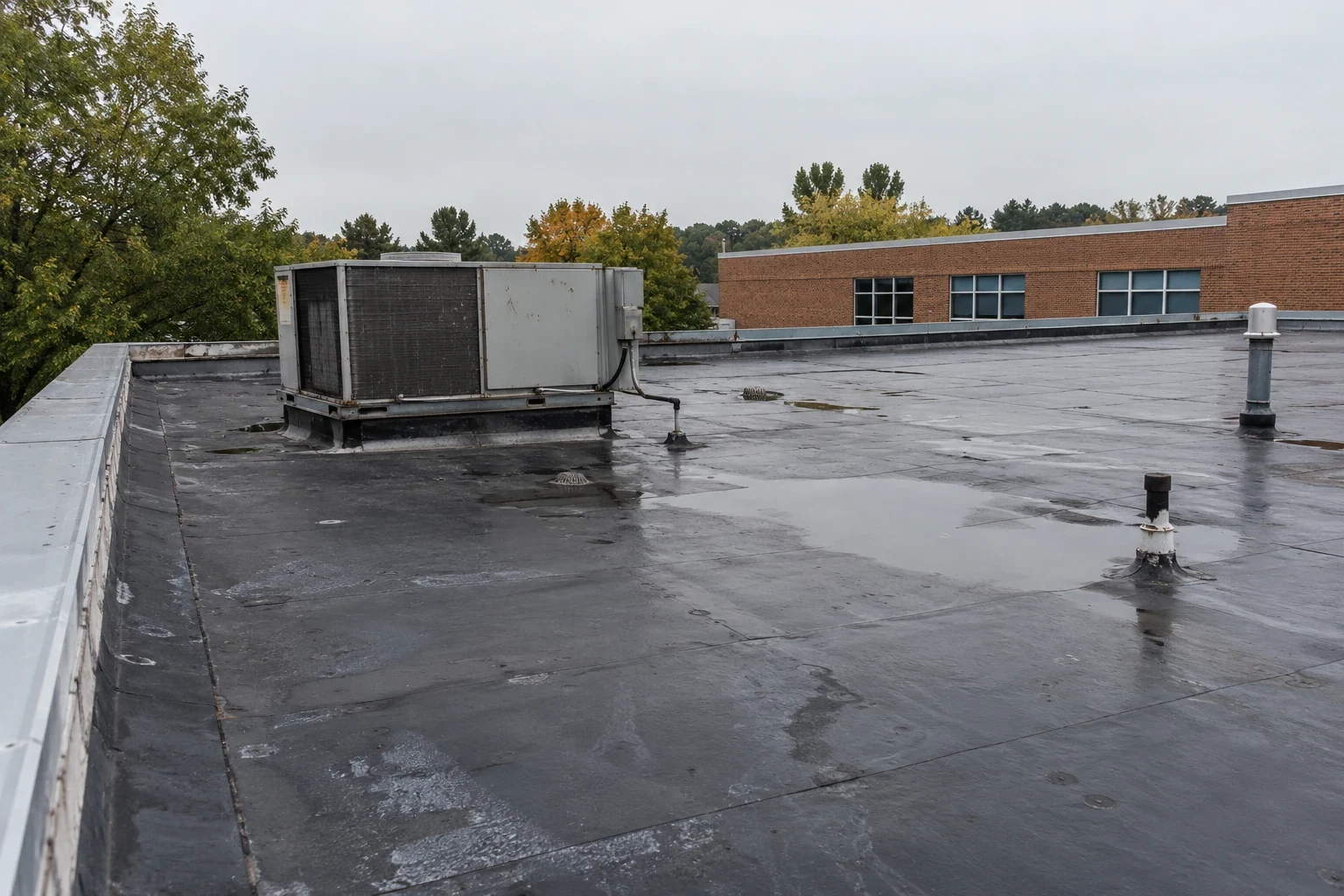
On the roof, we inspect surface wear, previous patches, edge metal, and rooftop equipment in the relevant zone. A test cut can confirm wet insulation or deck condition when that result changes the repair. We coordinate the opening with the school contact and protect the room below. The finding is photographed and closed after inspection, with any additional sample area identified before another opening.
Snow can cover a drain, seam, or low curb. During thaw, water may refreeze at an outlet or collect against an edge. We look for actual obstruction, open flashing, and membrane movement; a regional snowfall figure is not a building-specific snow-load assessment. Nearby Detroit normals provide seasonal context, while the roof’s slope, structure, and current conditions determine what can be inspected.
Leaks can also come from a loose unit curb, pipe boot, or wall transition. We trace water uphill and check the whole route before selecting a patch. A leak above a gym may move farther across the deck than one above a classroom partition. That difference affects protection and repair staging but does not change the need to verify the assembly and moisture below.
Schools may contain original construction, additions, portables, gym sections, and equipment enclosures with different roof systems. We identify membrane type, attachment, insulation, deck, and prior repairs by zone. A repair must match the system and reach a stable substrate. Gym and auditorium spans can have different deck profiles and access needs from classroom wings, so we label each area separately. If a test cut shows wet insulation or weak deck, we define the affected boundary before covering it.
Kitchen exhaust, HVAC curbs, skylights, and conduit interrupt the roof field. We inspect supports and flashing where they connect to the membrane. If an equipment move is planned, the mechanical contractor and school contact need to coordinate the curb detail before roofing closes. A larger institutional project may also involve college and university buildings or hospital roofs, each with distinct access and operating controls.
We confirm student arrival and dismissal, summer or break periods, after-school programs, deliveries, and rooms that must remain open. The school contact identifies bus lanes, playgrounds, staff entrances, and any work hours with noise limits. Lift placement and material staging are set away from protected routes. The calendar helps shape phases, but roof condition and weather set the daily opening boundary.
We remove only the section that can be inspected and made weather-tight before the shift ends. If tear-off reveals wet insulation or deck damage, the crew stops at a protected edge, documents the condition, and requests a scope decision. Interior protection stays in place until the roof is closed. Each day’s record notes material removed, repair completed, and any area waiting for follow-up. Phasing, lift access, interior protection, and disposal routes affect time and cost. We identify those needs before mobilization and show the assumptions in the scope. A summer window can help with larger sections, but a leak that threatens rooms or equipment may need earlier temporary work. The school can then compare immediate protection with a planned project without losing track of the roof condition.
We inspect drains, scuppers, gutters, parapets, and canopy edges near student entrances and interior leak areas. A blocked strainer can back water toward a roof seam; an open coping joint can send it into a wall. Construction debris must not enter outlets. We can coordinate drain repair and edge-metal work when inspection shows they share the failure path.
The Golden Corridor is a major commercial district with colleges and other uses, and the Sterling Heights Mound Industrial Corridor contains industrial and high-tech space. Those local facts are context, not evidence about a school building. We mark roof zones and outlets at the inspected address. If a school has several wings, labels should distinguish them so later maintenance and emergency calls point to the correct location.
The report lists affected rooms, roof zone, confirmed entry point, test findings, and any limits that remain. It separates temporary protection from permanent work and identifies the close-in point for each phase. Photos show the roof detail and interior impact. If snow or access restrictions prevented a complete check, that area remains on the follow-up list.
Send roof drawings, school calendar, access rules, leak locations, and prior repair records. We will inspect the relevant wing and provide a scope that fits the building schedule. A condition report can preserve repair history; office-building roof planning can be reviewed separately for district administrative buildings with different occupancy patterns.
Often, but access and weather still set the sequence. We inspect the assembly, confirm the school’s calendar and delivery routes, and phase work to close each section safely.
Water can travel along a deck flute, insulation joint, or framing before it reaches the ceiling. We compare the interior map with seams and low points above.
The school identifies student routes and occupied areas. We coordinate barriers, staging, lifts, and debris removal around those paths before work begins.
We secure the opening, photograph the condition, and route the added scope for approval. The affected area stays protected while the school reviews the finding.
Provide roof plans, the school calendar, room and leak locations, access rules, and prior repair history. Mark entrances, bus routes, and spaces that need priority protection.
Send roof plans, leak locations, access rules, and school dates. We will inspect the assembly, map drains and transitions, and sequence repairs around occupied areas and secure close-in.