Home / Property Types We Roof / Auto Dealership Roofing
Send roof plans, leak locations, equipment records, and service-lane constraints. We will inspect the related roof zones, confirm the water path, and set a repair sequence that protects vehicles and customer access.
We record the affected showroom, office, parts room, wash area, or service bay. A ceiling mark can sit below a deck flute or travel from a curb before appearing at the wall. We compare the interior location with roof slopes, structural direction, drains, and equipment layout.
On the roof, we inspect membrane seams, patches, penetrations, HVAC curbs, exhaust fans, and transitions between the showroom and shop. Vehicle lifts, compressors, and service equipment make interior coordination important, but they do not identify a roof cause. The inspection note separates roof findings from plumbing, exhaust, and mechanical questions. A moisture scan or test cut is used where the answer will change the repair boundary.
Parts and vehicle areas may need protection from water, debris, and foot traffic. The manager identifies active service lanes, inventory, customer entries, and delivery windows before work begins. We map each roof zone so a repair over the office does not become mixed with an unrelated leak above the shop.
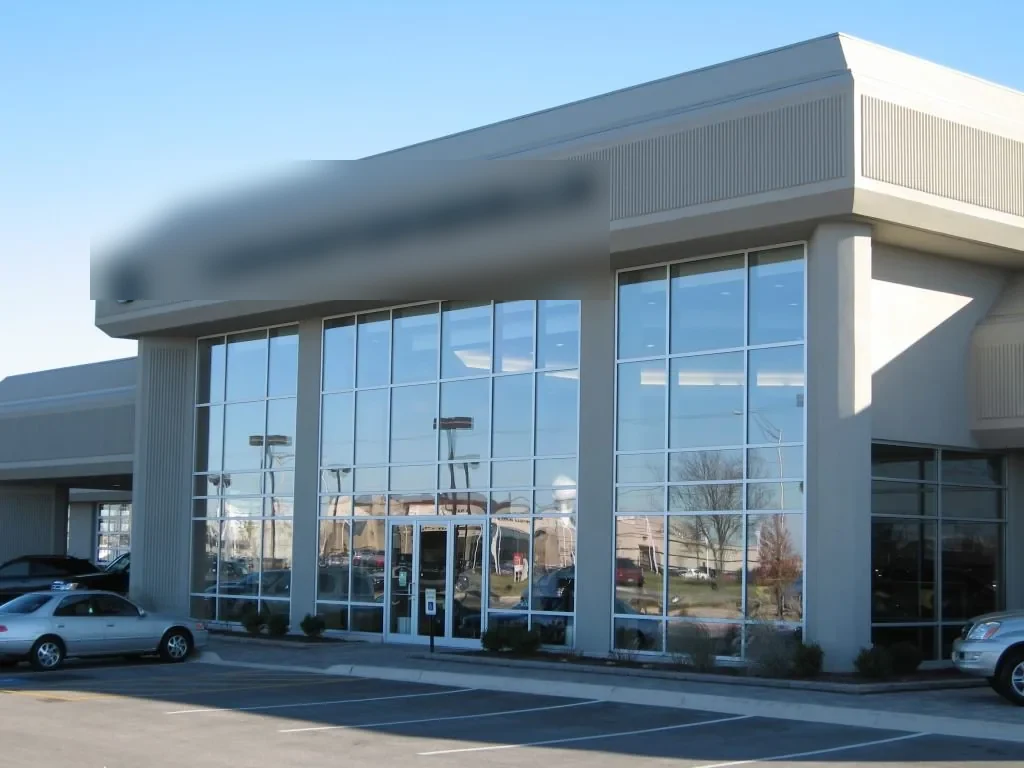
A dealership may have a membrane roof over offices, a different assembly over the service shop, and metal or membrane canopies at customer entrances. We identify membrane type, attachment, insulation, deck, and prior repairs by section. A compatible repair needs sound substrate. If an overlay is present, a test cut checks layer count and wet insulation before the owner considers a recover.
Service-bay exhaust, unit curbs, plumbing vents, and sign supports create penetrations that may change during renovations. We inspect flashing height, curb corners, loose fasteners, and abandoned openings. If another trade must move a unit or sign support, that work is coordinated before final close-in. A surface patch will not stabilize a moving curb.
At canopy and main-roof transitions, water can cross a height change or enter behind metal. We check where membranes terminate, how the canopy drains, and whether the customer entry below needs a protected route. For larger retail footprints, big-box roof planning shares some staging concerns, but dealership bays and showroom uses require their own access map.
Water can enter at a curb or seam and move under the membrane toward a low point. We inspect drains, overflows, scuppers, and the discharge route alongside the reported interior zone. A blocked outlet may hold water against a repair. A clear drain does not rule out an open flashing detail. Testing follows the path rather than assuming the nearest piece of equipment is responsible.
Nearby Detroit climate normals show seasonal snow and a wide temperature range. The Detroit readings give seasonal context and do not set a roof-load calculation at a dealership. Meltwater can refreeze at a drain or metal edge during temperature shifts. We check the actual outlet and termination and note any area that cannot be inspected safely while icy.
Vehicle wash areas and service bays can also create indoor humidity or plumbing moisture. We compare the timing and pattern of the interior report with the roof detail and mechanical records. If the source appears outside the roof, we identify that trade interface before sealing the assembly. Confirmed drain and scupper work can be coordinated with membrane repairs.
We coordinate lift staging, deliveries, service-lane access, customer parking, and showroom entries with dealership management. Repair work over a service bay may require a different window from work over the sales floor. The facility identifies lanes that must remain open, vehicles that need protection, and any work-hour restrictions.
Materials move by an agreed path, away from vehicles and public entries. We remove failed roofing to sound boundaries and close the membrane before opening another section. If tear-off reveals wet insulation beyond the initial area, temporary protection secures the roof while management reviews the finding. No work area is left exposed to weather at close of day.
Sterling Heights’ North Van Dyke corridor includes auto repair and other commercial activity; this does not specify a dealership's access or staging conditions. The site contact confirms where lifts, dumpsters, and material drops can go. A marked site plan helps separate customer routes from the roof crew’s work zone.
We inspect canopy seams, gutters, downspouts, coping, fascia, roof drains, and scuppers near the reported area. A canopy may discharge toward a doorway or vehicle lane if its outlet is obstructed. A parapet splice can admit water behind the wall.
At a service-side edge, equipment work can leave fasteners, abandoned supports, or open metal joints. We record the condition and whether another trade must remove or reset an item before roofing closes the area. A metal transition should shed water onto the intended roof plane or gutter, not into the wall assembly.
Confirmed edge failures can be addressed through coping and edge-metal repair. A roof condition report keeps showroom, service, and canopy findings tied to their own roof zones. Property teams can then match each repair with the work order for the correct side of the building.
We remove failed material to a sound boundary and inspect the deck and insulation. Wet insulation is replaced when confirmed. The membrane and flashing are rebuilt to match the system and attachment. At a curb, the detail connects to stable metal; at a drain, the repair preserves flow into the bowl. If the concealed condition changes the scope, we document it before expanding.
Temporary protection can stop active water while permanent work is approved. A visible stain does not set the size of the repair. A coating is considered only when the roof assembly and substrate support it; it does not replace failed insulation or metal work.
When several sections need renewal, a phased occupied-building reroof can separate customer spaces, service operations, and close-in limits. The choice between repair, recover, and replacement follows test results, roof history, and the condition of the deck.
The report names the affected interior area, roof zone, membrane, moisture results, confirmed water path, repair, and unresolved questions. Photos show the detail and its position relative to the showroom, service entrance, or canopy. Plumbing and mechanical items are listed separately from roofing work.
Send the roof plan, service-lane schedule, inventory or vehicle protection needs, leak dates, equipment records, and prior repairs. Mark customer and delivery routes that cannot close. We will inspect the related sections, trace water to its source, and return a repair boundary with staging and close-in points.
Dealership properties sometimes include office, warehouse, and service uses. A flex-industrial roof review can address a connected shop or parts building, while the main showroom remains its own roof zone.
The facility sets safe access and interior protection. We plan the roof boundary and timing with service operations, then close the area before shifting zones.
The sections may have different assemblies or drainage. We map the affected interior area and inspect the matching roof zone before linking the reports.
They can change interior access and equipment interfaces. We inspect the roof flashing and coordinate any mechanical adjustment with the responsible trade.
Yes, when inspection confirms related work. We trace the canopy outlet and roof termination, then scope each detail and access route.
Provide roof plans, leak locations, service and delivery hours, equipment records, and vehicle-protection rules. Mark customer routes that must remain open.
Send roof plans, leak locations, equipment records, and service-lane constraints. We will inspect the related roof zones, confirm the water path, and set a repair sequence that protects vehicles and customer access.