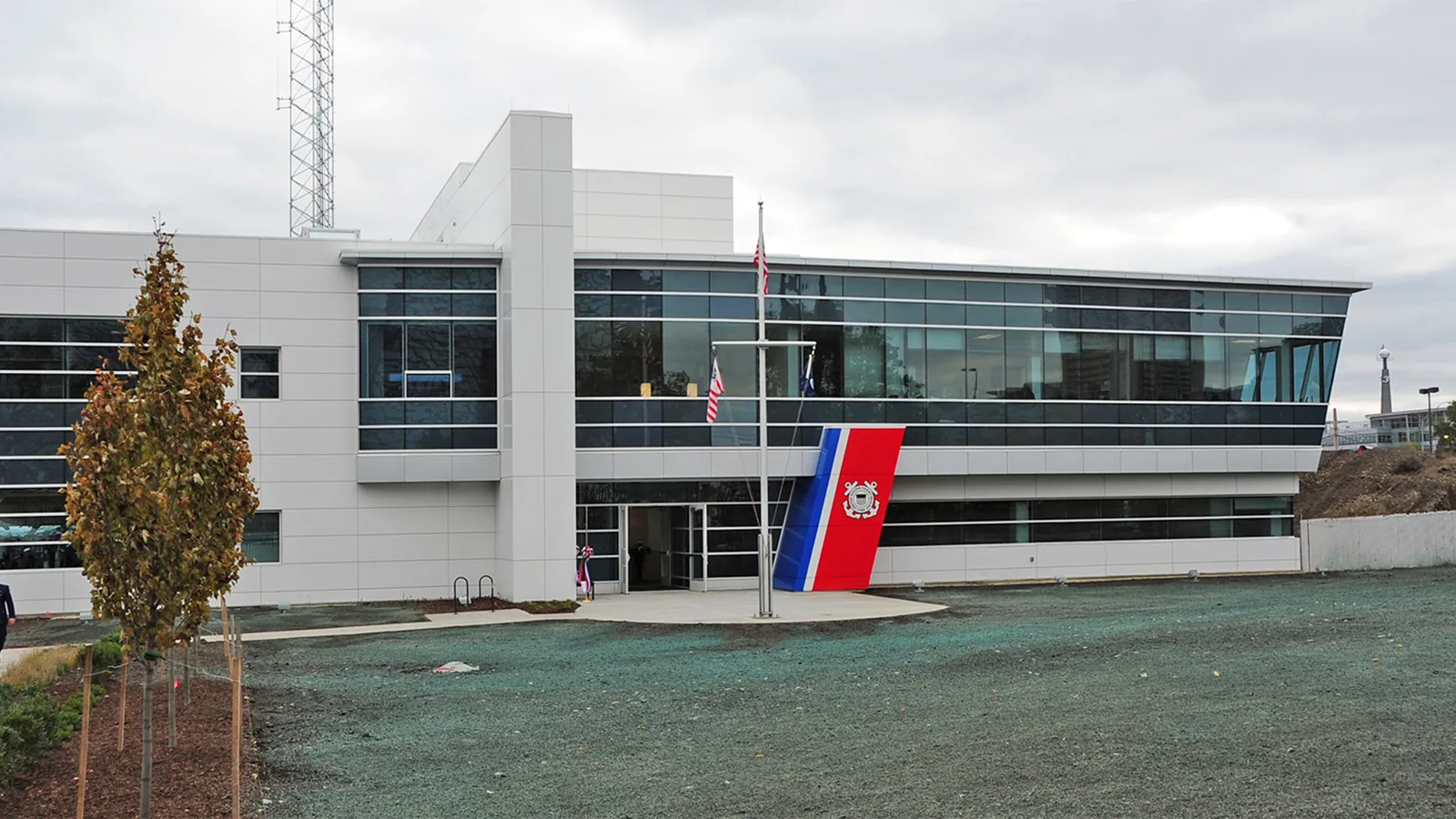
Home / Property Types We Roof / Coast Guard Station Roofing
Provide the facility name, roof plans, reported area, access rules, and mission schedule. We will inspect the approved zone, document the water route, and define a repair boundary with secure close-in.
We note the building, room, equipment, date, and whether the leak is active. Water near a radio or dispatch space may enter above a parapet, roof seam, penetration, or drain several bays away. We compare the interior mark with roof plans, slope, deck direction, and mechanical locations. That map narrows testing without exposing operational details in the public work record.
On the roof, we inspect laps, fasteners, prior patches, curb flashing, vents, antennas, and metal edges. A station’s roof may connect an operations area with a shop or storage wing, but the assembly can change between sections. We label each zone and record any concealed location that could not be examined. A moisture scan or test cut is used only where it affects the repair limit, and approved openings are closed within the access window.
The site contact confirms which rooms and routes are active before inspection.
Wind-driven rain can reach a roof-to-wall joint, while standing water can remain against a seam at a low point. We inspect the membrane, coping, scuppers, gutters, and discharge path as one route. A metal edge can leak behind the wall, and a blocked outlet can push water toward another flashing detail. The repair scope records which condition testing confirms.
The Detroit River station’s area of responsibility includes nearby waters. At a riverfront building, inspect exposed joints, edge metal, and drainage directly before choosing materials. Nearby Detroit climate normals also show winter snowfall and seasonal temperature movement. Those readings are regional context, not a site load or storm record.
Meltwater may refreeze at drains or exposed transitions. We look for ice-related displacement, open seams, and discharge marks when conditions are safe. If snow hides a detail, it is recorded as uninspected until access allows confirmation. Confirmed drain and scupper repair can be coordinated with the membrane or perimeter work.
The unit or facility manager sets access, escort, badging, photography, and vehicle rules. We submit personnel and equipment details through the designated contact. Operations schedules, response readiness, and restricted areas can limit staging. We confirm which roof zones are available and identify the route for lifts, tools, and debris before the crew enters.
Each opening has a weather limit and close-in point. We remove failed roofing only to sound material, replace wet insulation where confirmed, and restore the assembly before moving to another zone. If hidden damage increases the scope, temporary protection secures the opening while the authorized representative reviews the finding. Work does not leave loose materials or an exposed membrane at the end of the access period.
Selfridge hosts Air Station Detroit and multiple military tenants, but a Coast Guard facility’s access process depends on the specific site and contract. Station Belle Isle’s information sheet describes a separate unit on the Detroit River and notes its distance from Selfridge. We do not transfer one station’s access rules to another; the current facility contact provides them.
We identify membrane type, attachment, insulation, deck, and repair history before cutting into the roof. Stations and air facilities can contain low-slope roofs, metal panels, equipment screens, and later additions. A patch must match the installed system and reach a stable substrate. Where a recover is considered, a test cut can reveal layer count and wet insulation that would change the decision.
Antennas, communications lines, HVAC units, exhaust, and supports need secure flashing details. We inspect curb corners, pitch pans, fasteners, and abandoned penetrations. If a communications or mechanical contractor must move or isolate equipment, that work is coordinated before permanent closure. The roof report describes the interface without publishing sensitive system layouts.
At a long metal lap, thermal movement may open a joint if the attachment is loose or the panel detail is damaged. We check fasteners and seam condition before applying sealant. A military hangar roof review can share aircraft-support considerations, while a ground-vehicle installation building has another mission profile. The system and approved project documents determine each repair.
We remove failed roofing to sound material, inspect the deck and insulation, and replace wet components where confirmed. Membrane, metal, and flashing repairs follow the installed assembly and contract details. If a test shows a wider wet area, we secure the opening, photograph the finding, and submit the added scope through the designated approval route.
Emergency response is available around the clock, including weekends and holidays, when active water needs protection. Temporary measures are documented separately from permanent correction. The station receives the exact protected area, remaining test question, and access needed for the next phase. An emergency patch does not bypass contract review for lasting work.
A roof condition report organizes test locations, repair boundaries, and open items by building. If replacement is required, an occupied-building reroof plan can phase work to protect operational spaces. We identify the basis for repair, recover, or replacement from the roof findings, not from the station’s mission description.
We check parapets, coping joints, gutters, downspouts, scuppers, door edges, and the membrane termination near the leak. Water can travel behind a wall or reach an operations area through a low transition. We inspect the outlet and overflow together, then verify that the route sends water away from equipment and access doors.
At a shoreline or river-adjacent site, the facility identifies clearance needs near the edge and any restricted views or access. We keep staging within approved areas and confirm the work boundary with the site representative. The roof detail still controls material choice: field membrane, edge metal, and fastener condition are checked at the building.
Where metal coping or fascia is part of the failure, edge-metal repair can be combined with membrane correction. A follow-up inspection verifies that the repaired area and adjacent drainage remain clear after the work is complete.
The closeout names the station building, roof zone, assembly, water path, test results, work completed, and any item requiring another trade or approval. Photos follow facility rules.
Send roof plans, leak locations, access instructions, mission schedule, equipment records, prior repairs, and contract documents. Identify the approved contact and the area that can be opened. We will inspect the authorized zone, map the drainage, and return a repair boundary with a secure close-in plan.
Station Belle Isle and Air Station Detroit are separate Coast Guard facilities with different missions and building controls. Each roof requires its own route map and work authorization. The next action may be drain correction, flashing repair, moisture testing, or a phased renewal plan, based on what the inspection confirms.
No. Its station information sheet states that the unit has no barracks or housing. Roofing scope should follow the actual station facilities and mission needs.
Yes. The Coast Guard locates Air Station Detroit on Selfridge and describes helicopter missions over Lake Huron, Lake St. Clair, and Lake Erie.
Temporary protection can address active water under the facility’s direction. Permanent work follows the project approval and contract process.
The facility identifies sensitive rooms, device restrictions, and approved routes. We document roof findings without publishing protected equipment layouts.
Provide roof plans, leak locations, access and escort rules, mission hours, equipment records, prior repairs, and contract requirements.
Provide the facility name, roof plans, reported area, access rules, and mission schedule. We will inspect the approved zone, document the water route, and define a repair boundary with secure close-in.